Parts We Carry
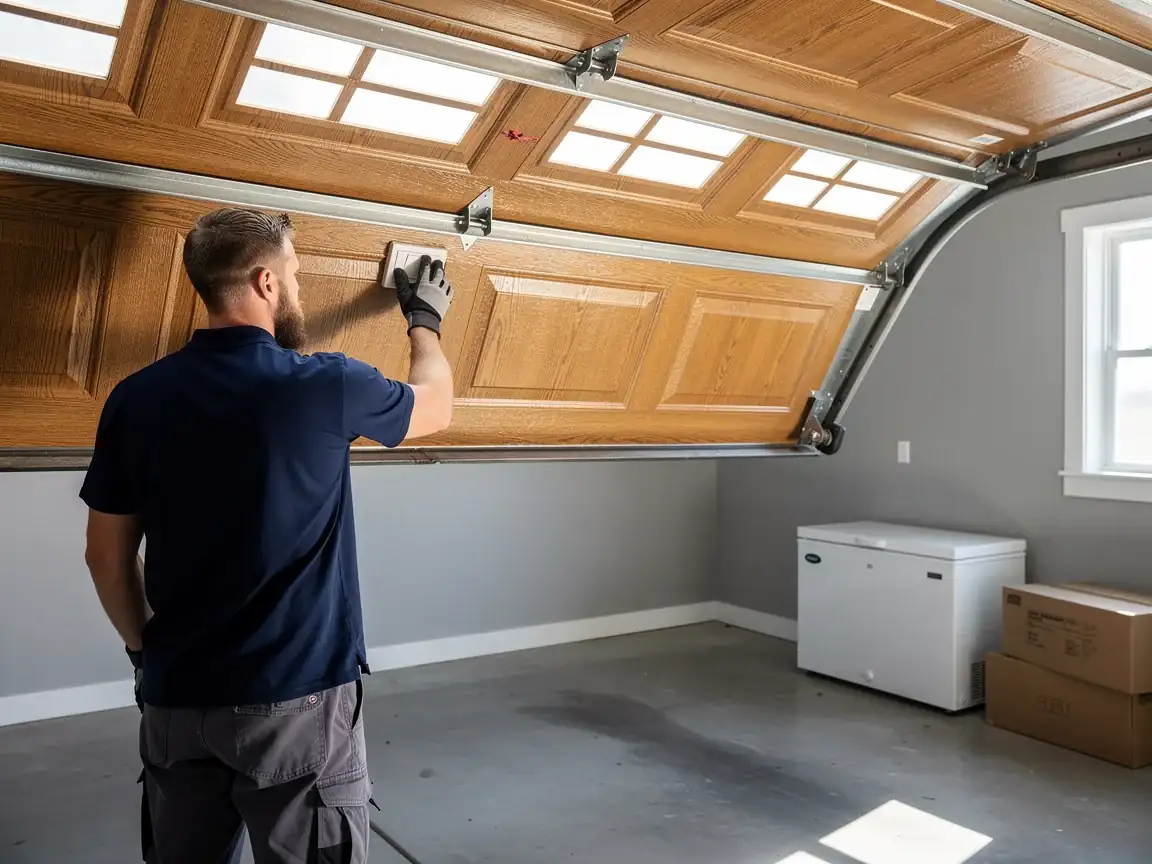
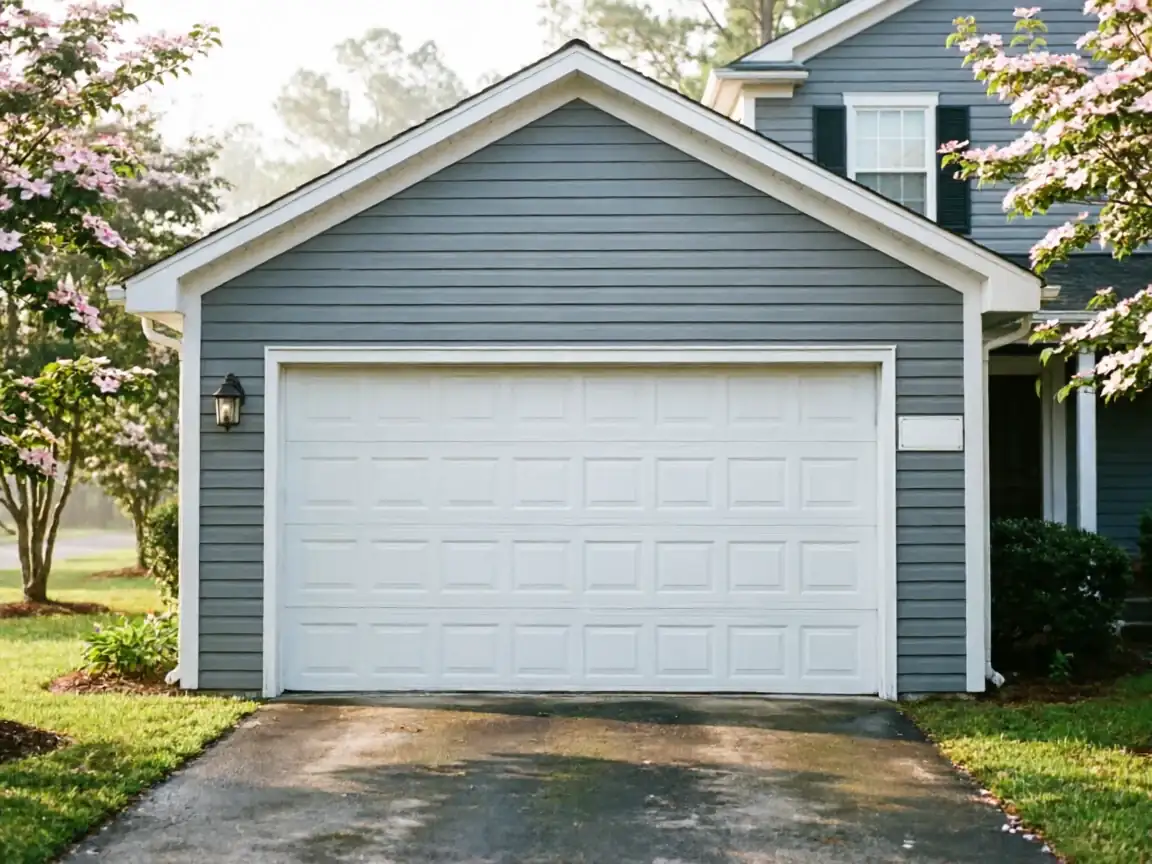
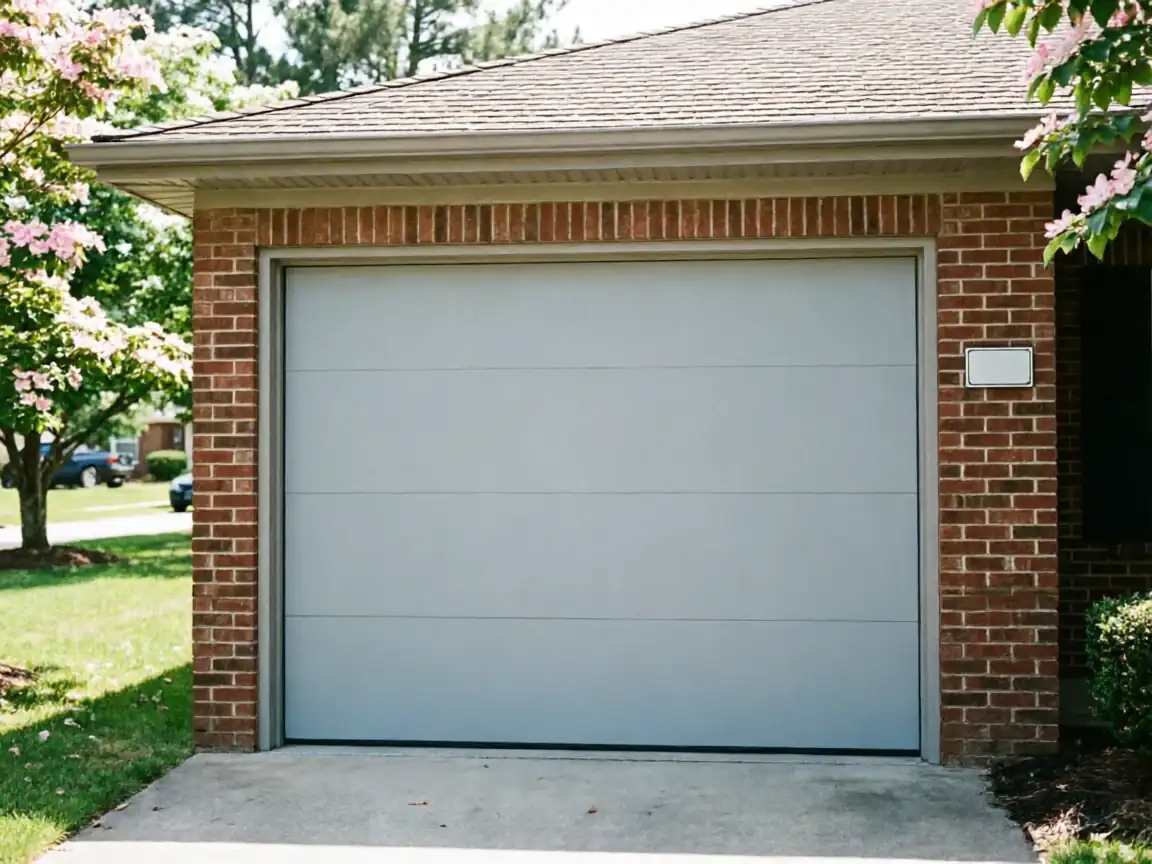
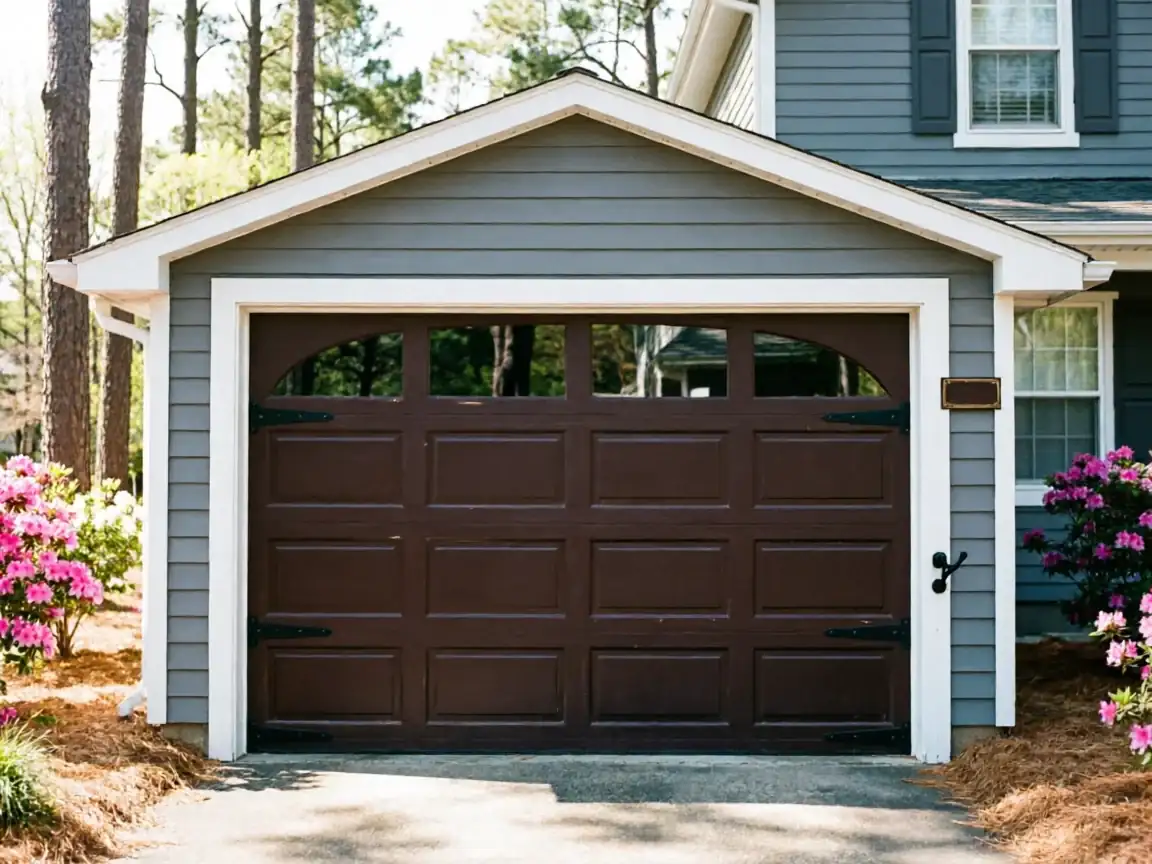
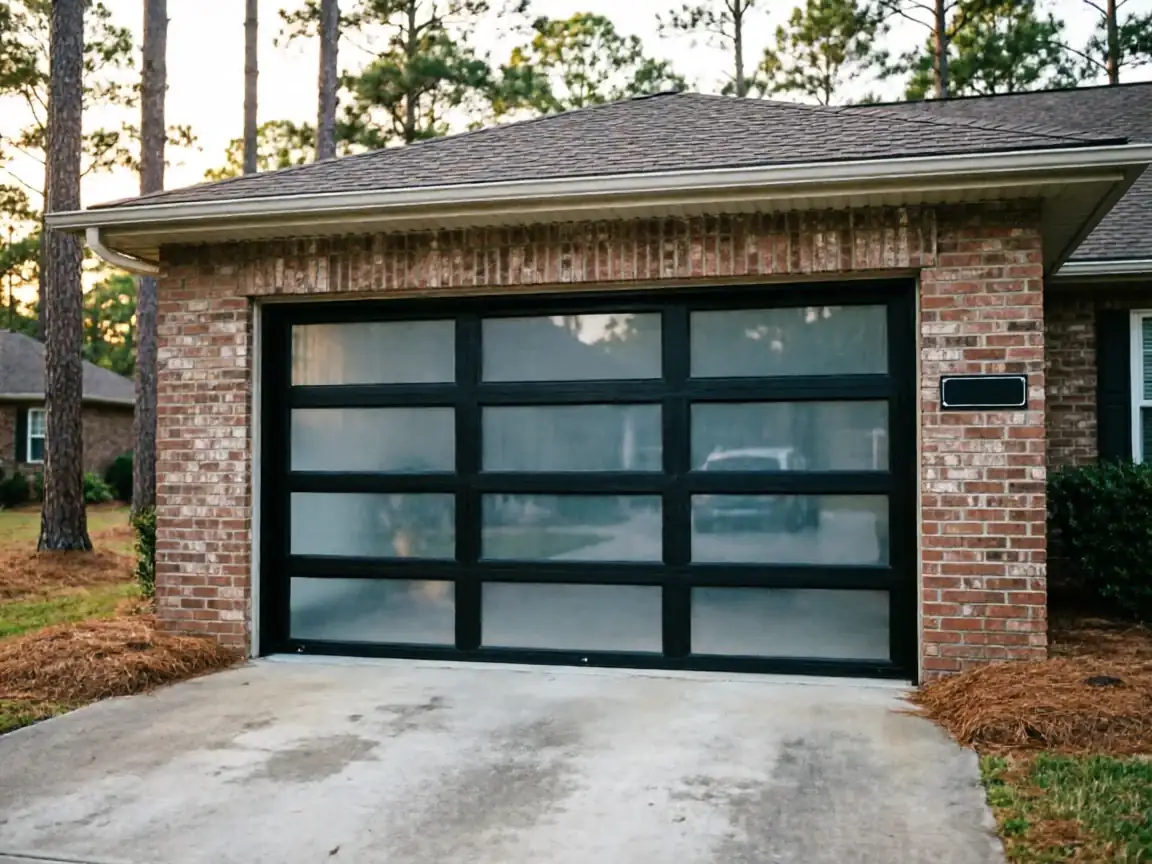
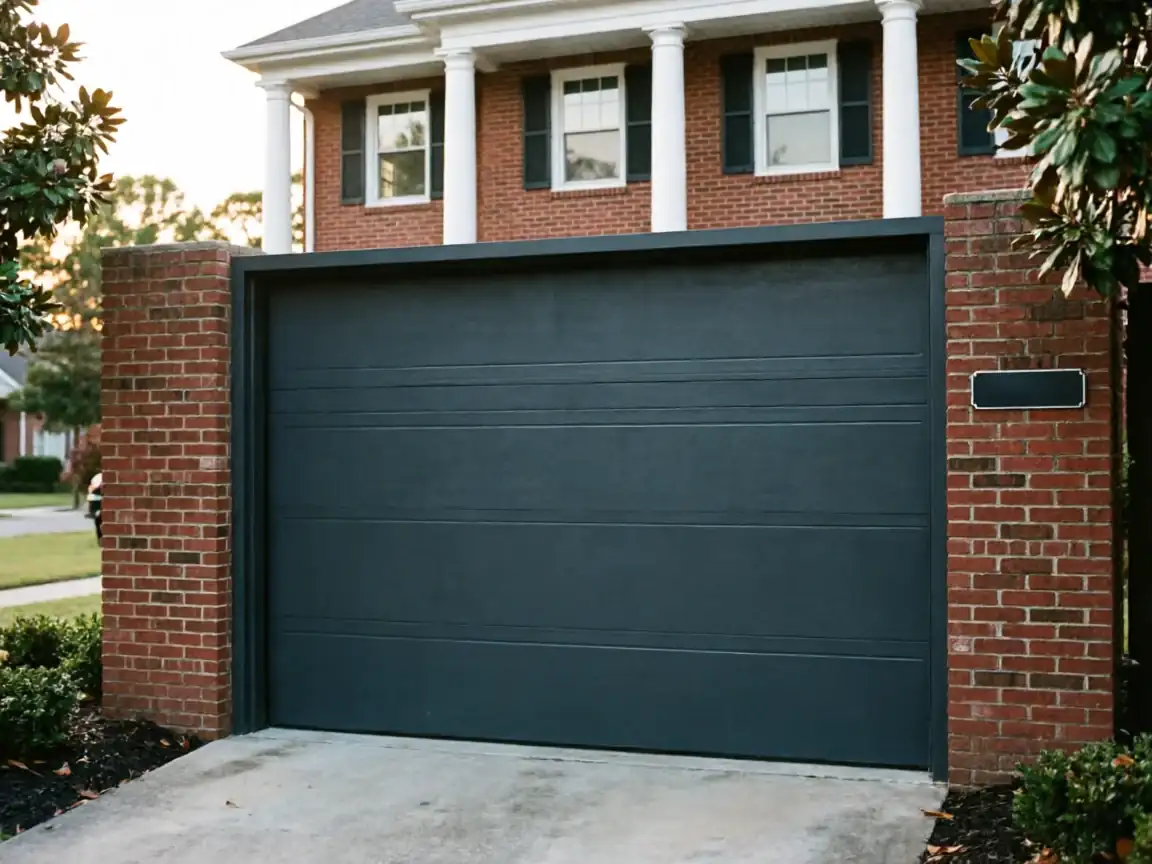
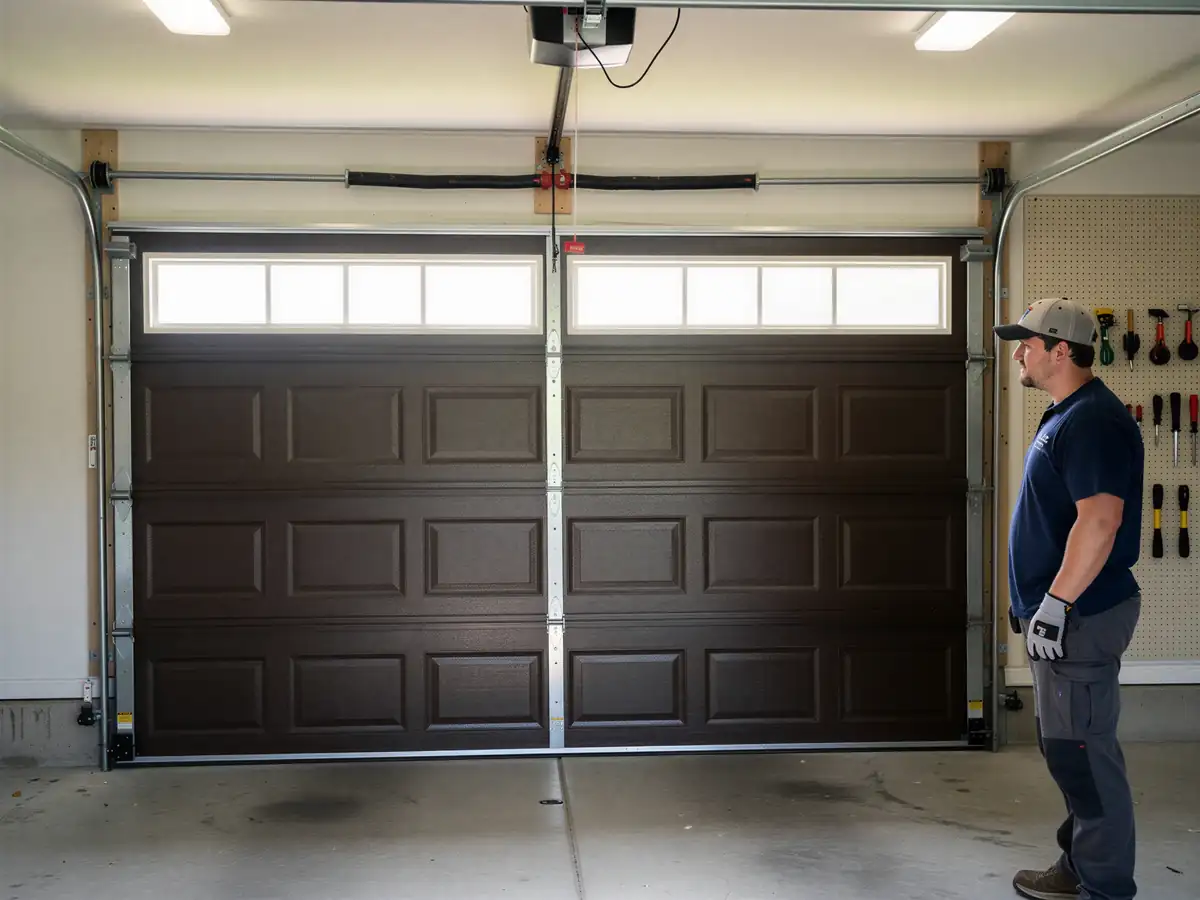
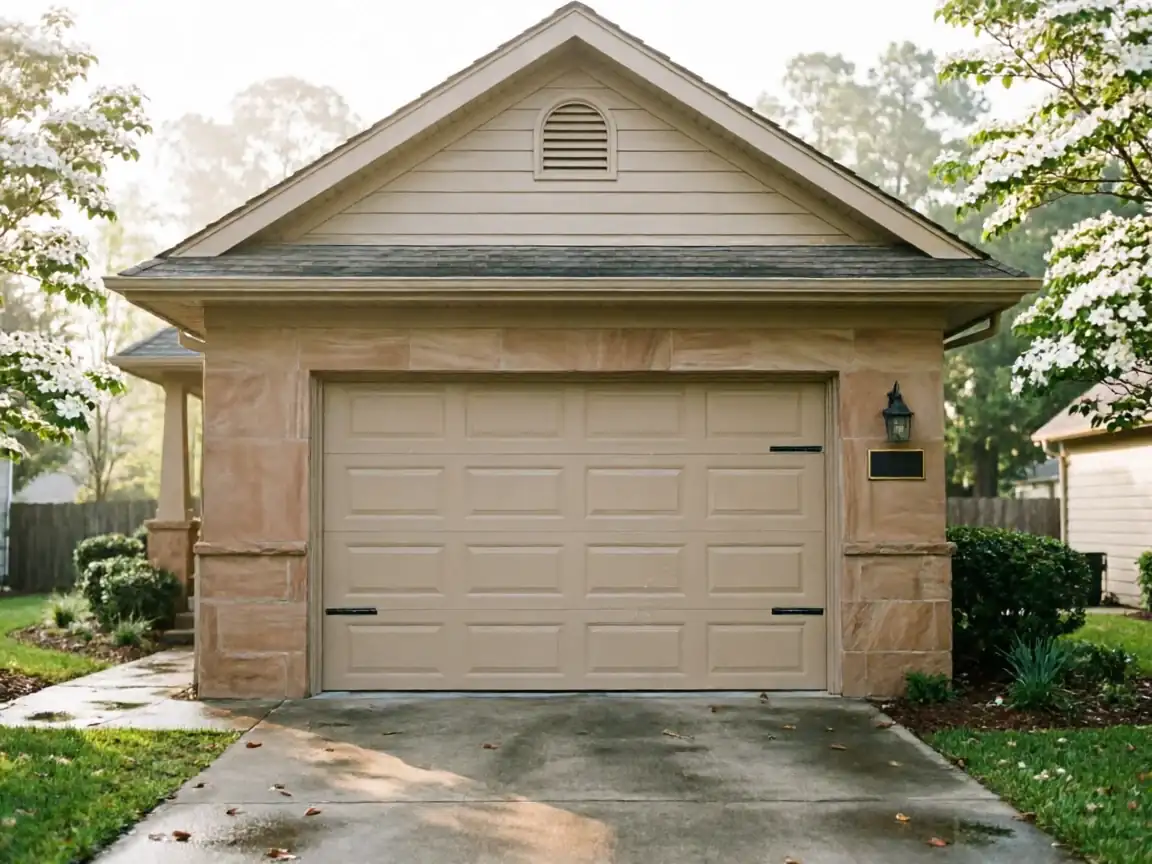
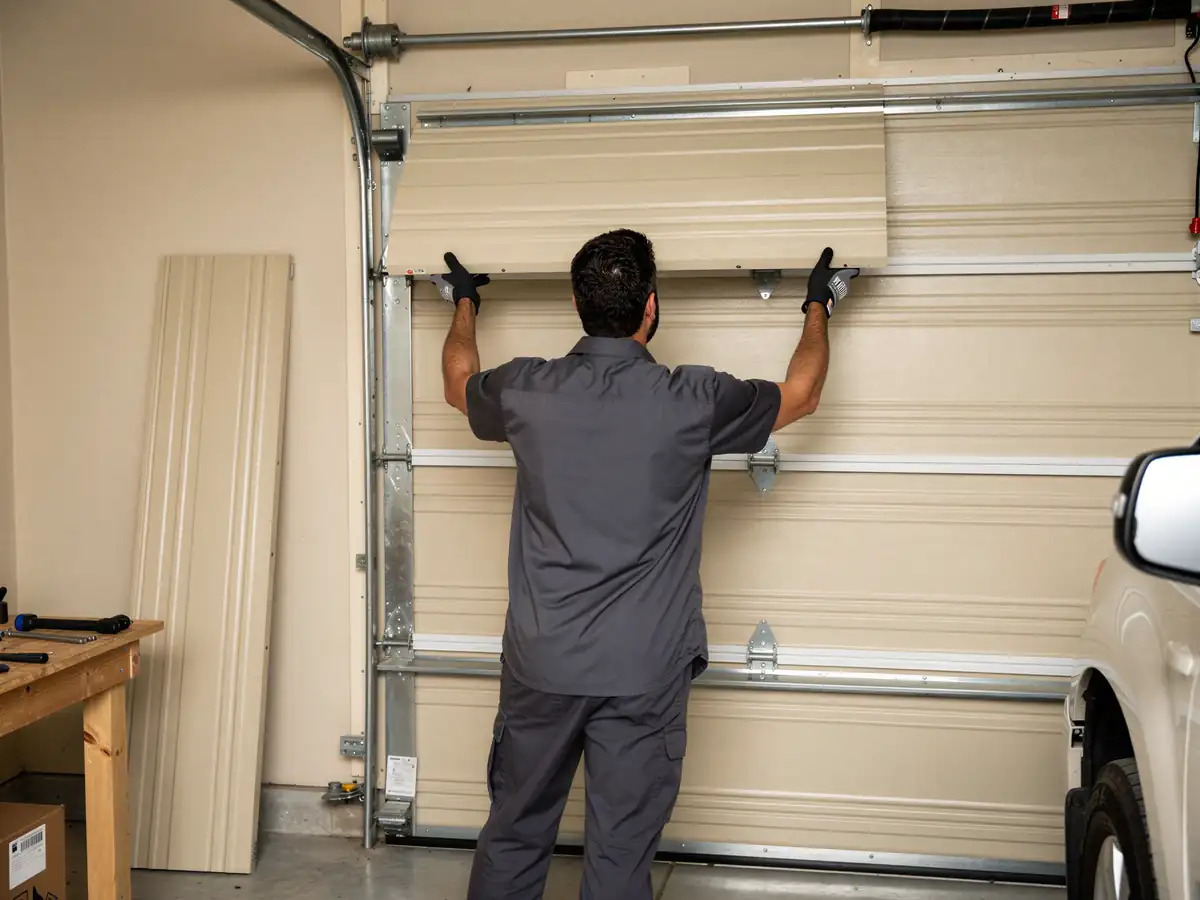
Most houses in Euharlee went up around 1996, which puts the garage door squarely in the steel raised-panel era - not the old flat wood slabs you'd find on something built in the 1960s, and not the heavier insulated composite doors you see on new construction. These are typically 16x7 double doors or 9x7 singles, steel skin over a foam core, usually two or three horizontal panel sections bolted to the door's hinge stiles. The foam adds some insulation value, which matters here given the area's moderate cold winters, but it also means a cracked panel skin lets cold air straight into the foam and the garage behind it. We stock standard steel panel sections in the common long-panel and short-panel profiles that fit doors from this build era, plus the matching end stiles and hinges. What we don't keep on the truck is anything custom - carriage-house overlay panels, wood-look composite, or odd window-insert configurations. If your door has one of those, we'll need to order the exact match before we can finish the job, and that can mean a return trip.
What Causes It Around Here
The two most common ways we see Euharlee panels damaged are backing into the door with a vehicle - bumper height lines up almost exactly with the bottom panel seam on these builder-grade doors - and foam-core cracking from age. A door installed around 1996 is pushing close to thirty years old, and steel skins that thin flex more than they used to, especially on the bottom panel where ground-level impacts and moisture wicking up from the slab both take a toll. We don't see the ice-dam cracking that colder climates get, but the area's moderate winters still bring enough freeze-thaw cycling to stress foam adhesive bonds at the panel seams over decades. Basketball and lawn equipment dings round out the list, usually on single-car doors.
Doing It Yourself
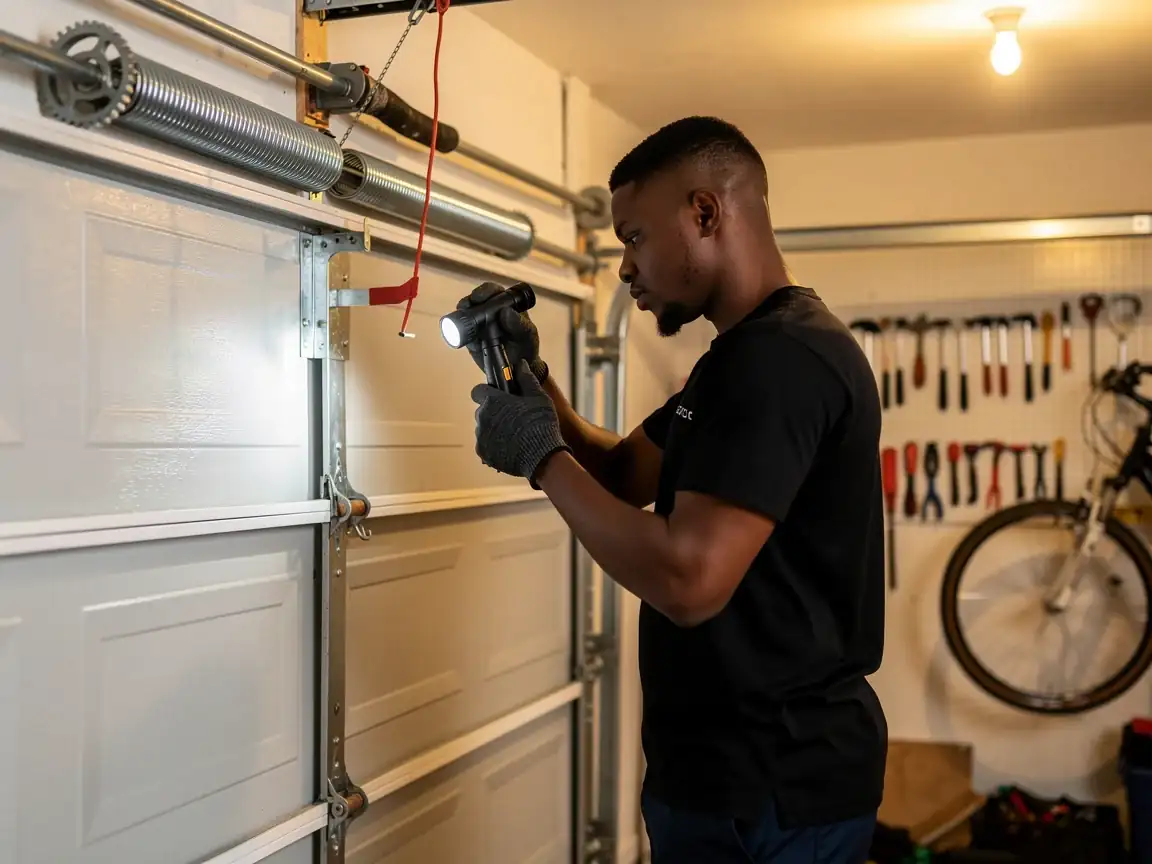
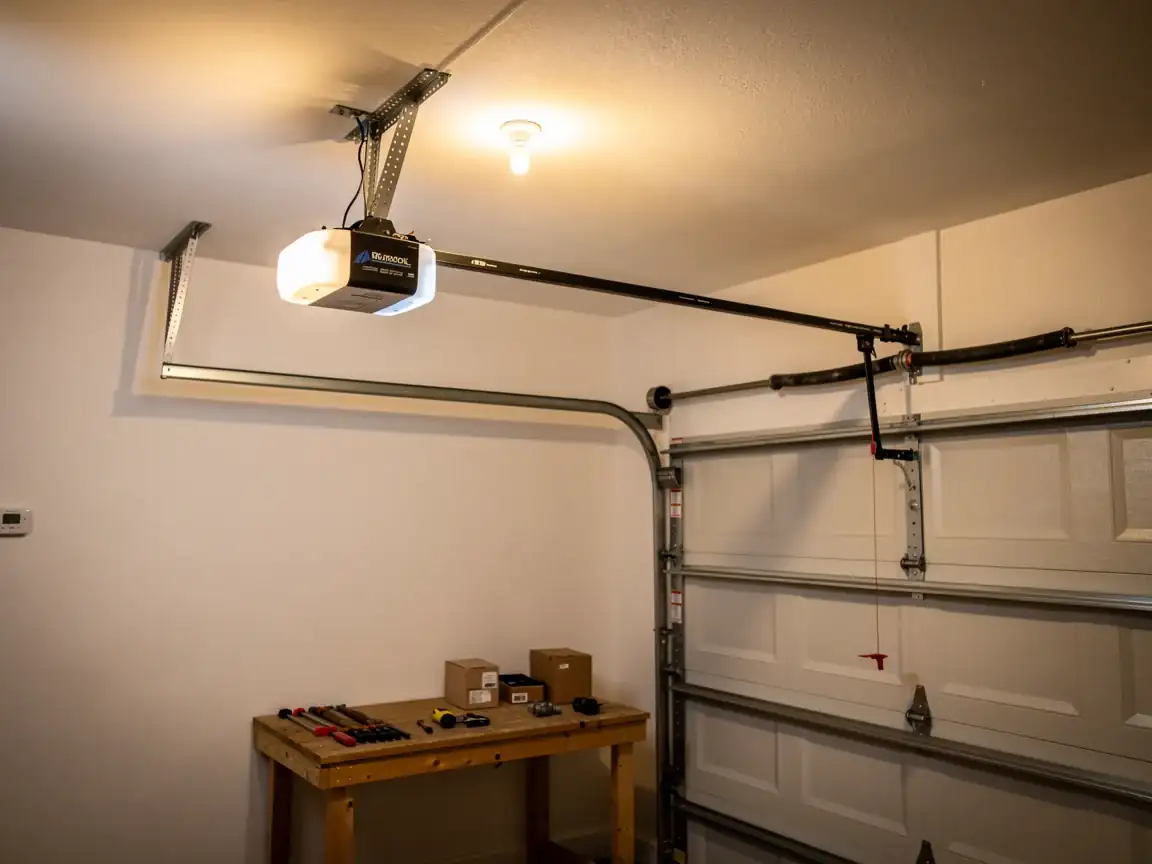
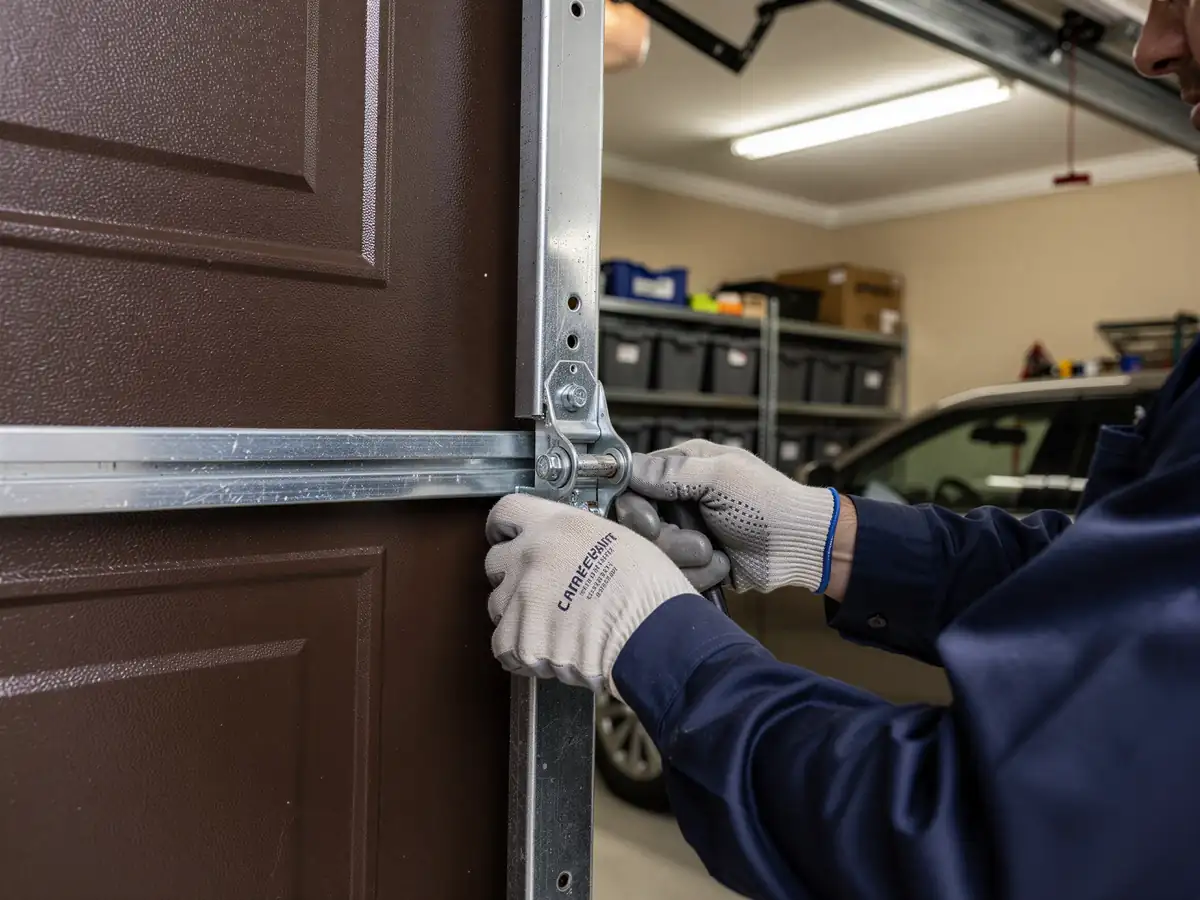
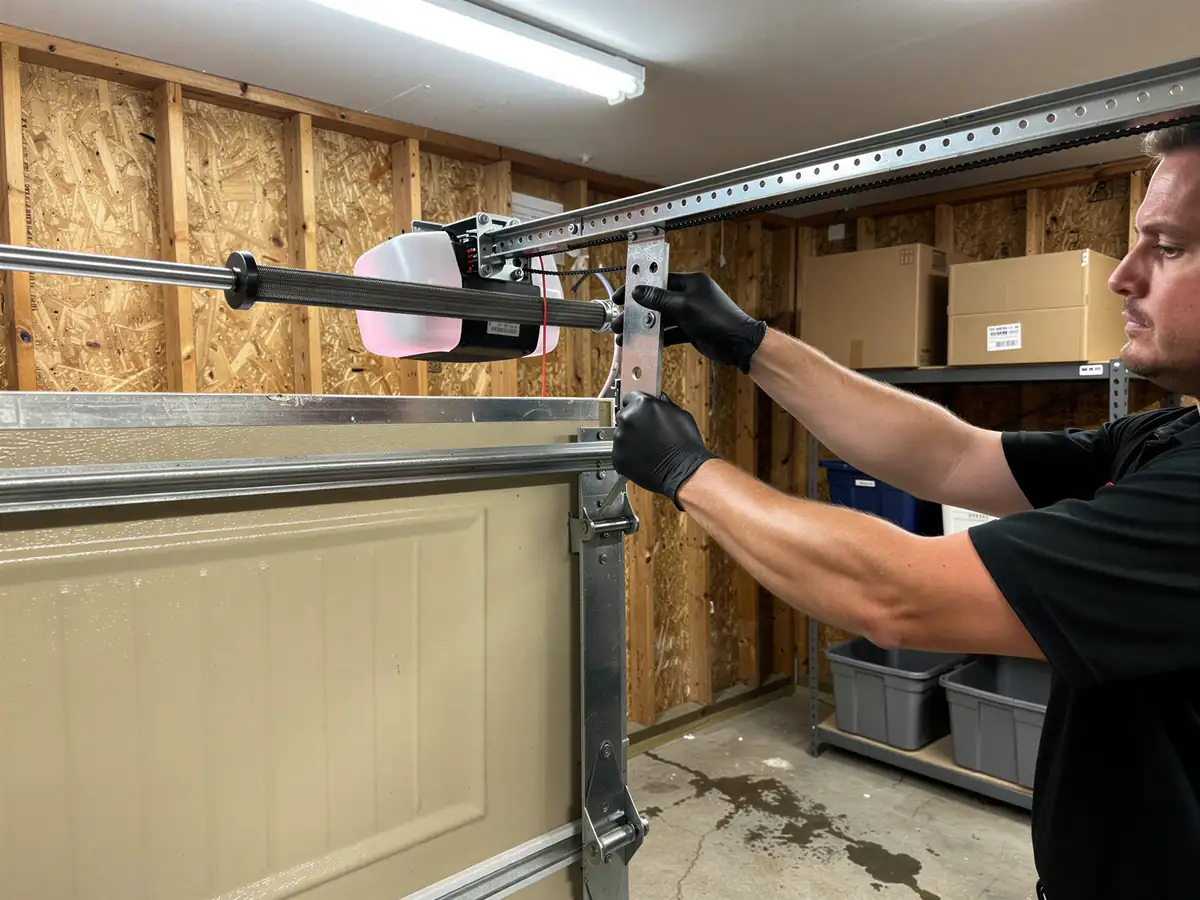
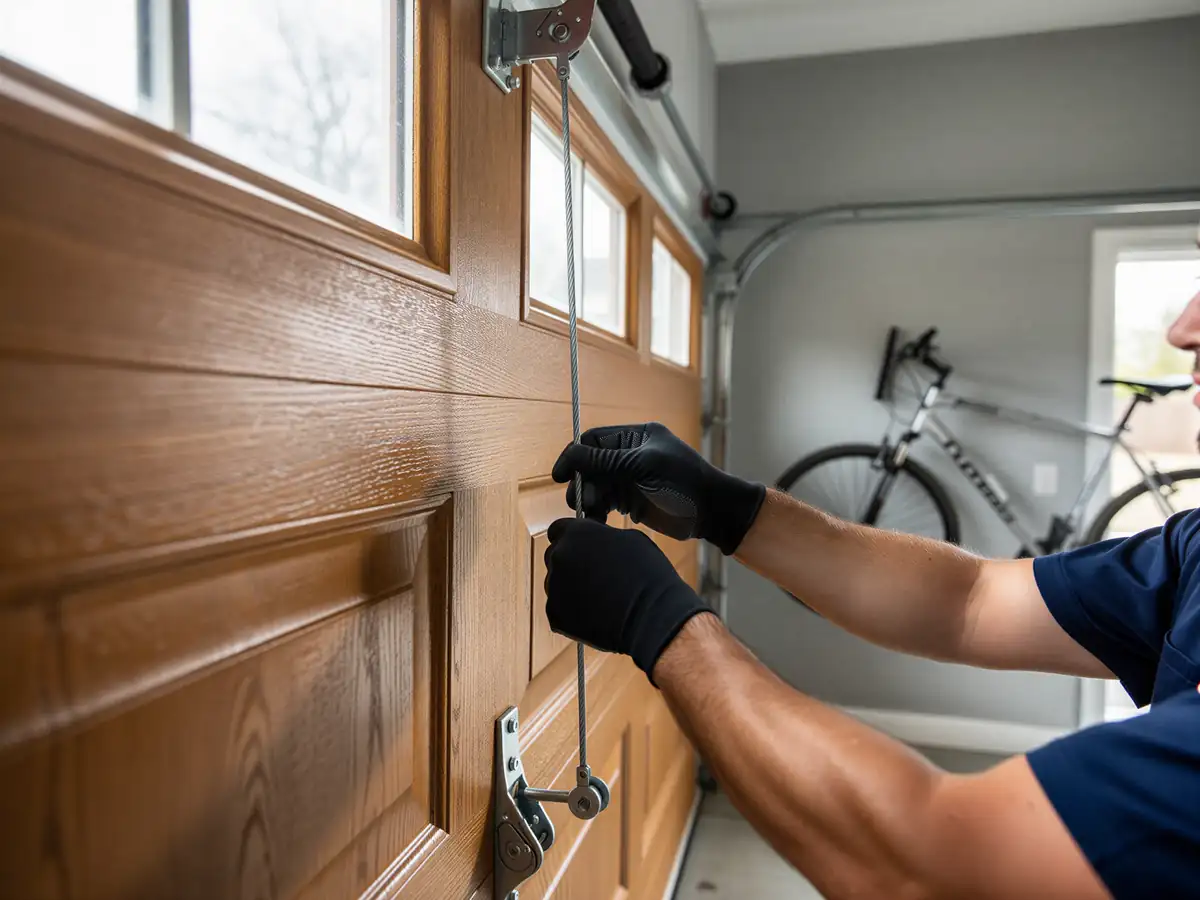
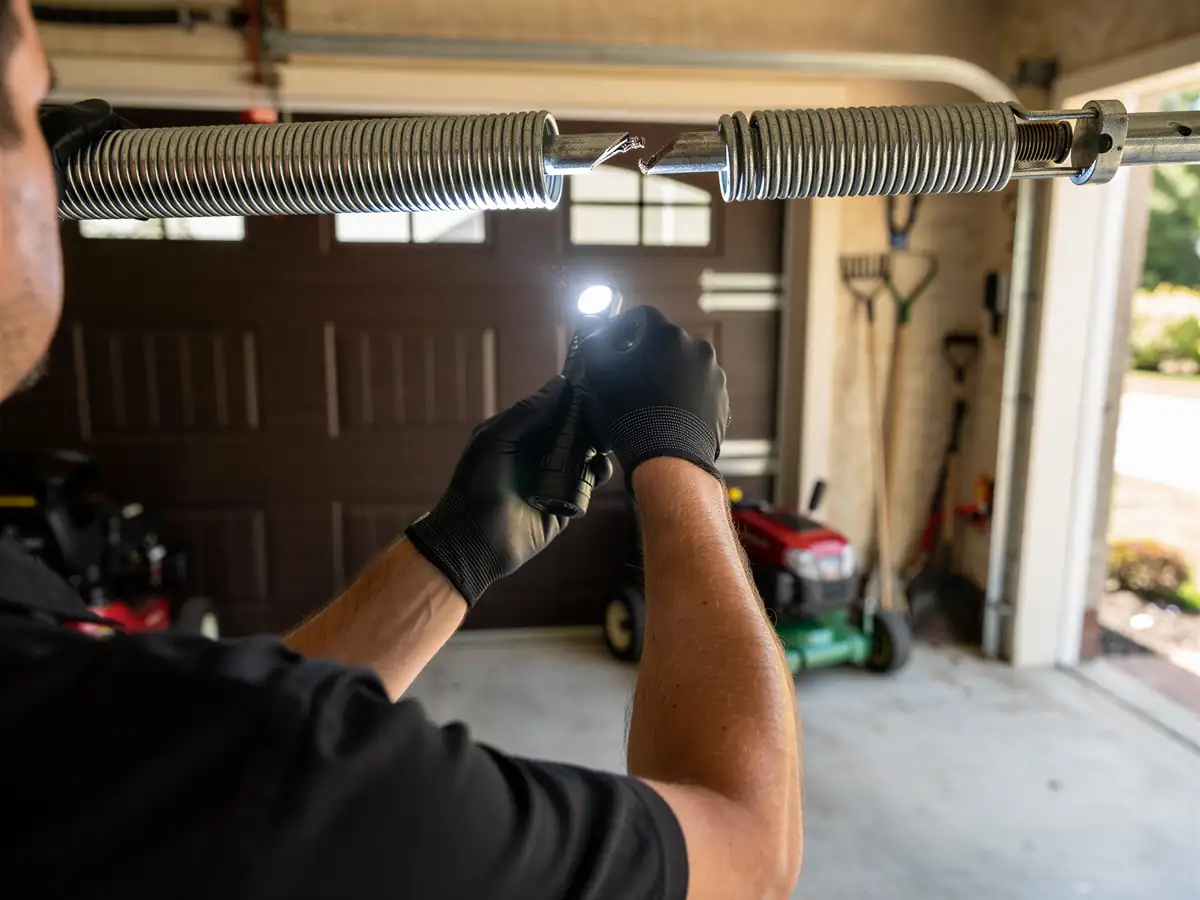
Swapping a single panel section on a sectional door is within reach for someone comfortable with a drill and a ladder, provided the door isn't under spring tension while you work and the hinges aren't rusted into the stiles - common on original 1996 hardware. Where it gets risky is a bottom panel with the bottom bracket attached, since that bracket is under constant cable tension from the torsion or extension spring system and letting it go wrong can snap a cable under load. We'd rather tell you that upfront than have you find out mid-job. If it's a mid-panel with no brackets or weatherstrip retainer involved, it's a reasonable weekend project. Anything touching the bottom bracket, the spring, or the opener arm, call it in.
How It Shows Up
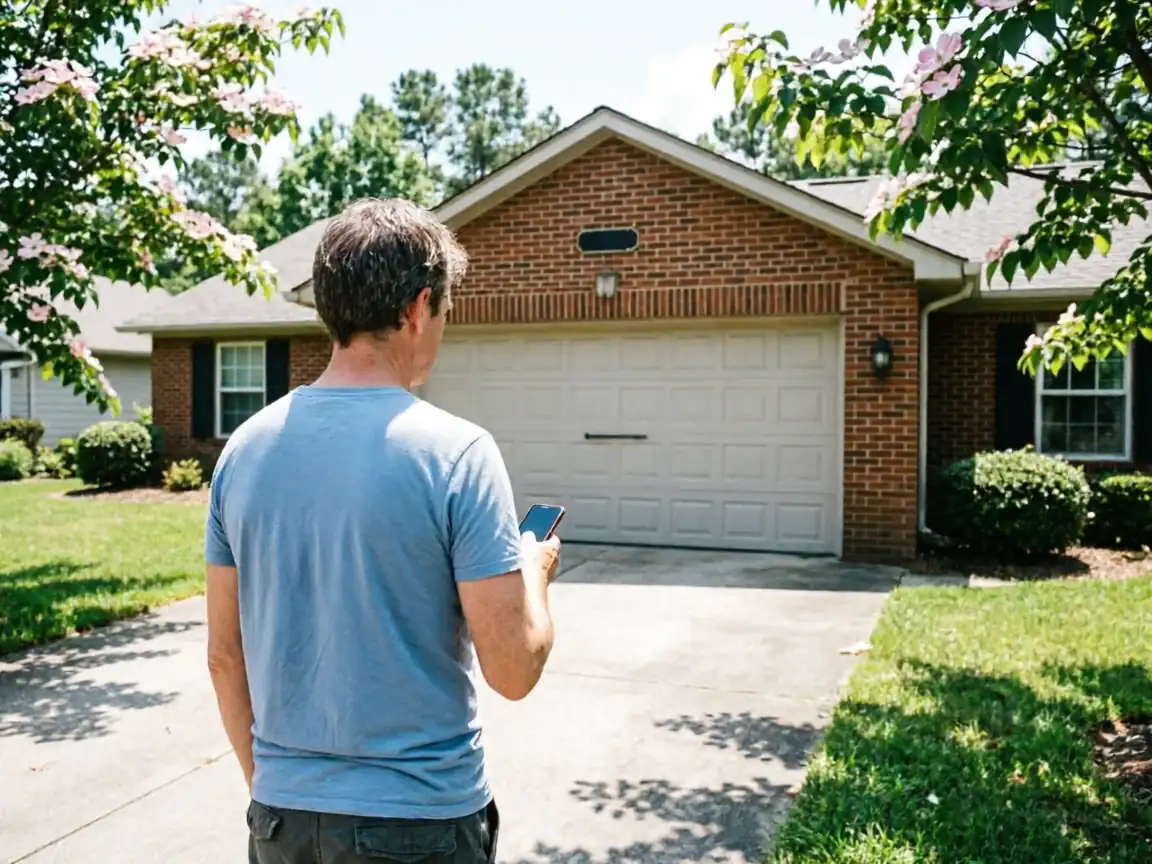
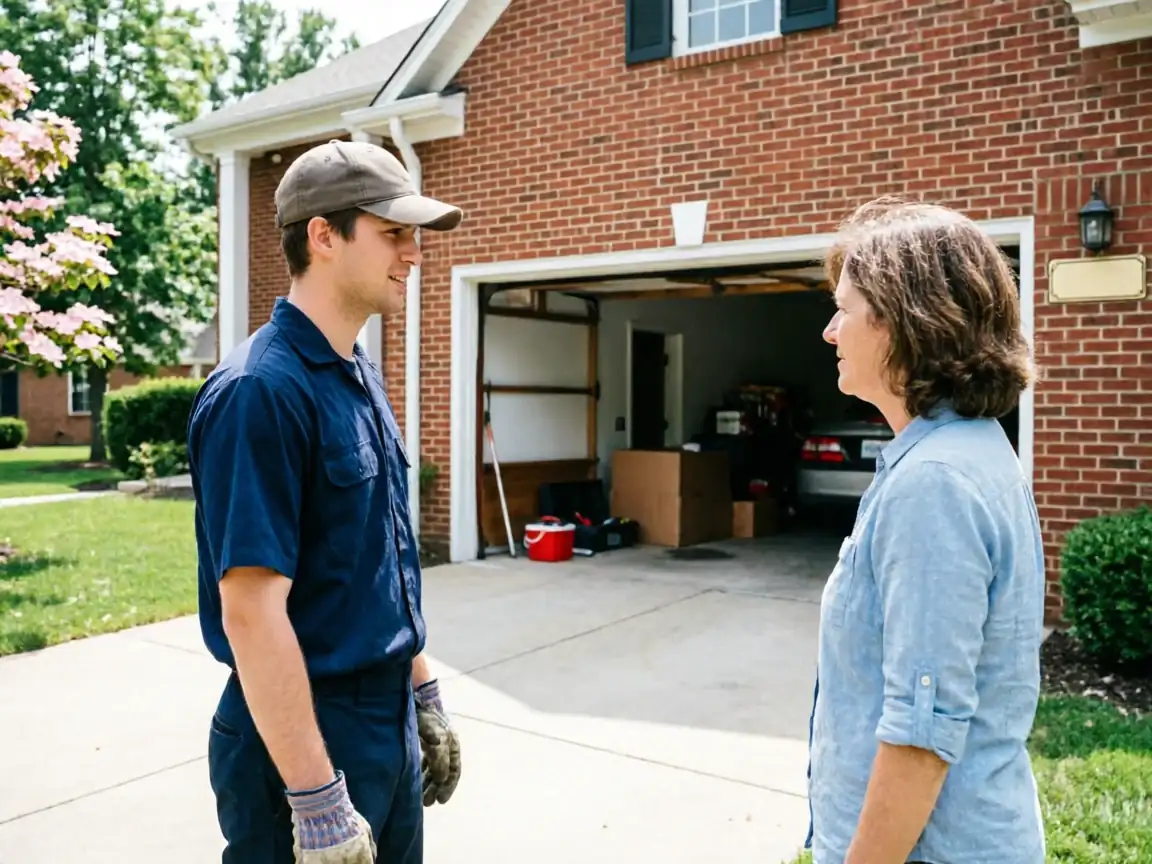
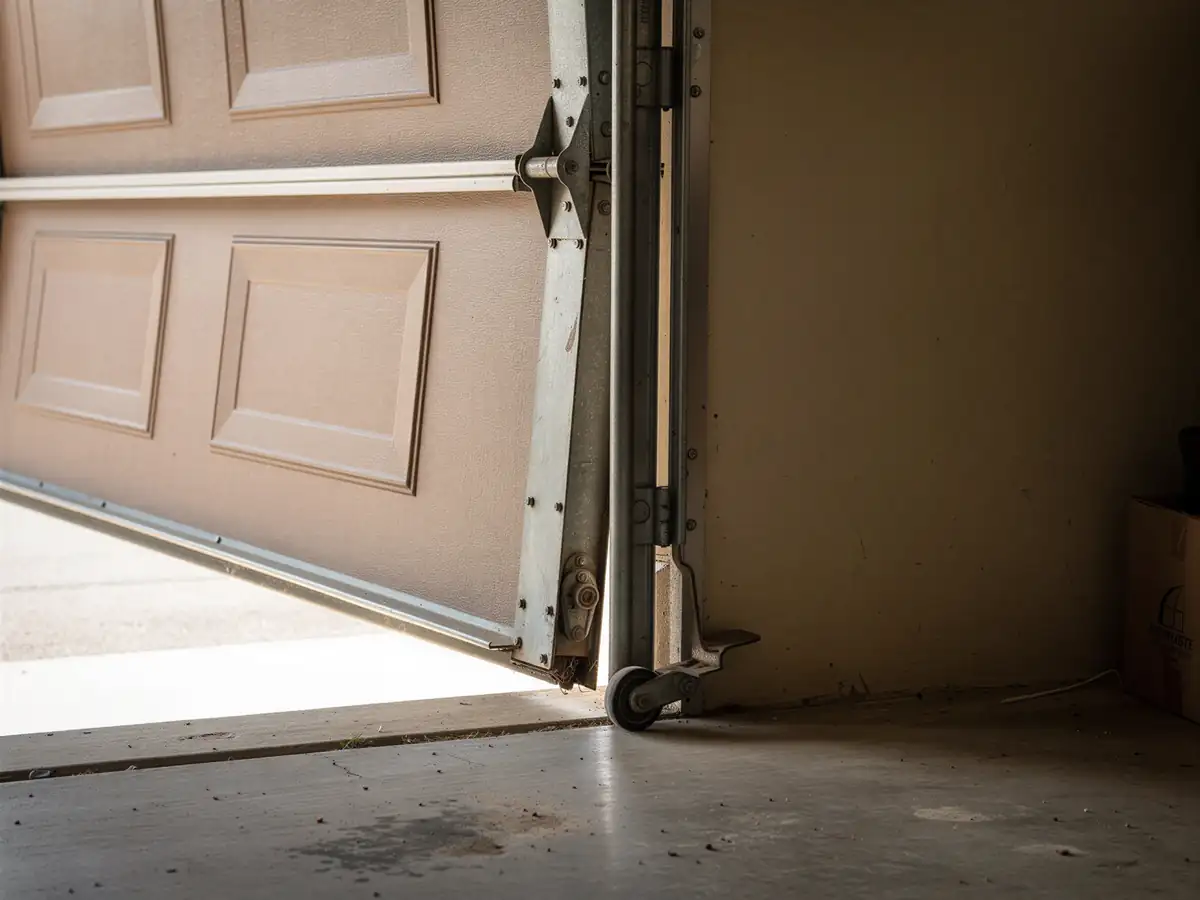
You'll usually notice it as a visible dent or crack on one section, often the bottom panel, sometimes with daylight showing through at a seam if the foam core has separated from the steel skin. Some owners notice the door running louder or shuddering partway through its cycle before they ever see the dent - that's the panel flexing against the track roller on each pass. If you're driving the 16 miles out from Acworth's side of things mentally and wondering whether it's worth the trip, a single cracked panel on an otherwise sound door almost always is. A door with multiple failing panels or one where the track and opener are also showing their age is a different conversation, and we'll have it honestly when we're standing in front of it.