How It Shows Up
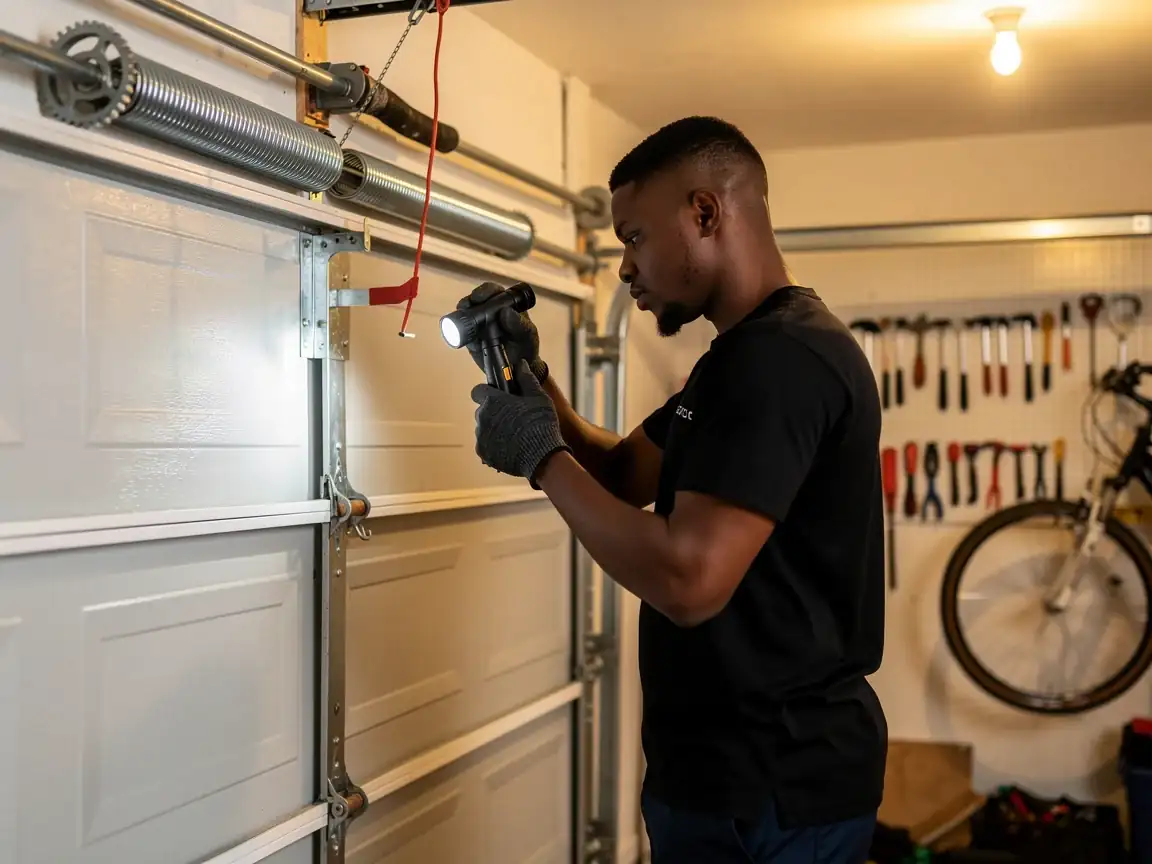
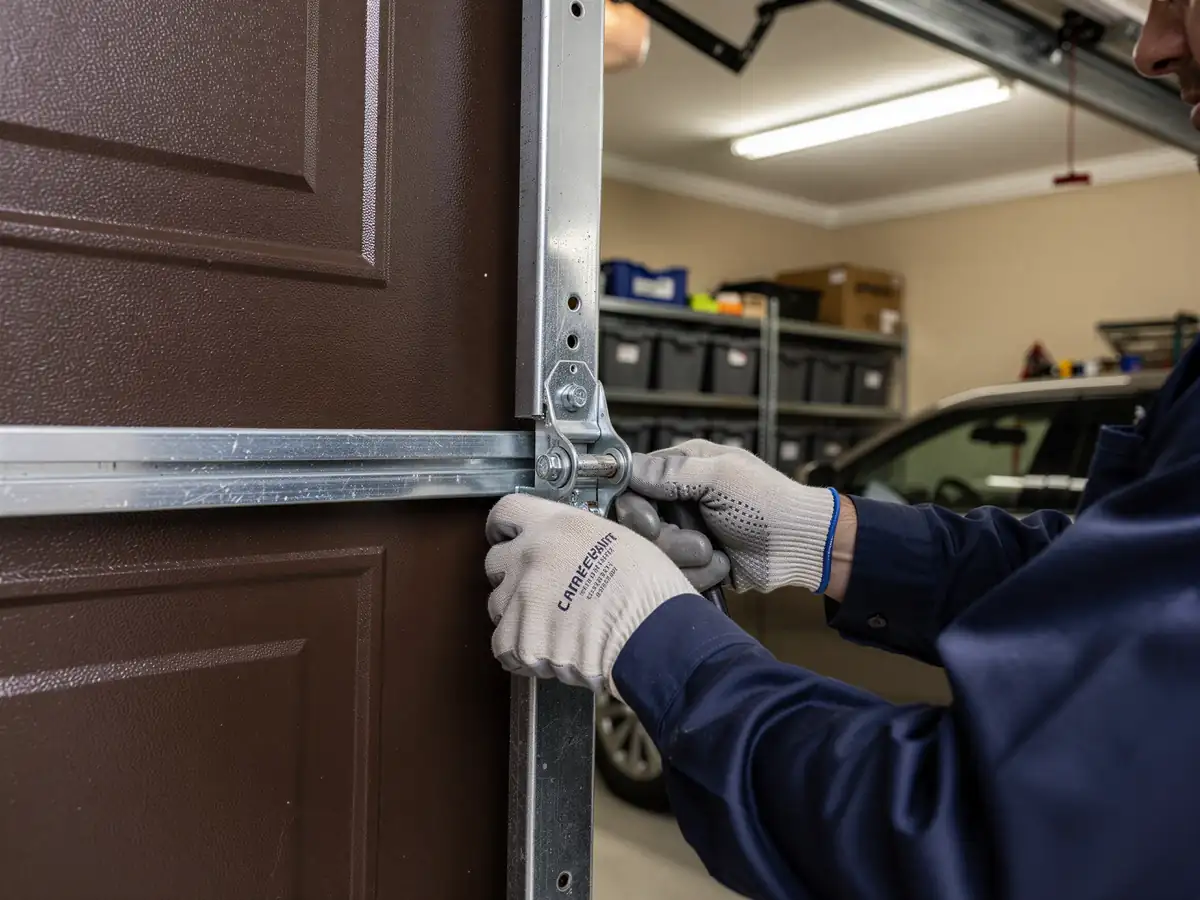
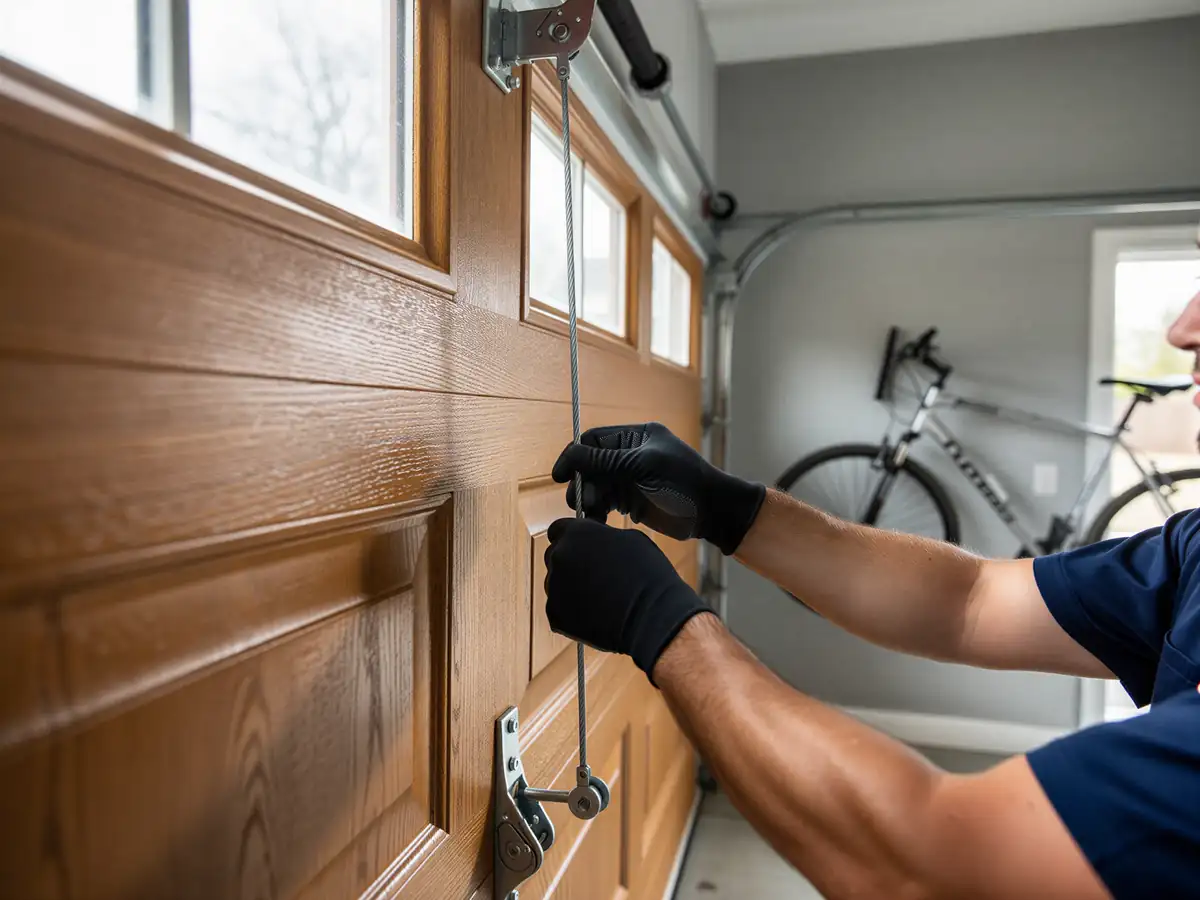
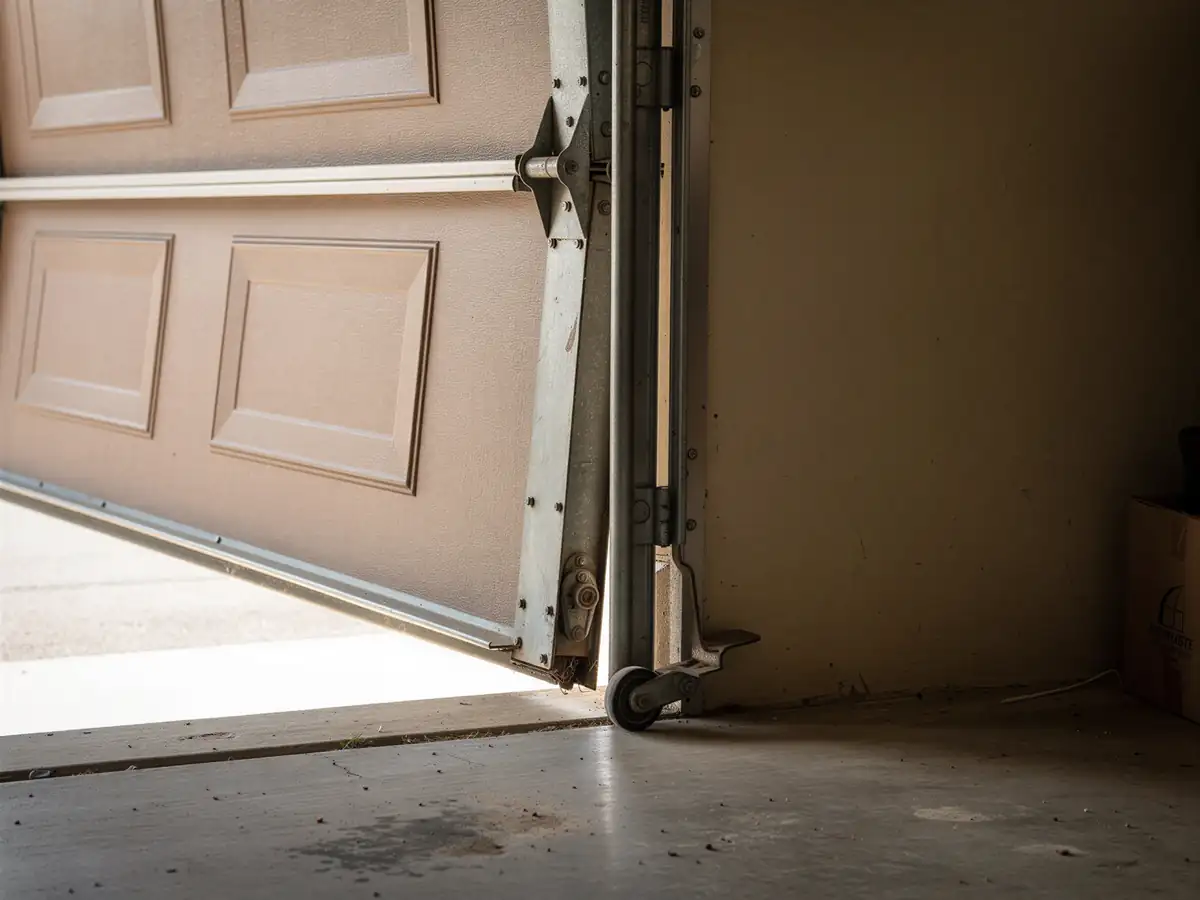
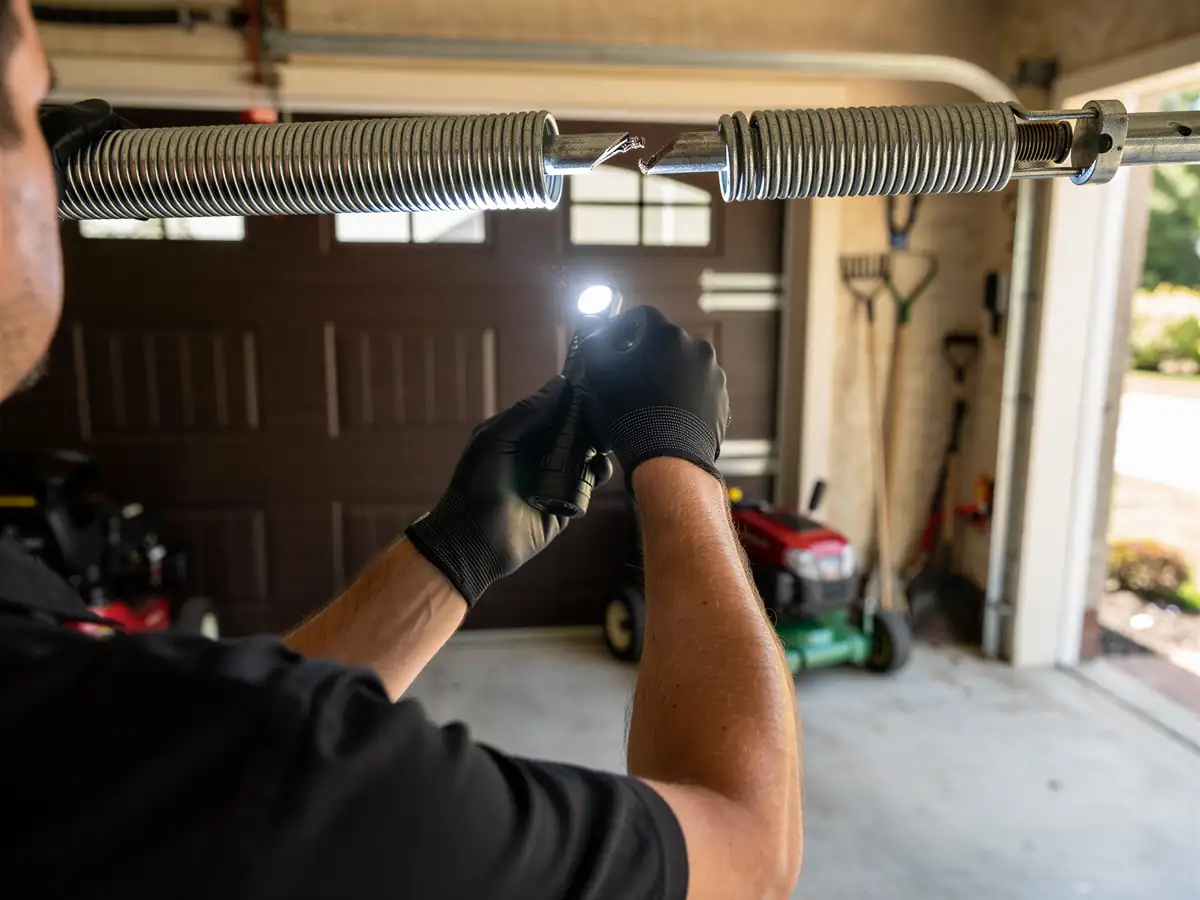
Most emergency calls start the same two ways: the door won't move at all, or it moves and then slams. A torsion spring lets go with a bang loud enough to bring neighbors outside, and the door locks in place - the opener will strain against it, strip a gear, and still go nowhere. The other common version is a cable that jumps the drum or frays through, which lets one side of the door drop while the other stays up, racking the door sideways in the track.
On newer openers you'll sometimes get a different kind of emergency: the safety sensors throw a fault code and the door refuses to close, which is less dramatic but just as urgent if you're trying to leave for work or lock up for the night. Across the roughly 37,582 households in this service area, we see all three of these multiple times a week, not as rare events but as the normal failure pattern for doors that have been running for fifteen-plus years.
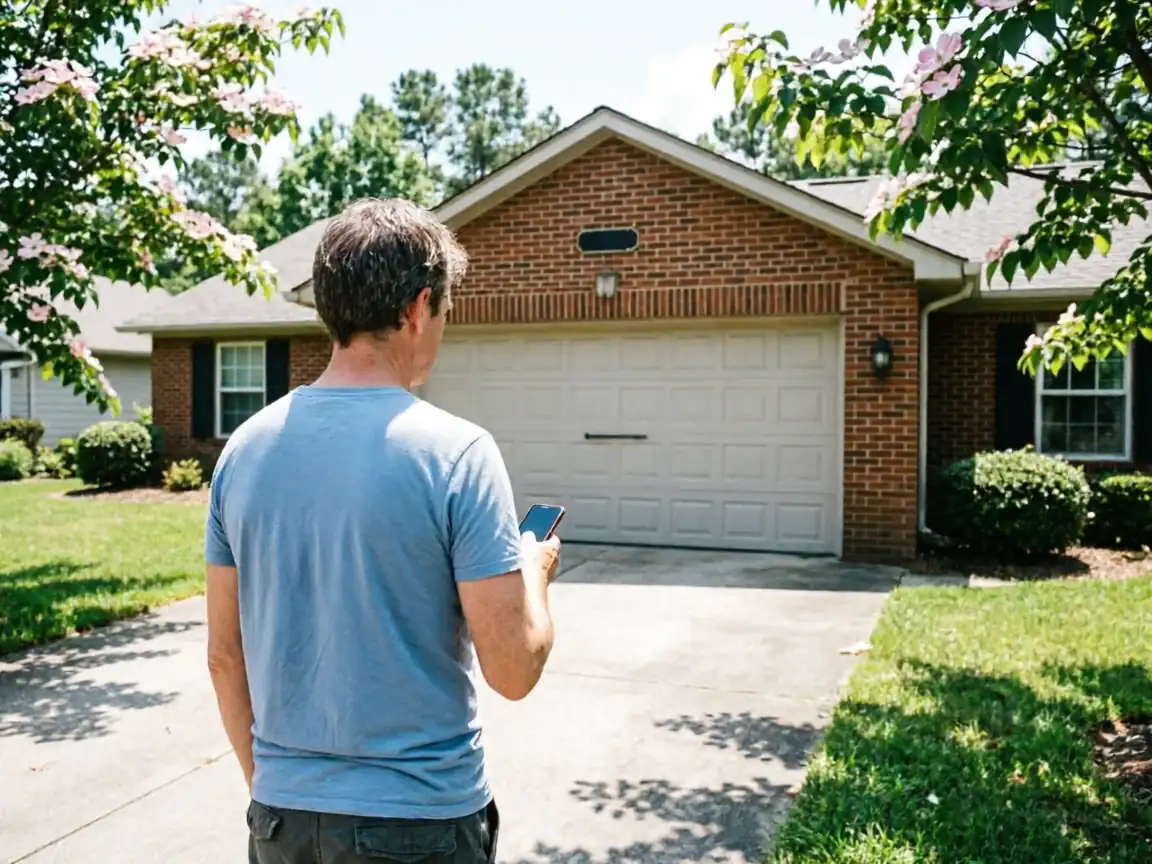
An emergency call is really just a regular failure that happened on a bad day - stuck open with the car inside, stuck shut with groceries in the trunk, or a spring that let go five minutes before you needed to leave.
Where This Job Goes Sideways
The trouble starts when someone tries to force a stuck door
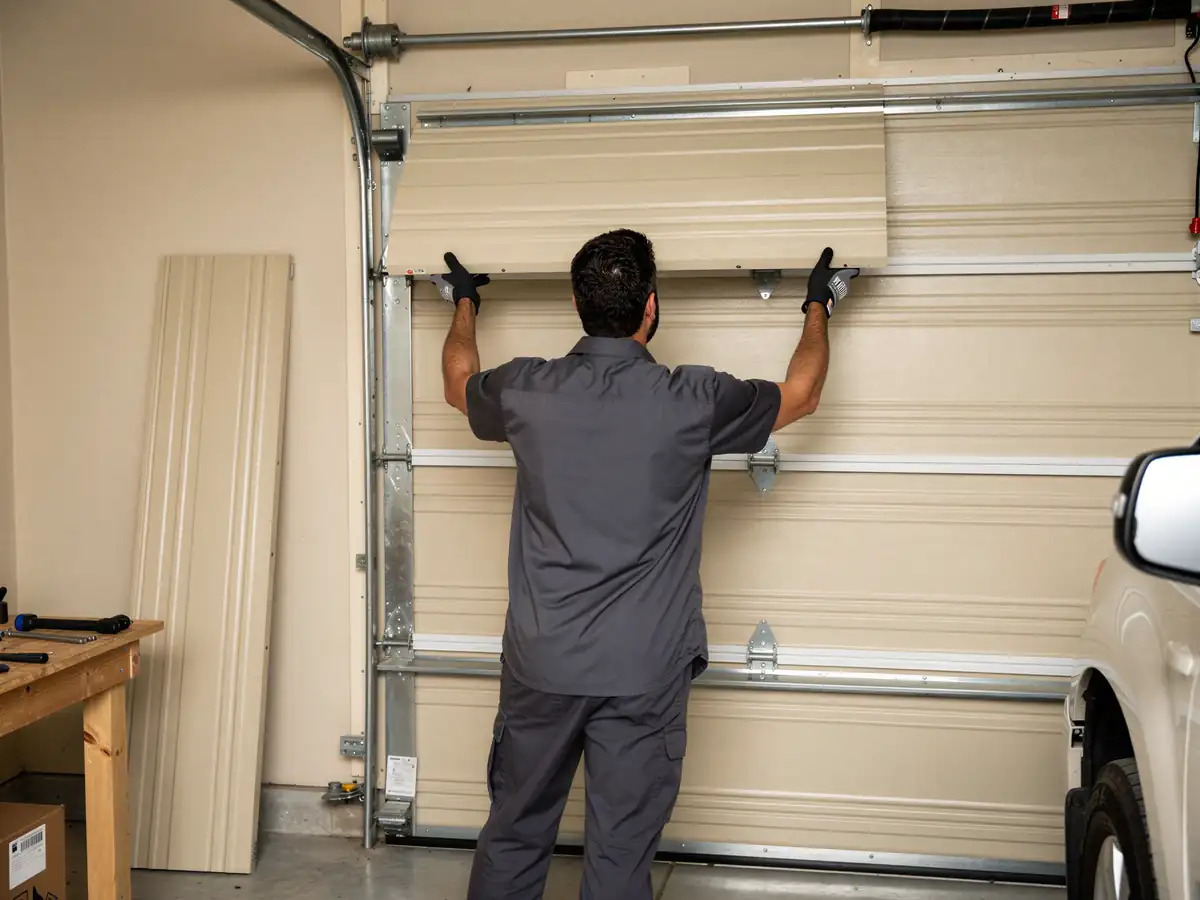
A broken spring with the door down means there's no counterbalance left - the opener or a person pulling the emergency release is fighting the full weight of the door alone, and that's how cables snap, tracks bend, or someone gets hurt. We also see panels cracked because a door got forced past a bent track instead of being freed first.
The other way it goes sideways is diagnosis
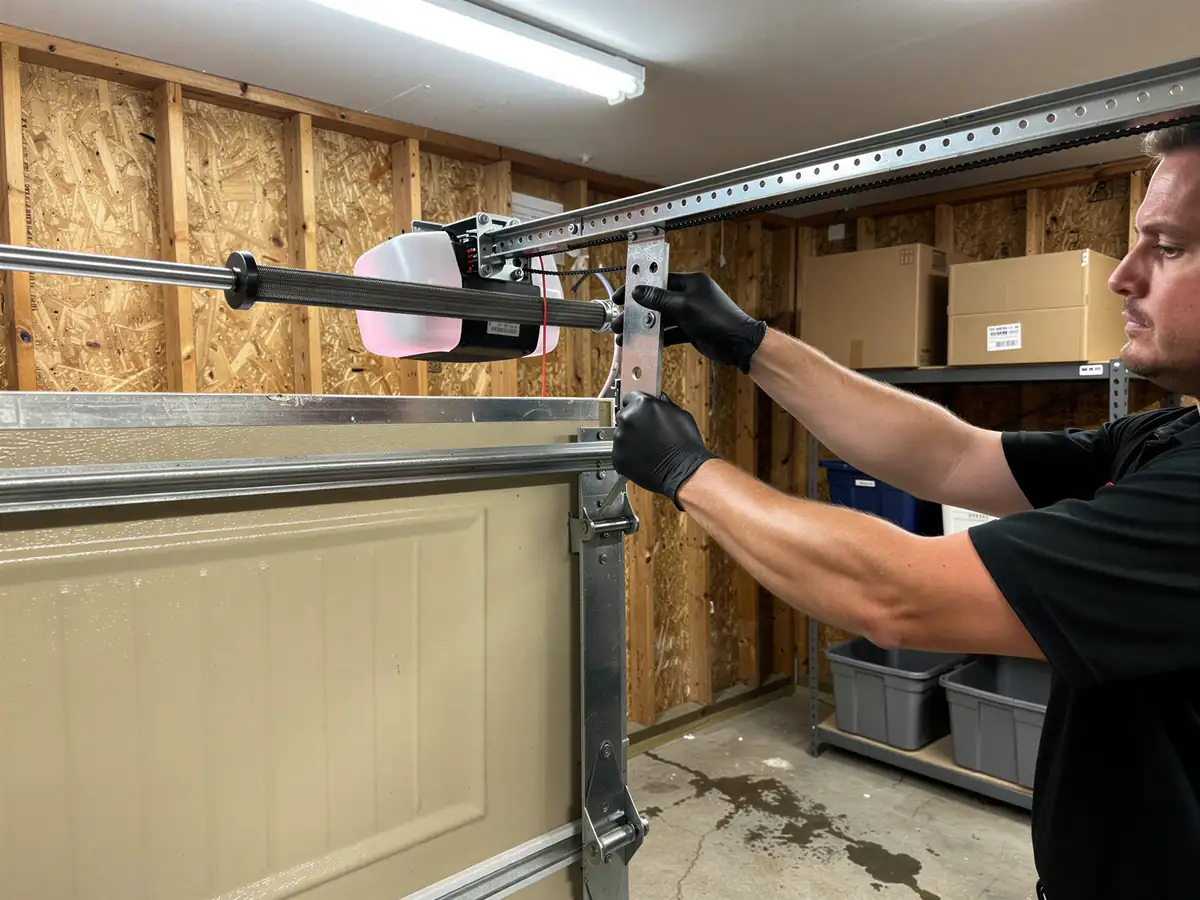
A door that won't close on a photo-eye fault gets misread as a dead opener, and someone replaces the opener when the real problem was a sensor knocked out of alignment or a wire pinched in the track bracket. That's an expensive guess. With household incomes in this area at a median of $78,351, most owners can absorb one unnecessary repair, but it's still money that didn't need to go out the door.
We're honest that not every emergency call is actually an emergency repair
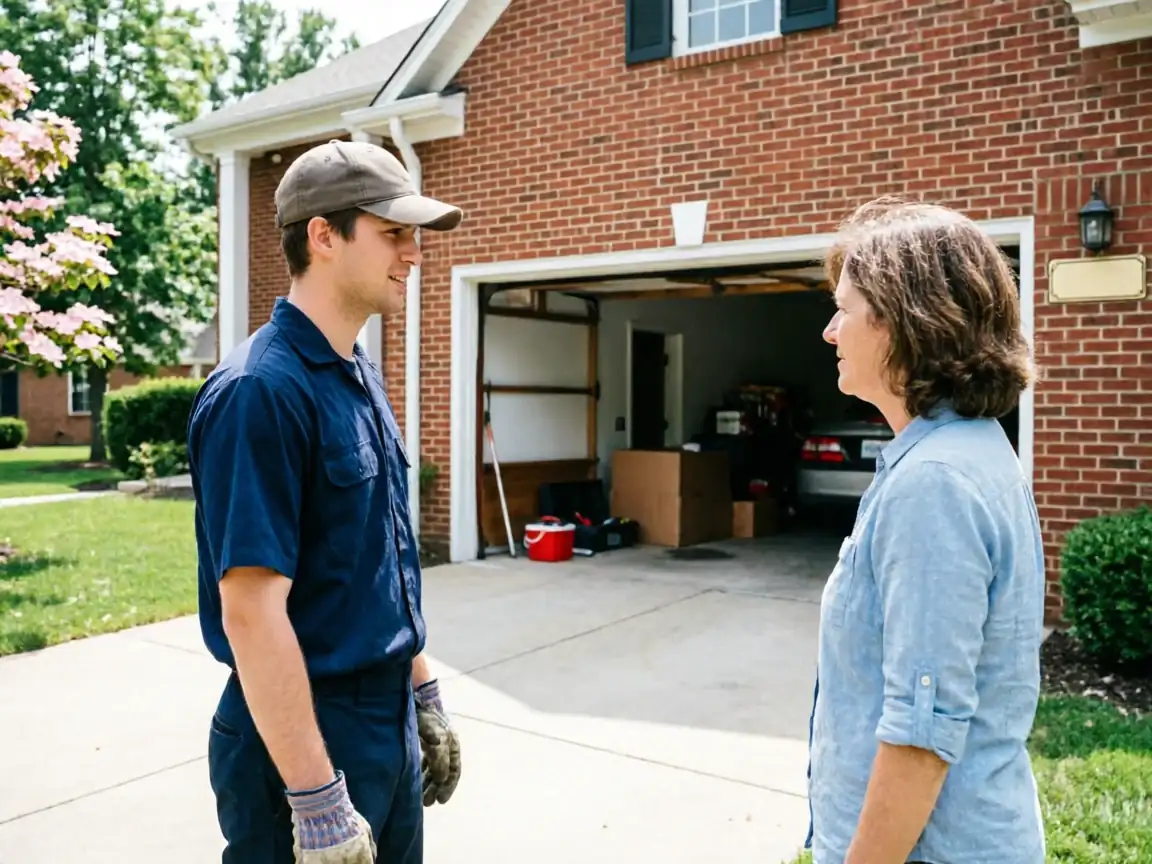
Sometimes it's a five-minute fix once someone who's done it a thousand times looks at it. We'd rather tell you that on the phone than run a truck charge for nothing.
Doing It Yourself
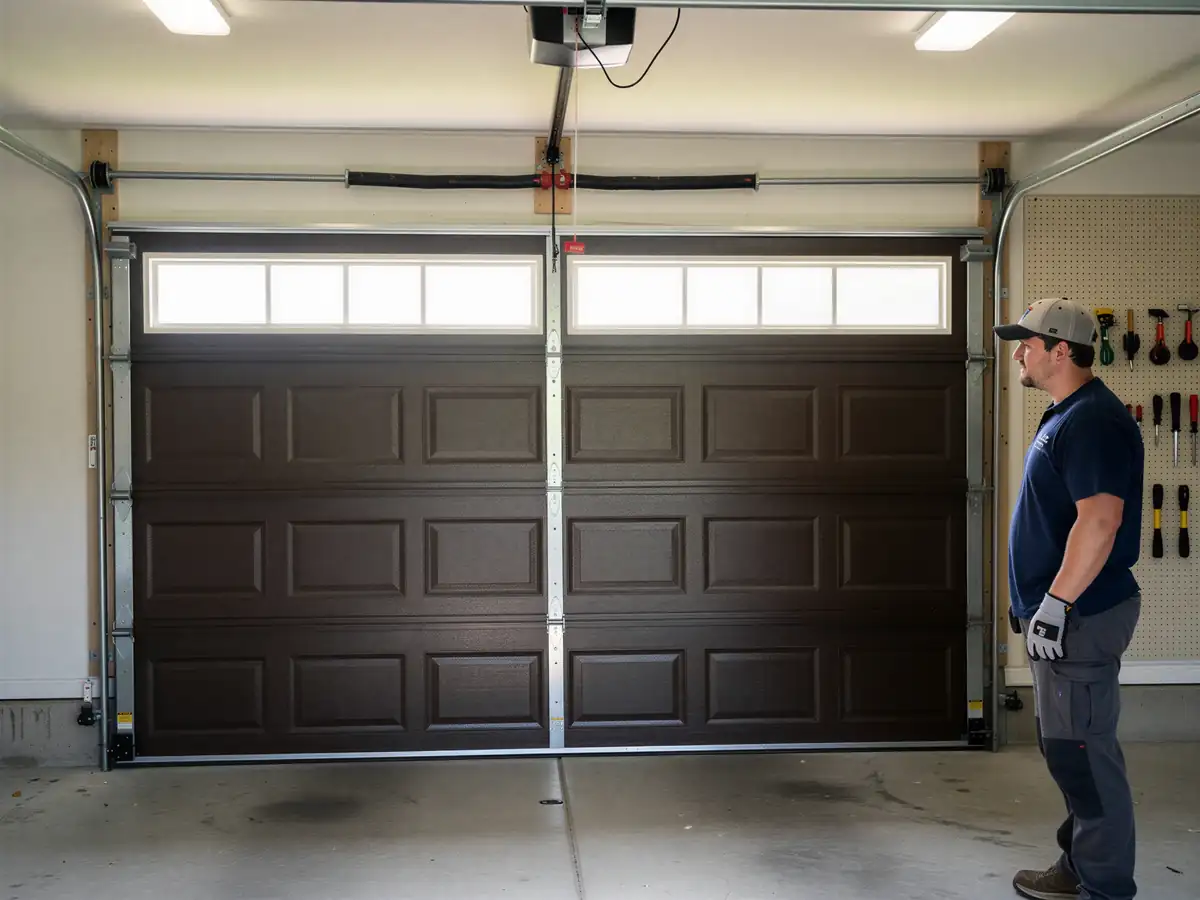
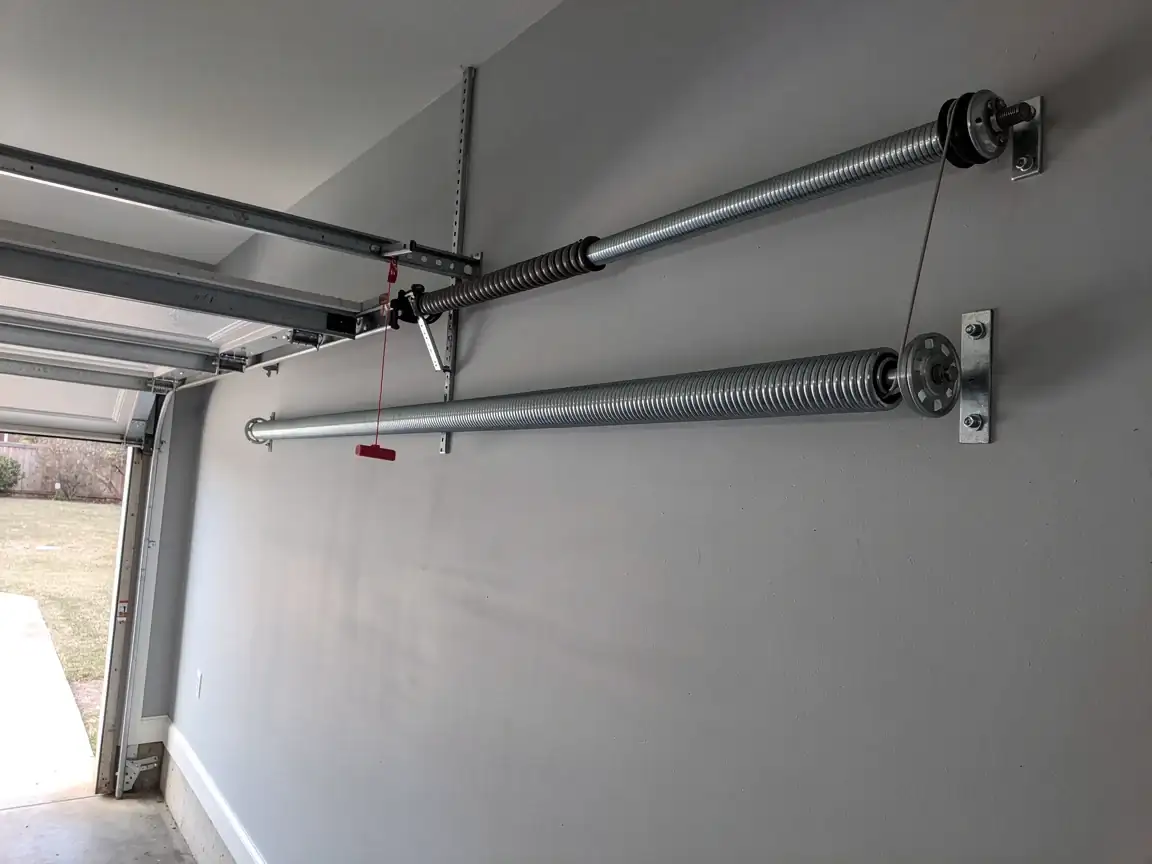
If the door is stuck shut and the spring is clearly broken - you'll see a visible gap in the coil above the door - don't try to lift it by hand or pull the emergency release cord while someone else cranks the door up. The spring is what holds the weight; without it, the door is pure dead load, and torsion spring tension is not a DIY repair even with the right tools.
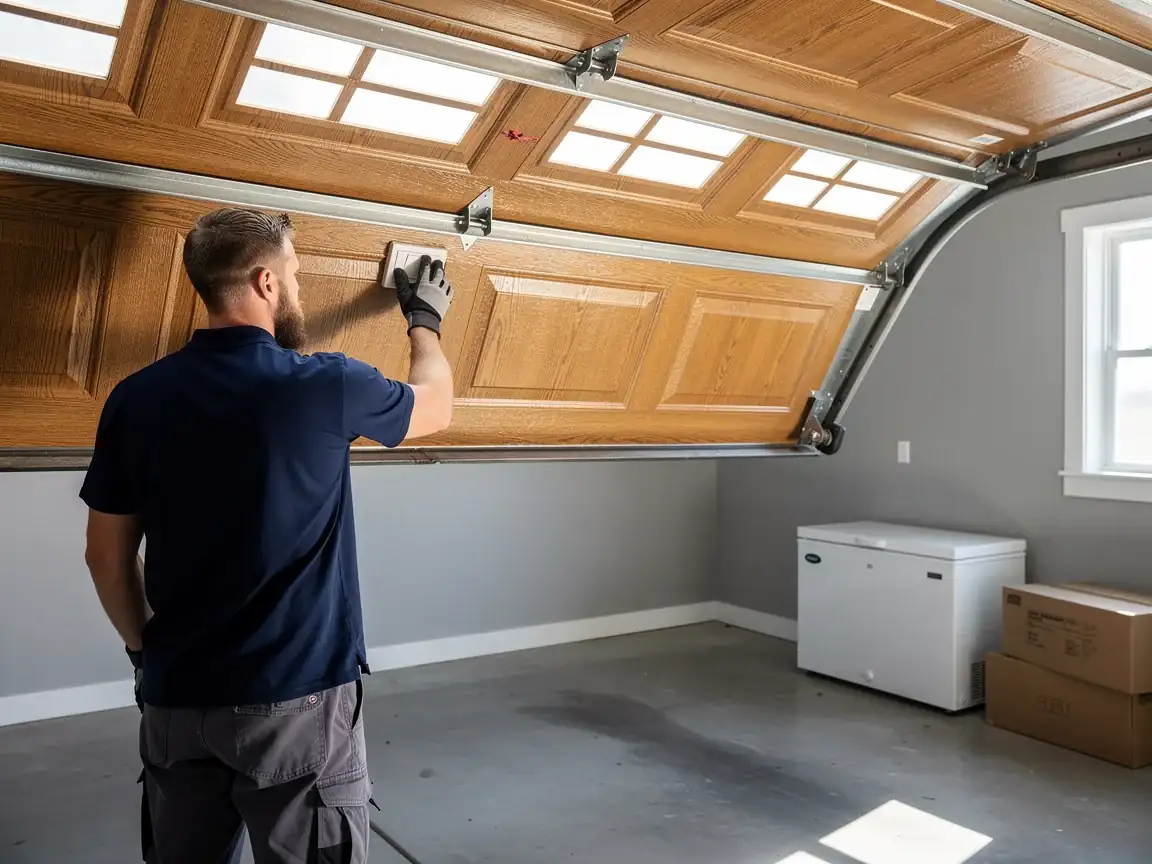
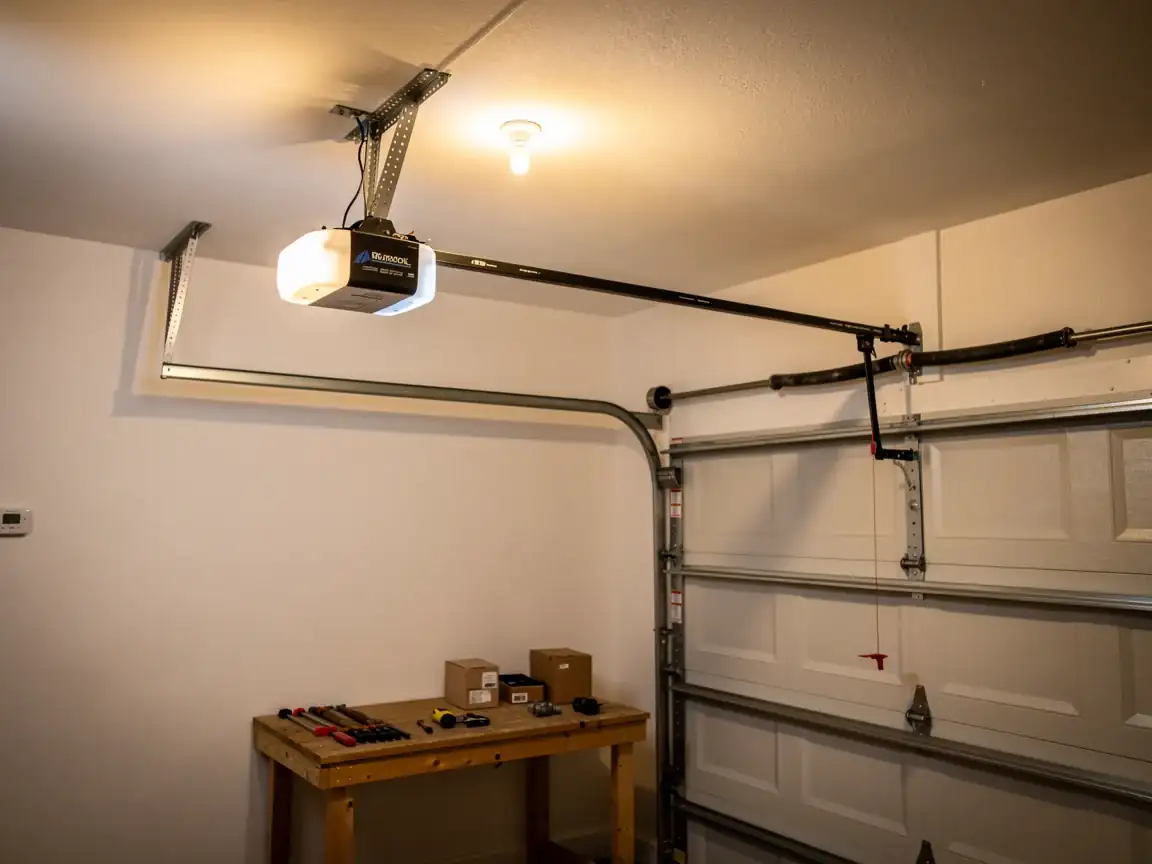
What you can safely check yourself: the photo-eye sensors near the floor on each side of the track, to see if one has been bumped out of alignment or has a cobweb across the lens, and the wall button to confirm it's not a stuck or sticky switch. If the opener runs but the door doesn't move, check that the trolley hasn't disconnected from the carriage - a dangling red cord usually means someone pulled the release and never reset it.
Beyond that, leave it alone. A door under spring tension that's handled wrong doesn't just fail to fix itself - it can put someone in the ER. That's the one line we don't bend on, no matter how simple the symptom looks.
What Causes It Around Here
A big share of the housing stock in this service area went up between 1964 and 2007, with the median build year sitting around 1989 and most of it concentrated in 1980s and 90s construction across a dozen named communities. Doors and openers installed during that original build-out, or replaced once already, are now old enough that springs are at or past their rated cycle count, and galvanized cable has had decades to work-harden and fray at the drum.
The climate here is on the cold side of moderate - not brutal, but enough freeze-thaw swing each winter to matter. Steel contracts in cold snaps, which tightens tolerances in tracks that were already slightly out of plumb from age, and that's when rollers bind and cables jump. We see a real jump in emergency calls on the first hard cold mornings of the year, right as a weak spring or a worn cable finally gives up under the added strain.
Put those two things together - housing old enough for original hardware to be at end of life, and a climate that stresses metal parts seasonally - and you get the pattern: steady midyear wear, sharp cold-weather spikes.