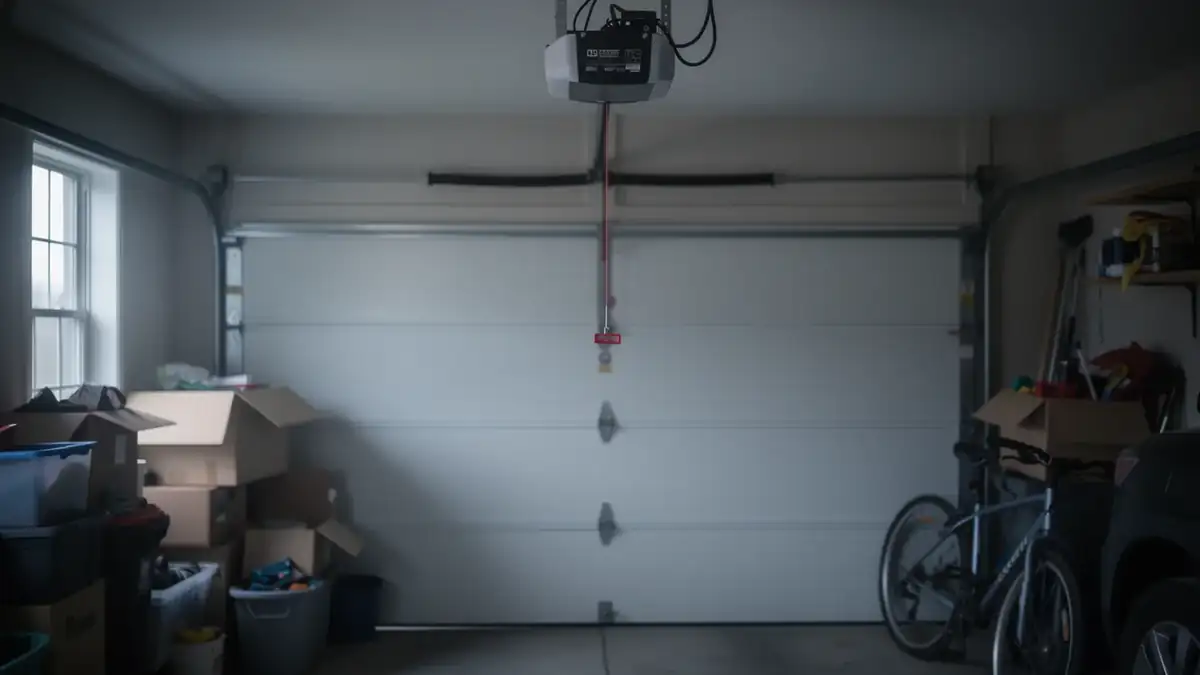
Checking It Yourself
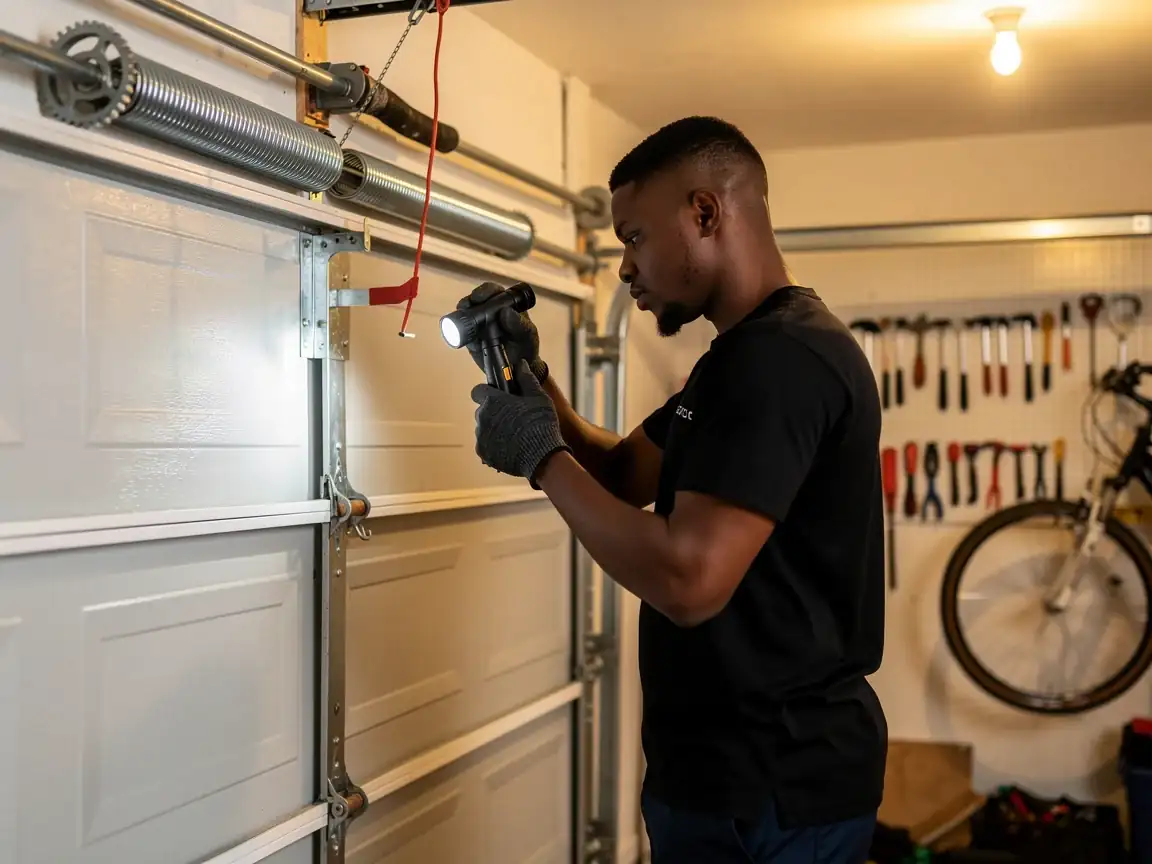
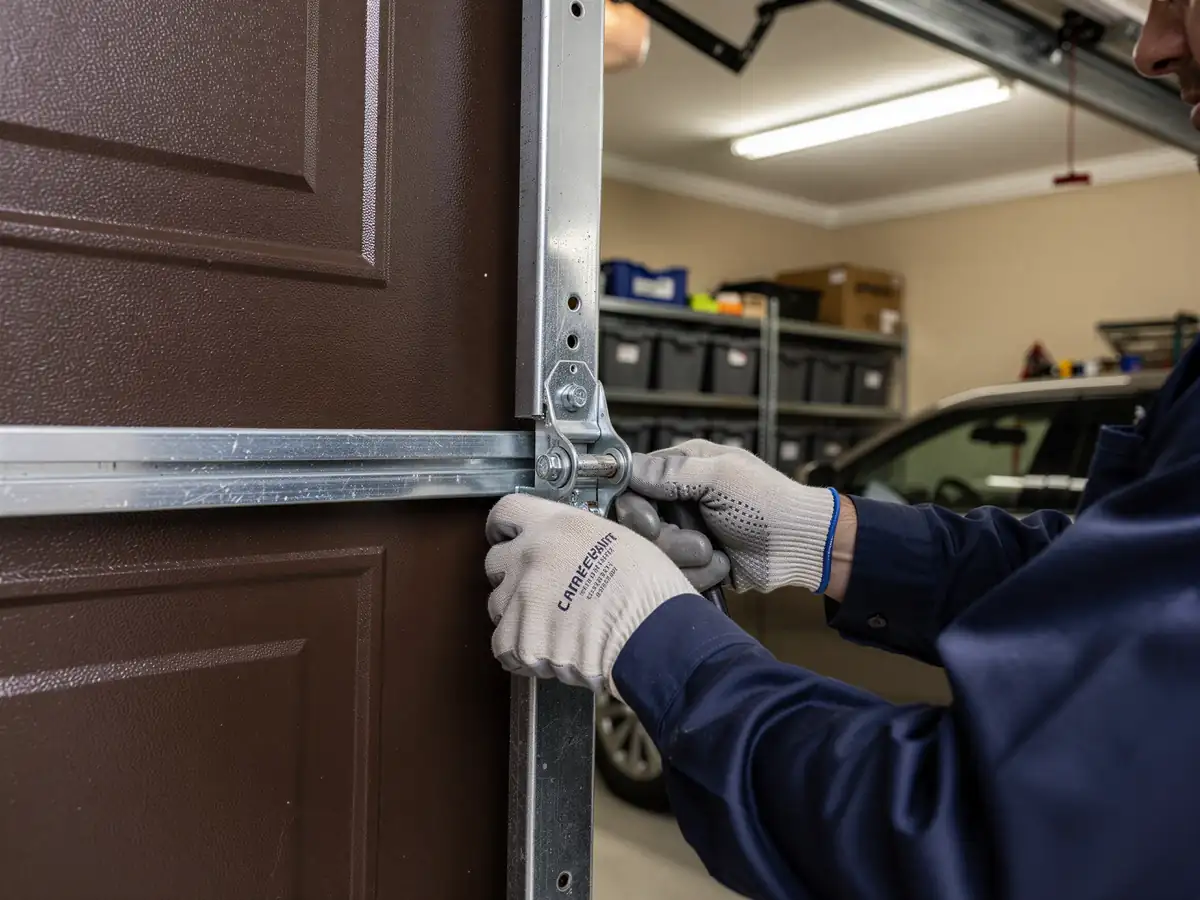
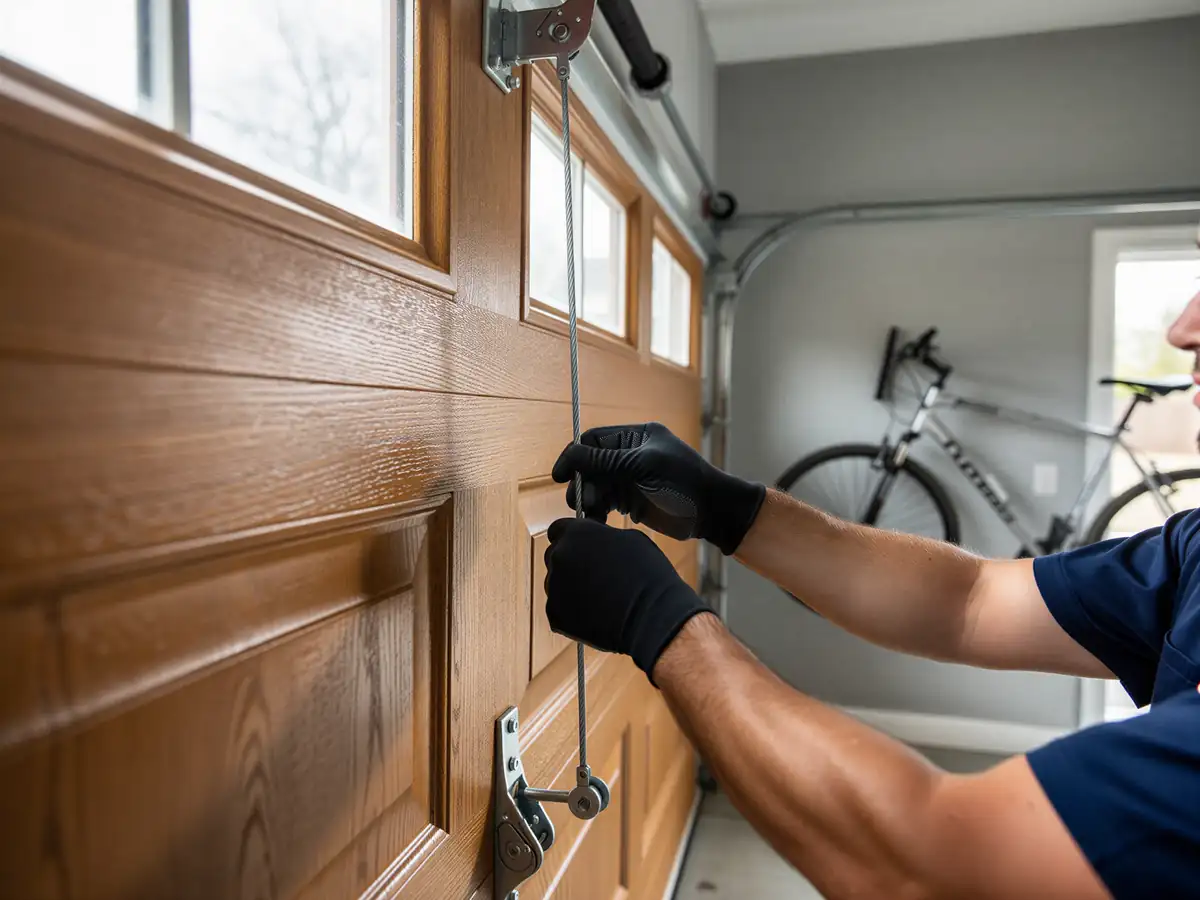
Before you call anyone, find the manual release cord - the red handle hanging from a track near the top of the door. Pull it straight down and the door disengages from the opener carriage, letting you lift it by hand. If the door was already down when the power cut out, this is usually the fastest way back into your garage.
Next, check your breaker panel. A tripped breaker looks identical to a dead opener from where you're standing in the garage, and it costs nothing to rule out. If the breaker's fine and the opener still won't respond once power's restored, listen for a hum with no movement - that's usually the motor trying and failing, not the logic board.
One thing worth knowing: if your opener is original to the house and the house went up anywhere in the 1964-2007 range that covers most of this area, there's a decent chance it has no battery backup at all. No backup means no opener function during an outage, full stop, regardless of what else is wrong with the unit. That's not a defect - it's just the era the thing was built in.
The Situation
Housing across the service area was mostly built between 1964 and 2007
With the median landing right at 1989. That matters here specifically because battery backup didn't become a common feature on residential openers until well after most of these garages were wired. A house built in 1989 likely got its first opener sometime in the 90s, and a lot of those units are still running - or were only replaced once, with a comparable chain-drive model that also skipped the battery.
That means when the power goes out, the door does whatever position it was in when the lights died
No lift, no close, nothing - until either the power comes back or someone pulls the manual release.
Across the 12 named communities in this area
From Emerson six miles out to Lithia Springs at nineteen, the pattern repeats. The housing stock is consistently 1980s-90s vintage, so the same opener-and-outage situation shows up in roughly the same shape, house after house, regardless of which side of the service area you're on.
How Local Conditions Play In
This area sits in a cold-moderate climate band, which isn't dramatic compared to the Midwest, but it's enough that winter ice and wind events knock power out with some regularity. That's the real trigger behind most of these calls - not a broken opener, but a stuck one, because the power went down during a storm and the door happened to be up, or down, right when it did.
Cold also plays a smaller role on its own. Metal tracks contract slightly in a hard freeze, and an opener that's already straining against age or a weak spring has less margin for error when the mechanism is tighter than usual. It's rarely the cold alone that causes a failure - it's the cold exposing a problem that was already there.
Worth saying plainly: we don't have outage frequency data for this specific area, so we're not going to pretend we know how often this happens to you personally. What we do know is the housing age and the climate band, and both point toward battery backup being a sensible upgrade rather than an optional extra.
What Most People Get Wrong
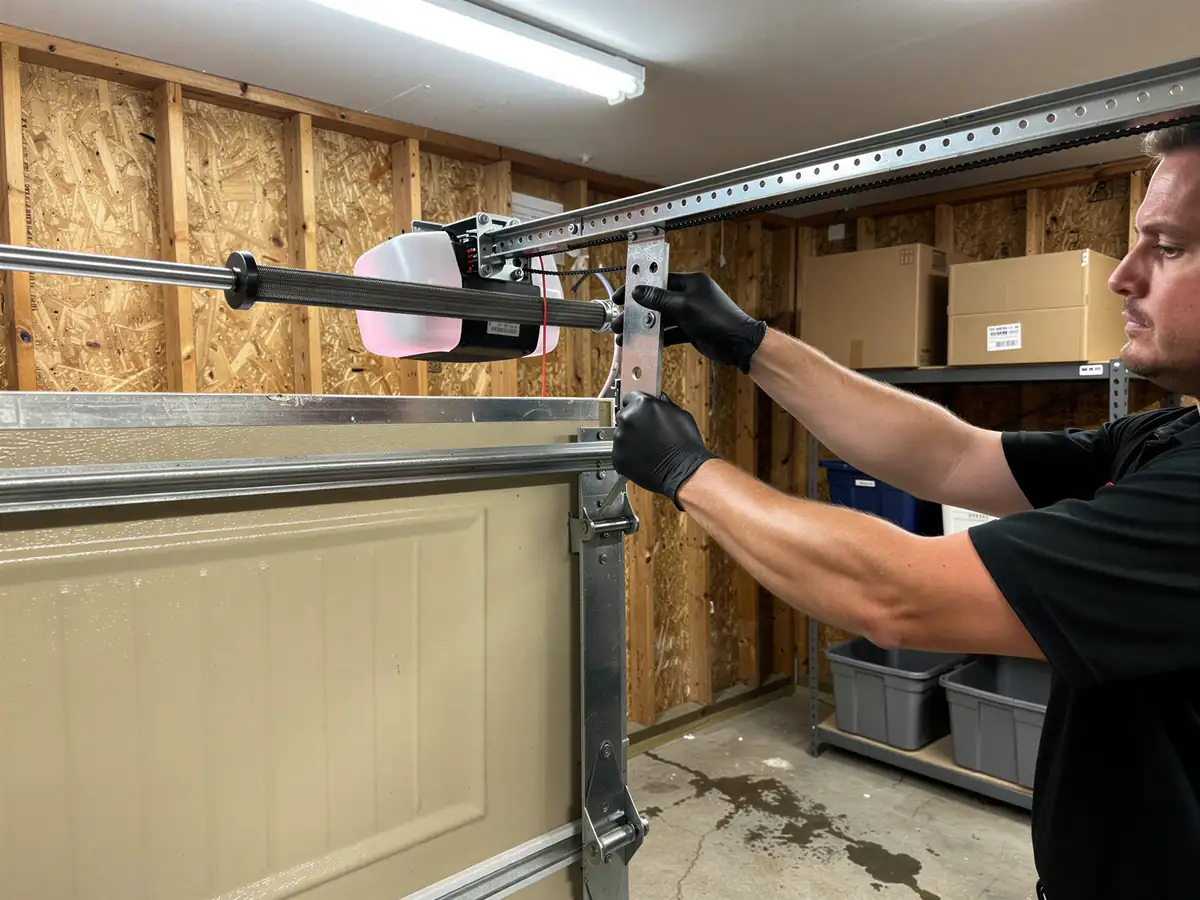
The most common mistake is assuming a dead opener during a power cut means the opener is broken. Most of the time it isn't - it's doing exactly what it's built to do, which is nothing, because it has no power and no backup battery to draw on. People call expecting a motor replacement and the actual fix is a battery backup unit, which is a different job entirely.
The second mistake is not knowing where the manual release cord is until the power's already out and they're standing in a dark garage trying to find it. It takes thirty seconds to locate in daylight and a lot longer in a storm.
With a median household income of $78,351 across the service area, most owners here can absolutely afford to add battery backup to an existing opener rather than replace the whole unit - but a fair number don't know that option exists separate from a full opener swap. We'll tell you straight if your opener's old enough that a backup battery isn't worth retrofitting onto it; sometimes the unit itself is close enough to the end that replacement makes more sense.