How It Shows Up
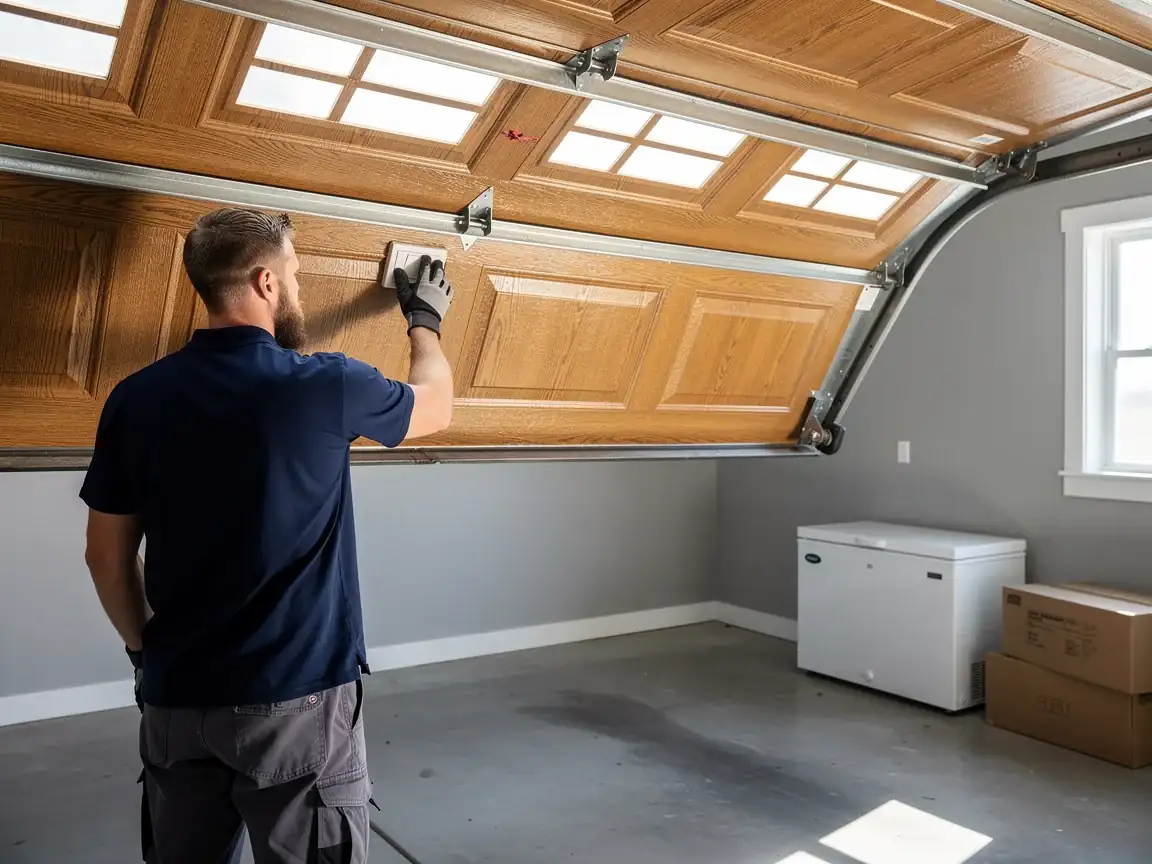
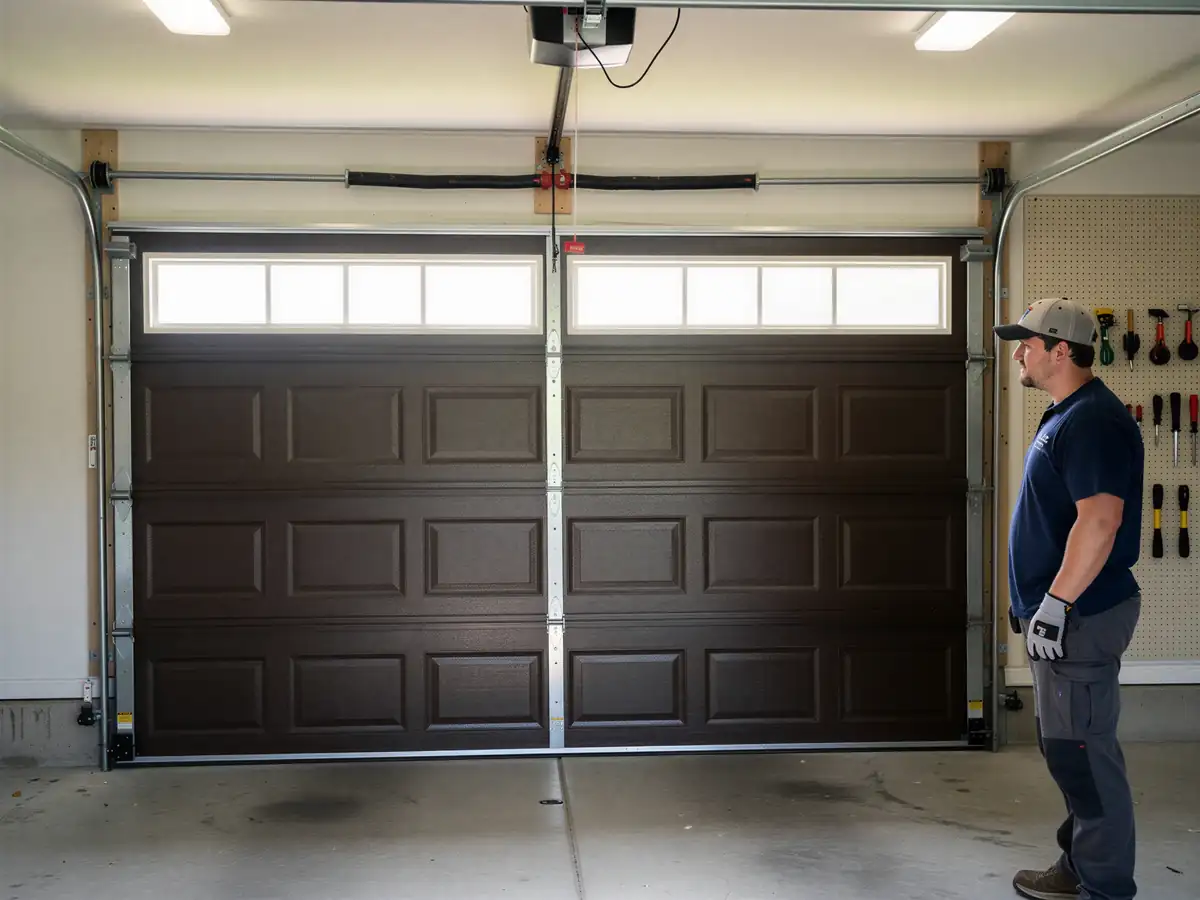
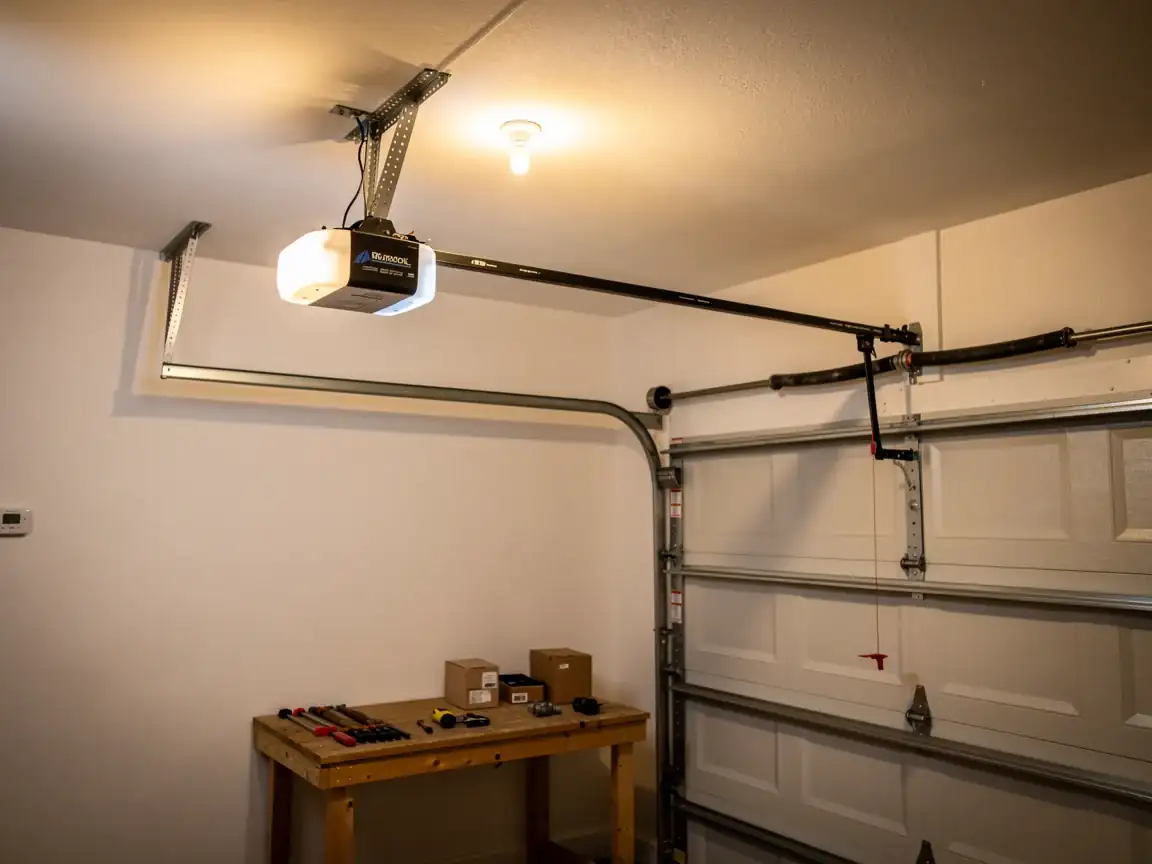
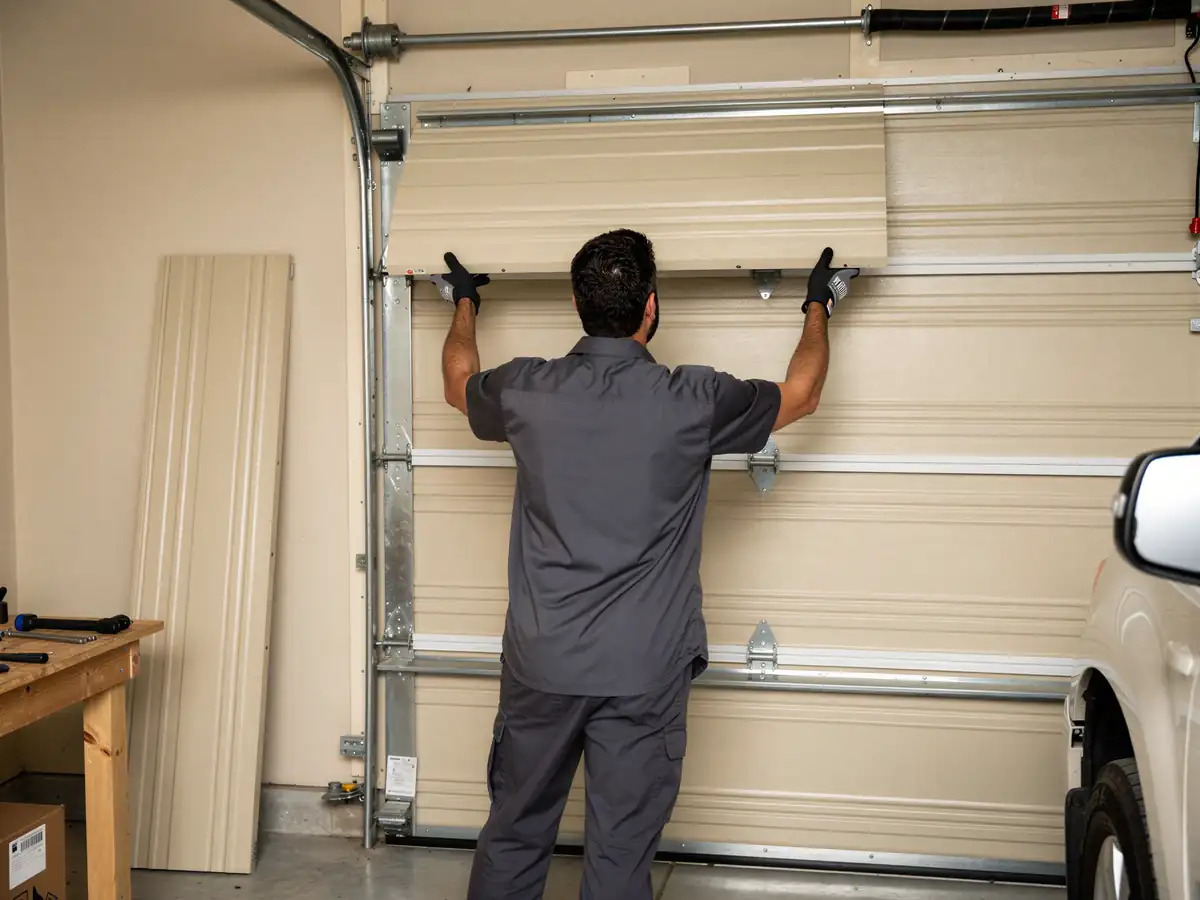
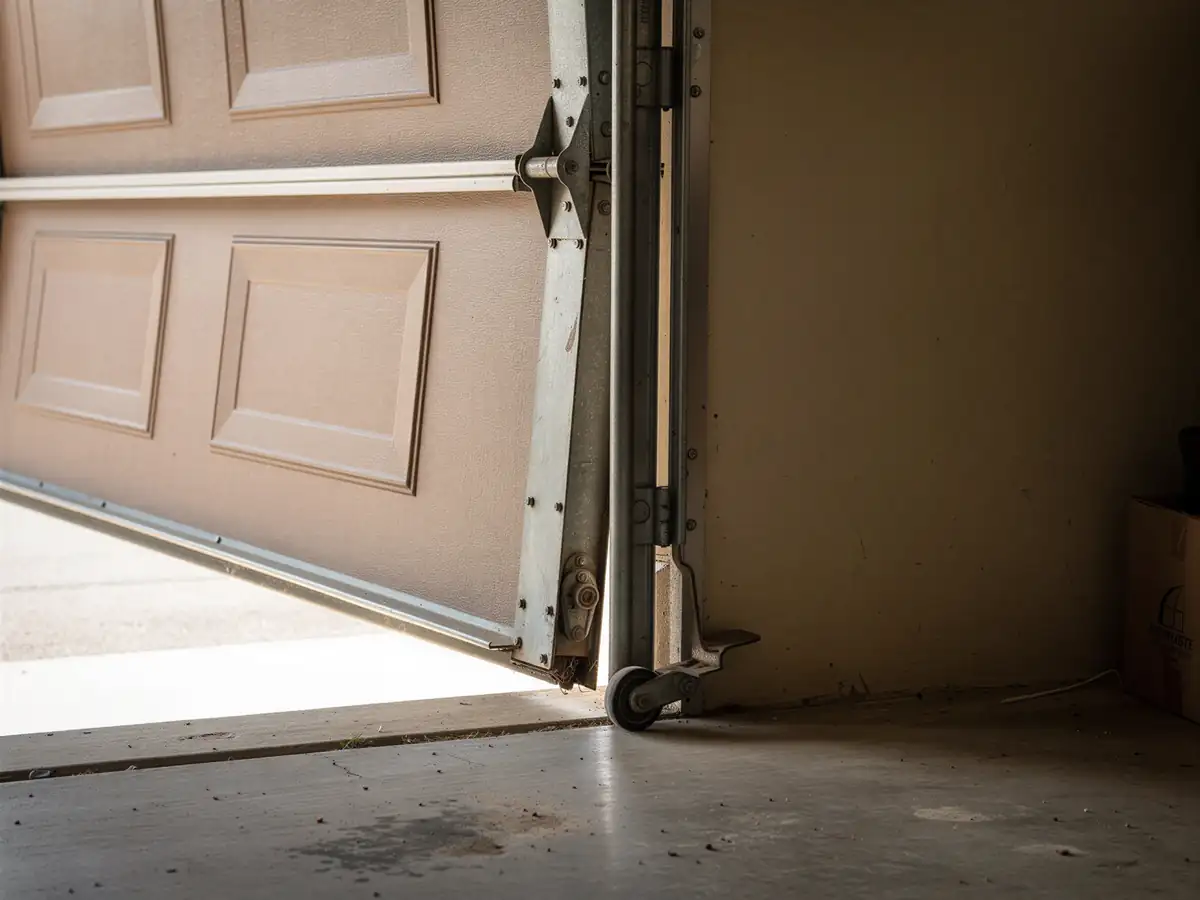
A door off track rarely happens all at once. Most owners notice it in stages: the door starts to shudder or bind partway through its travel, one side drags lower than the other, or you hear a scrape of metal on metal right before it stops moving altogether. Sometimes a roller pops clean out of the track and the panel hangs at an angle, held up by whatever cable or hinge hasn't let go yet. Other times the door looks fine sitting shut, but the opener strains and reverses every time you try to run it, because the track has pulled away from the wall bracket just enough to throw the whole path out of line.\n\nOn a double-wide door, off-track problems often show up unevenly - one side still rolling true while the other has walked off the rail. That uneven pull is usually the first sign something structural gave way, whether that's a bent track, a loose bracket, or a broken cable that let one side of the door drop. If the door is still partly on its rollers, don't keep running the opener. Running a motor against a door that's fighting its track is how a bent track becomes a track that needs full replacement instead of a reset.
Doing It Yourself
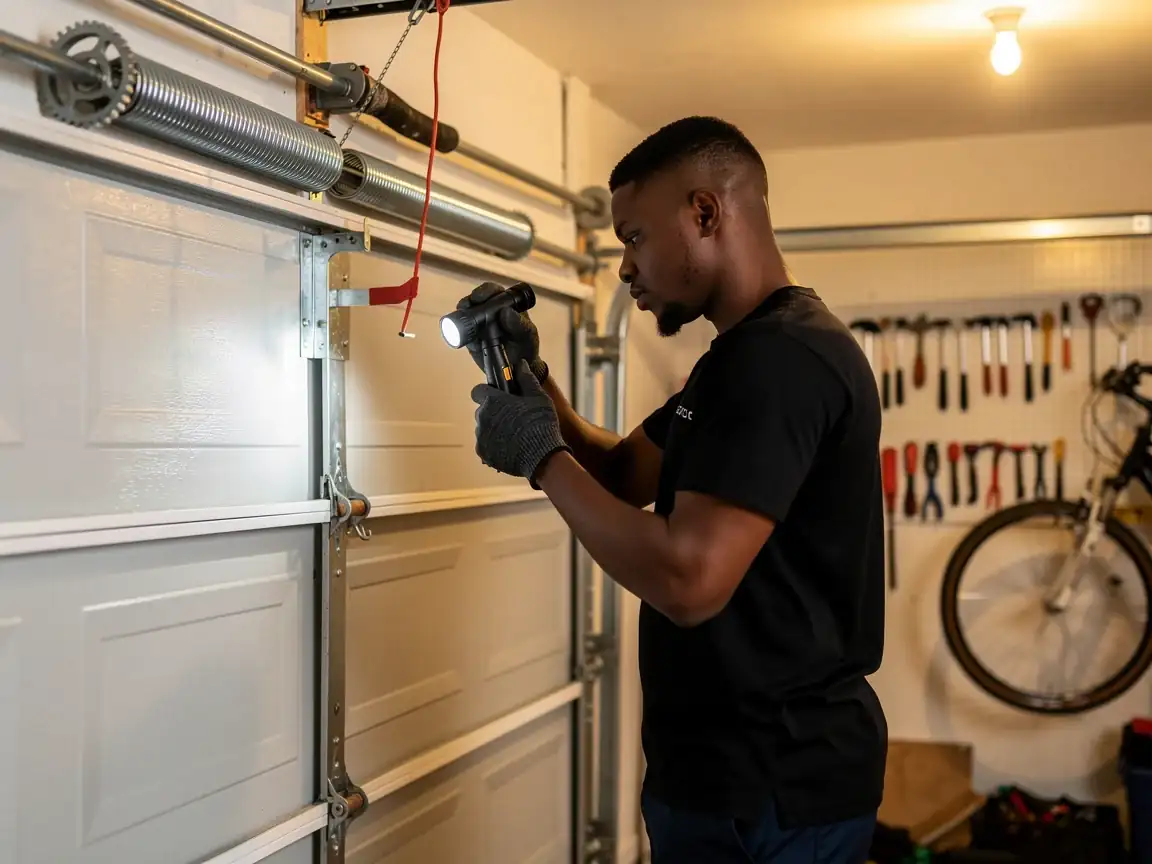
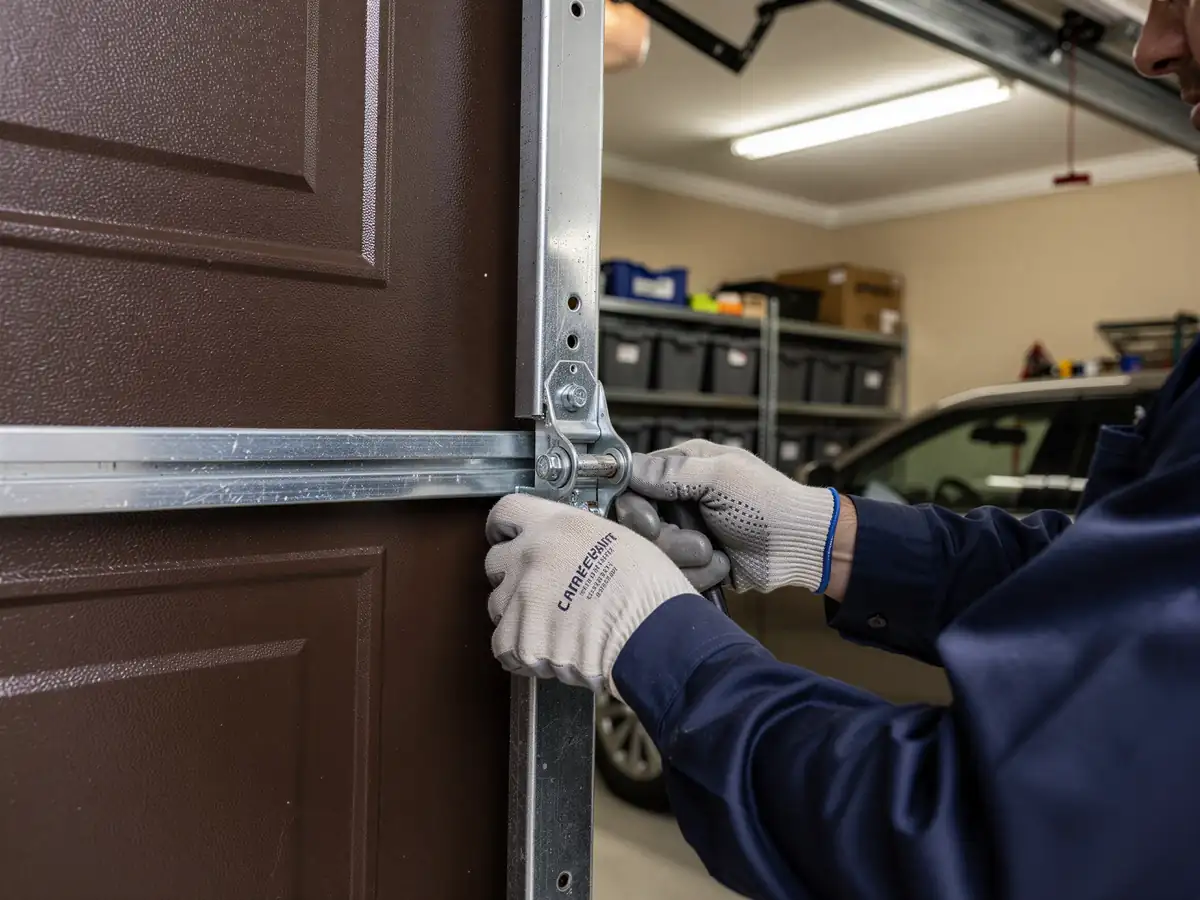
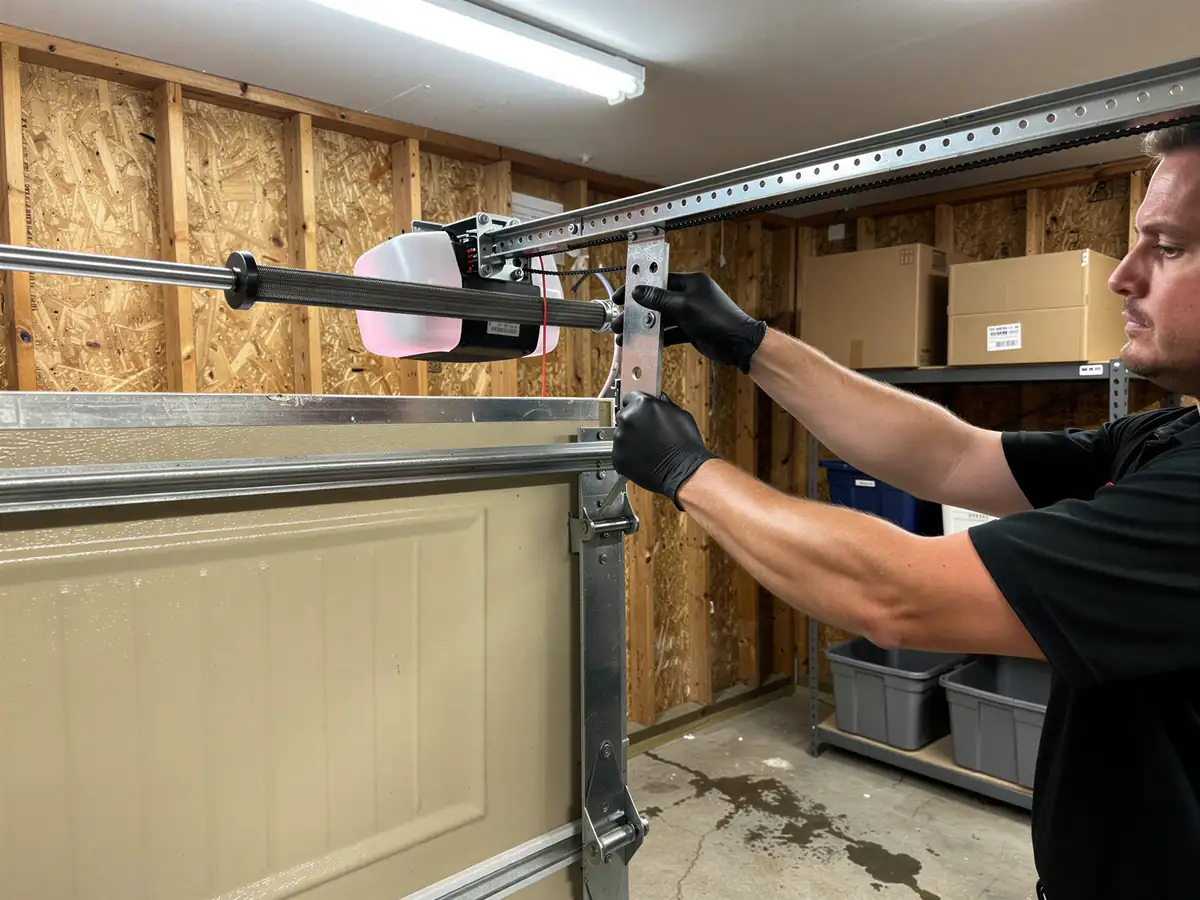
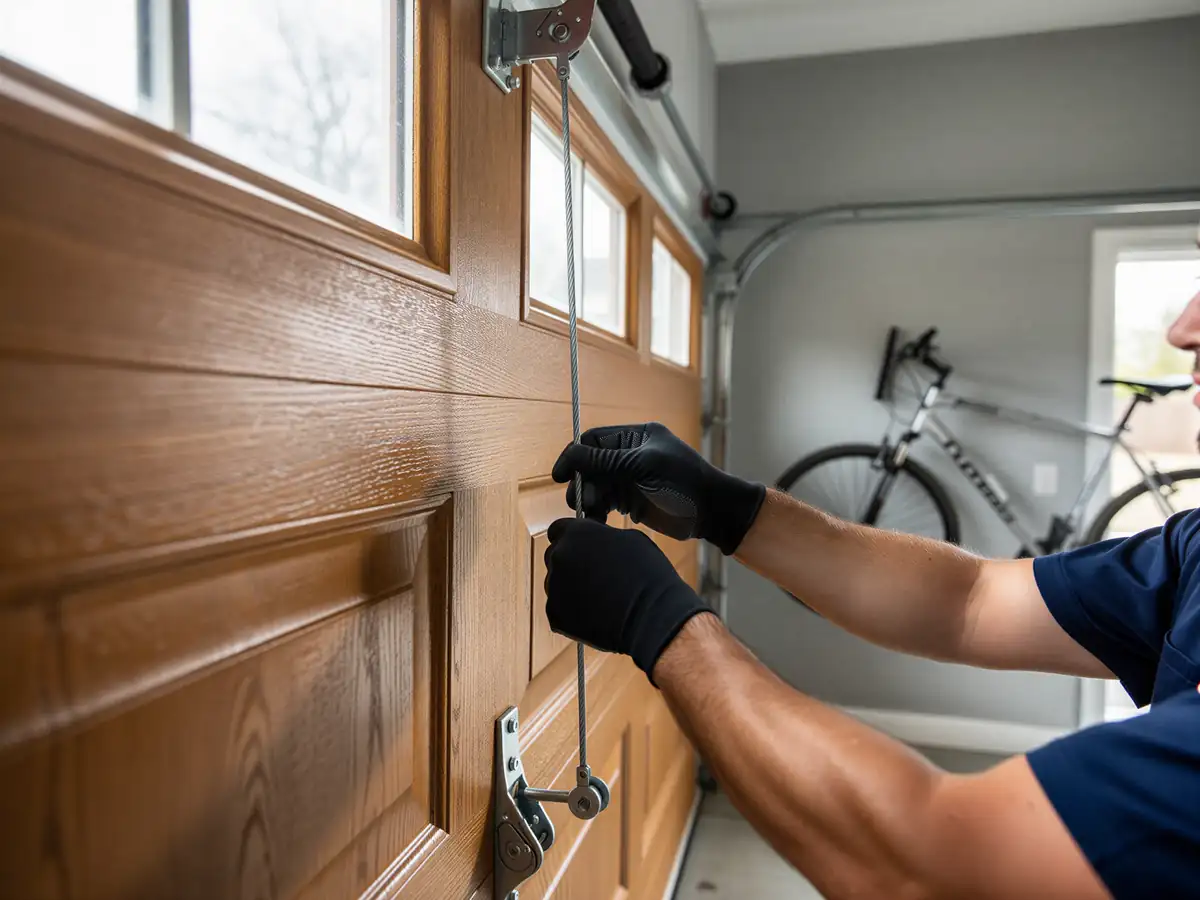
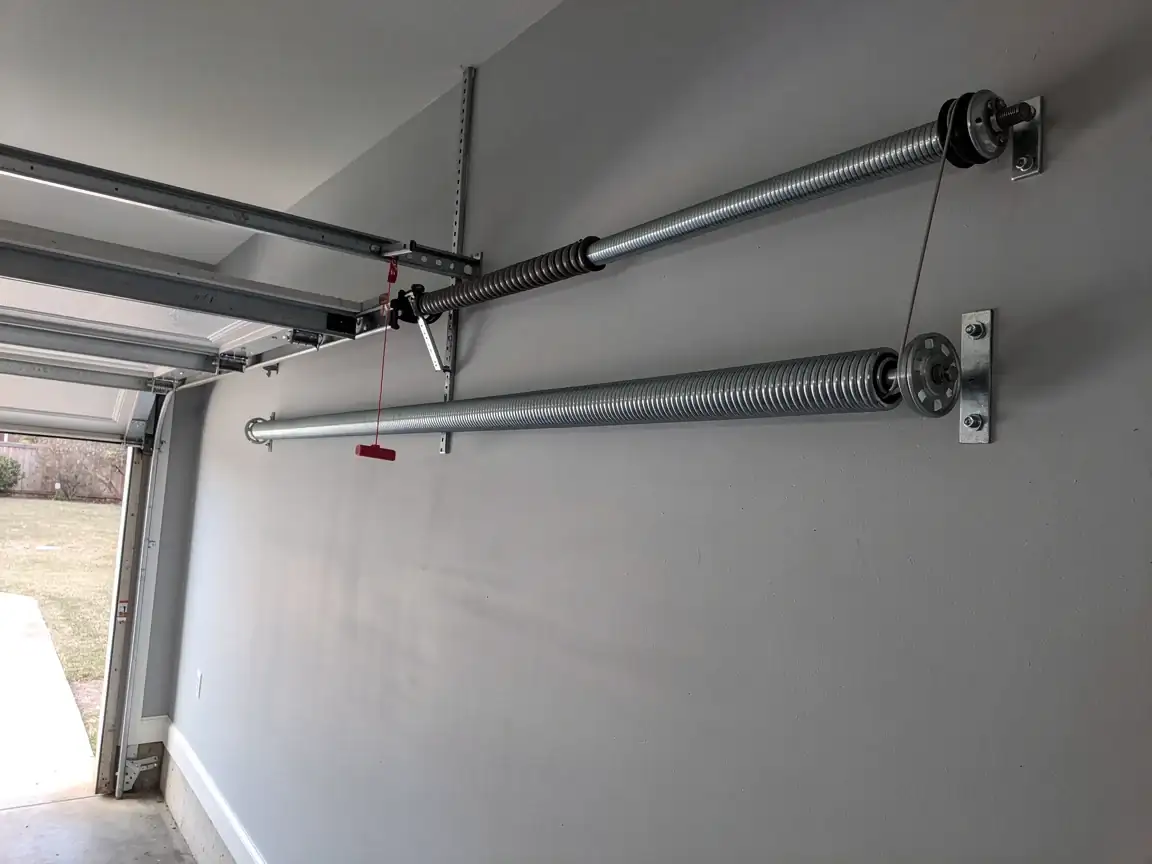
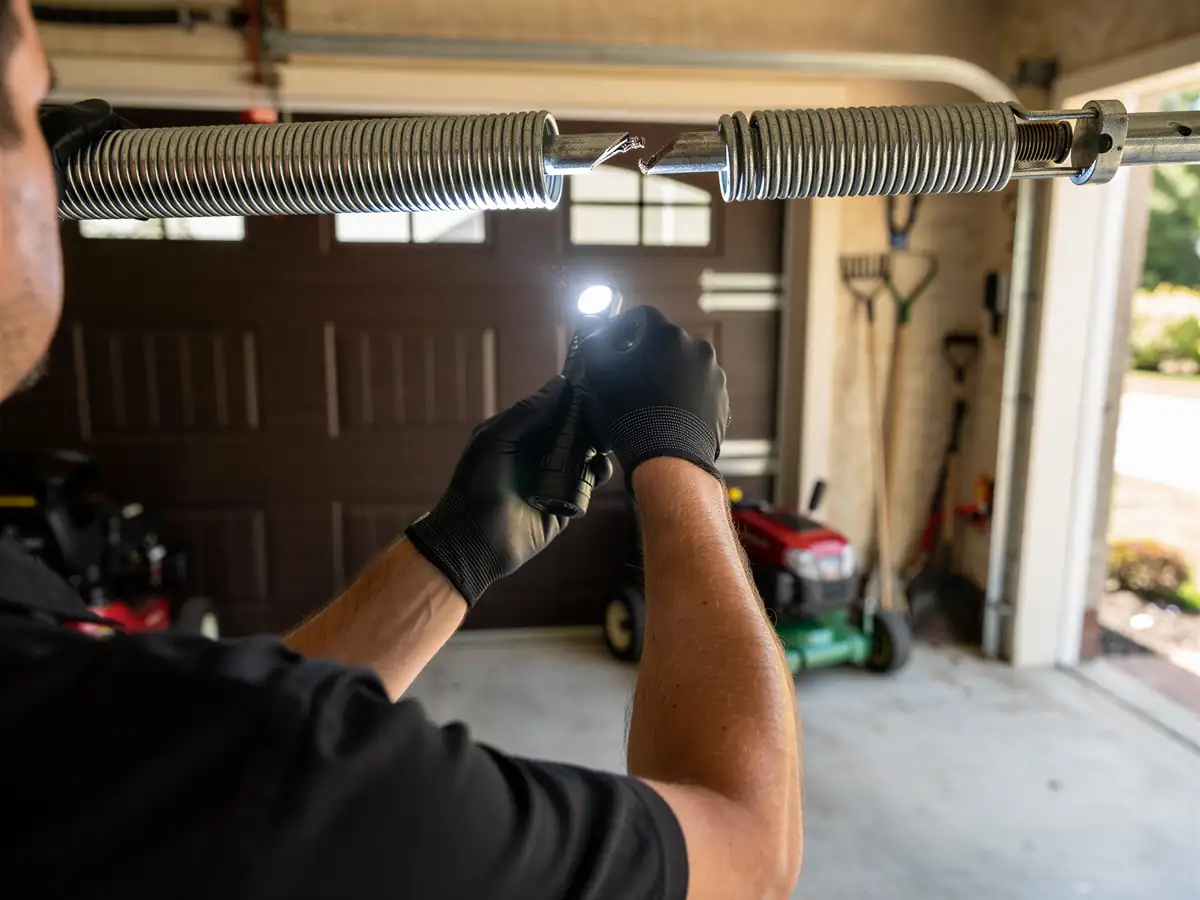
There's a short list of things worth checking before you call anyone. Look at the track itself for an obvious gap between the rail and the wall bracket - sometimes a bracket has simply worked loose and a few turns of a wrench solves it. Check the bottom of the door for anything in the roller path: a dropped tool, a buildup of debris, a kid's bike pedal. Pull the emergency release cord and see if the door swings freely by hand. If it moves evenly and smoothly with no binding, the issue may be isolated to the opener's travel settings rather than the door itself.\n\nWhat we don't recommend is reseating a roller back into a bent track, re-tensioning a spring, or forcing a door that's hanging unevenly. Those jobs call for a second pair of hands, the right clamps, and knowing which cable or spring failed first. Here's the honest limit: if the track is bent rather than just loose, bending it back rarely holds for long - a bent rail has usually work-hardened at the kink point, and a replacement section holds up better than a re-straightened one. We'll tell you when that's the case instead of charging you to fix something twice.
What Causes It Around Here
This service area is mostly 1964-2007 housing stock, with the bulk of it built in the late 1980s and early 1990s across the twelve communities we work in. That generation of garage doors and tracks is old enough that brackets have loosened over decades of use, galvanized track rails have picked up surface rust at the seams, and a fair number of openers have been swapped at least once without anyone checking whether the original track alignment still matched the replacement unit's pull geometry.\n\nThe climate here is the other half of it. This area sits in a cold-moderate band, which means steel track rails go through a real seasonal flex - not the deep freeze of further north, but enough expansion and contraction across the year to work screws loose in wood jambs and let brackets creep out of square a little at a time. On an older track that's already carrying some rust or a slightly bent rail from years of minor bumps, that seasonal movement is often the last push that lets a roller walk off the edge. Newer doors on steel-frame openings handle that cycle better simply because the hardware hasn't had as many years to loosen.