How It Shows Up
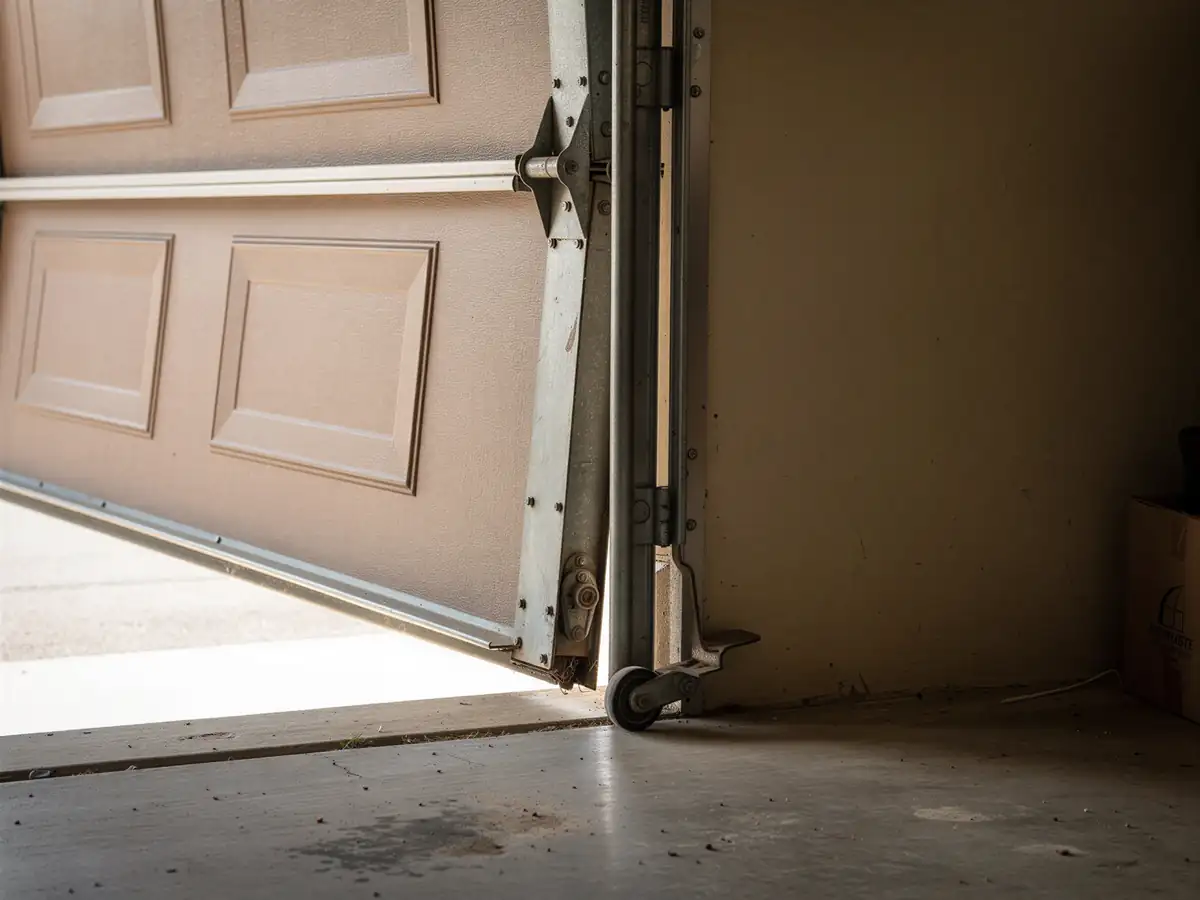
The first thing most owners notice is a dent - a backed-into bottom panel, a hail ding, or a crease where a basketball or a trailer hitch caught the door wrong. The second thing, usually a season or two later, is that the dent isn't just ugly anymore. The seam where that panel meets its neighbor starts to gap, the door binds going up, or a strip of rust shows along the bottom edge where the steel skin folded.
Most houses across the Acworth service area went up between 1964 and 2007, with the bulk of that stock dating to the 1980s and 1990s, which is when steel sectional doors with foam-core panels became the standard build. That matters here because those panels are now 25 to 40 years old. The steel skin on a door that age has usually gone through enough expansion and contraction cycles that even a small dent can crack the paint seal and let moisture behind it.
You'll also see warping on the bottom panel specifically, more than any other section. It's the one that takes the brunt of weather, road debris, and the occasional bumper tap, and on an older door it's the one with the thinnest remaining galvanized coating.
Where This Job Goes Sideways
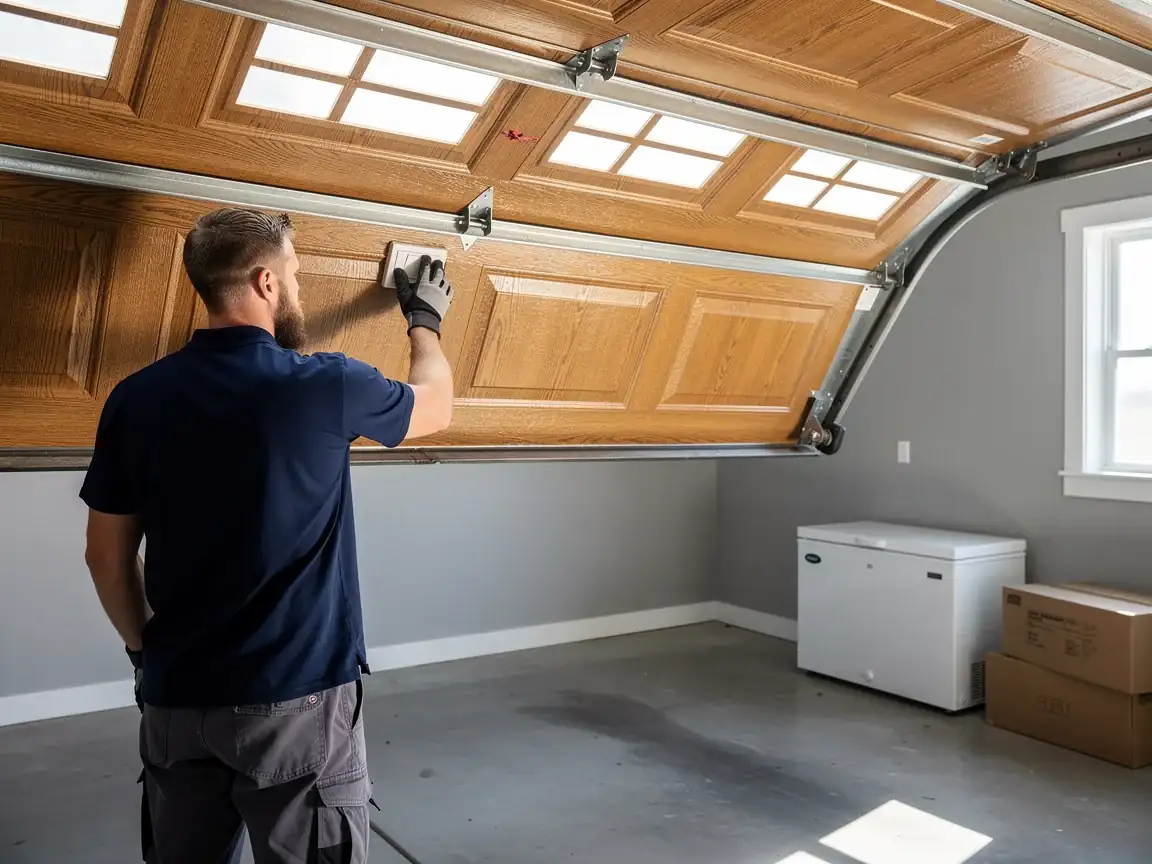
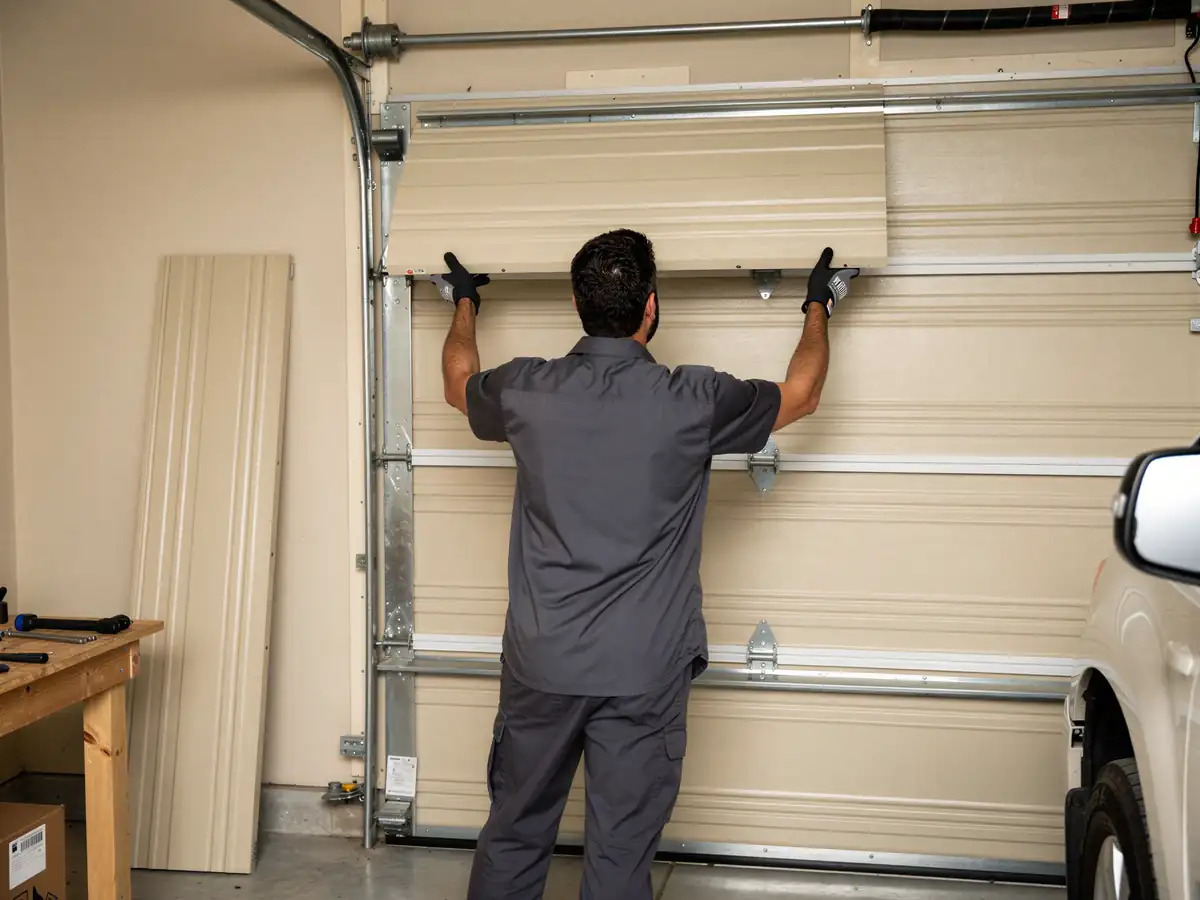
The trouble isn't pulling the damaged panel - it's finding one that matches
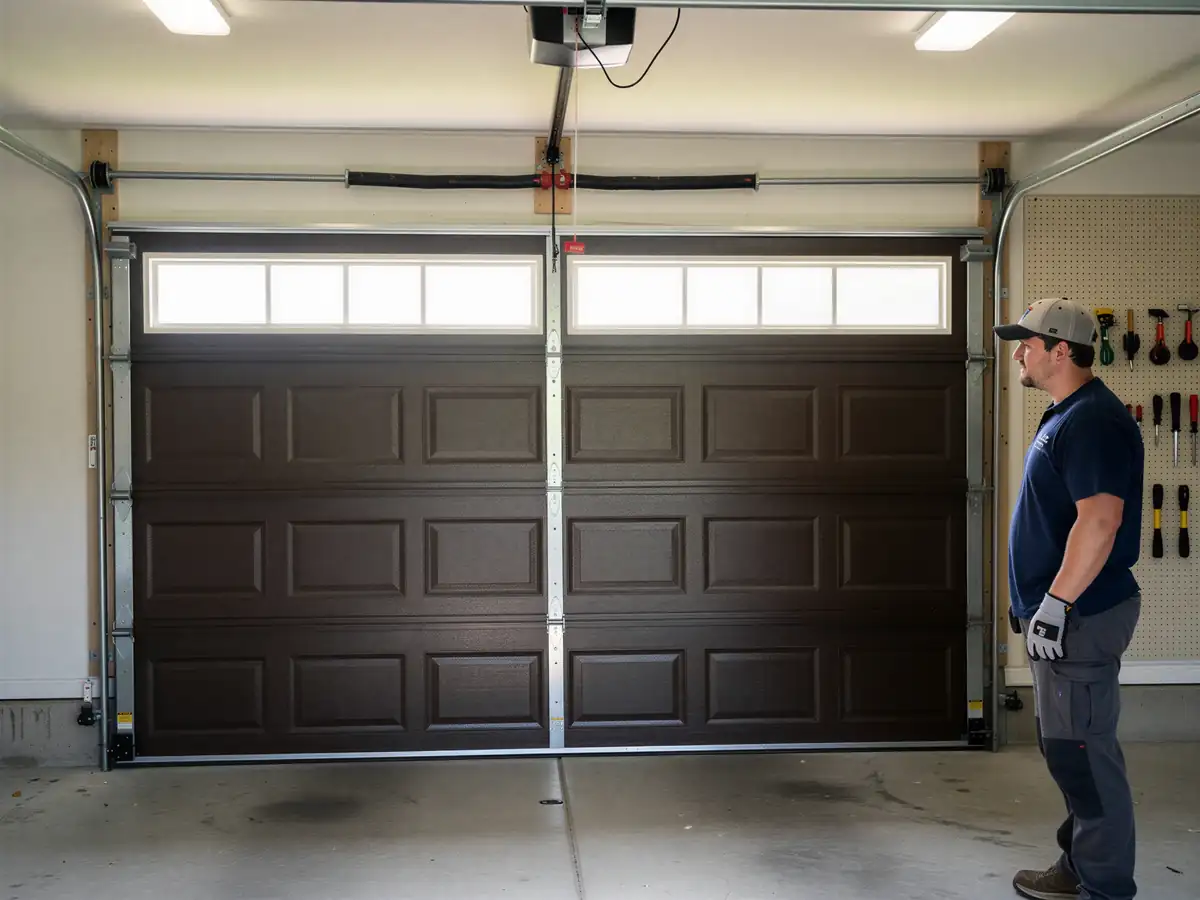
A door built in 1989 doesn't share a panel profile with a door built in 2004, even if both came from the same manufacturer, and plenty of the doors on these streets came from builders who used whatever distributor had stock that month.
Across the twelve communities this service area covers
From Emerson six miles out to Lithia Springs nineteen miles out - that 1980s-90s door stock means the same panel profiles are aging out at roughly the same time, and the same discontinued-part problem shows up house after house. Rib spacing, panel height, and end-stile hardware all have to line up, and on an older door the hinges and rollers from the damaged section often don't fit a new panel without adjustment.
The other place this goes wrong is tension
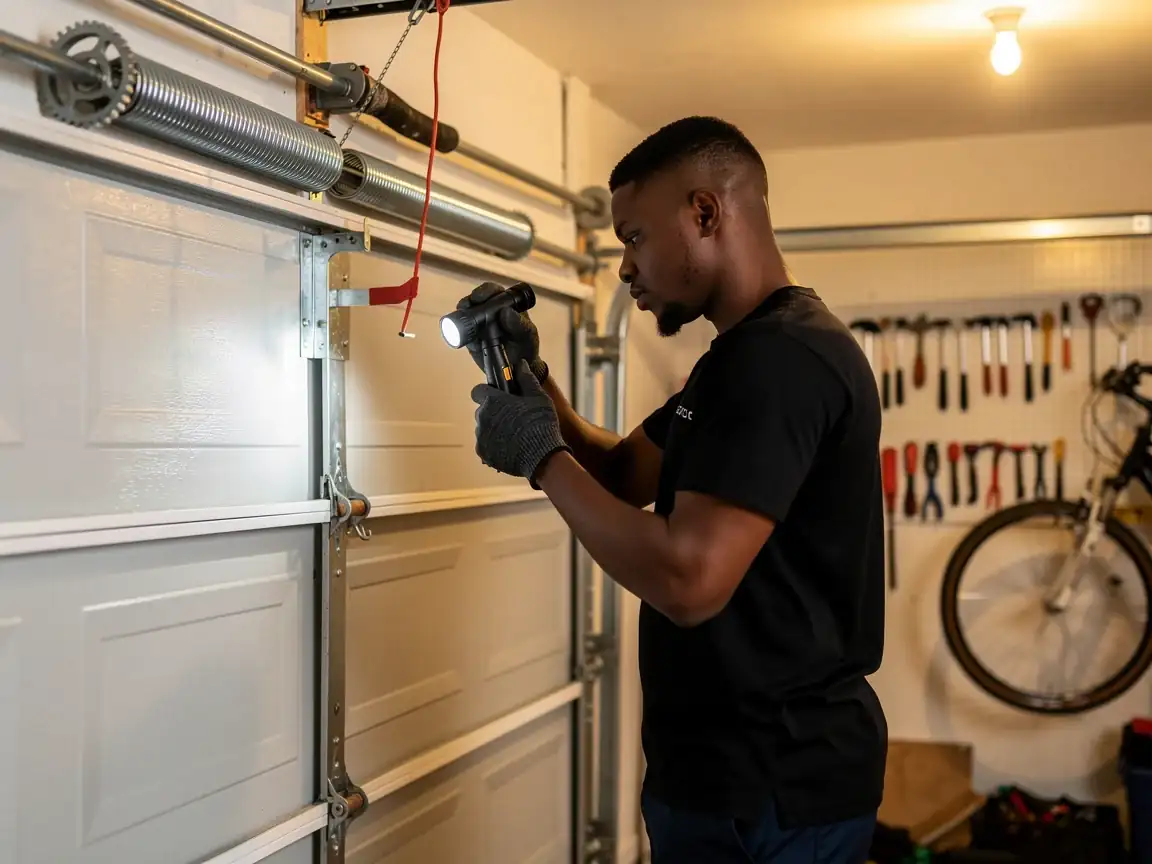
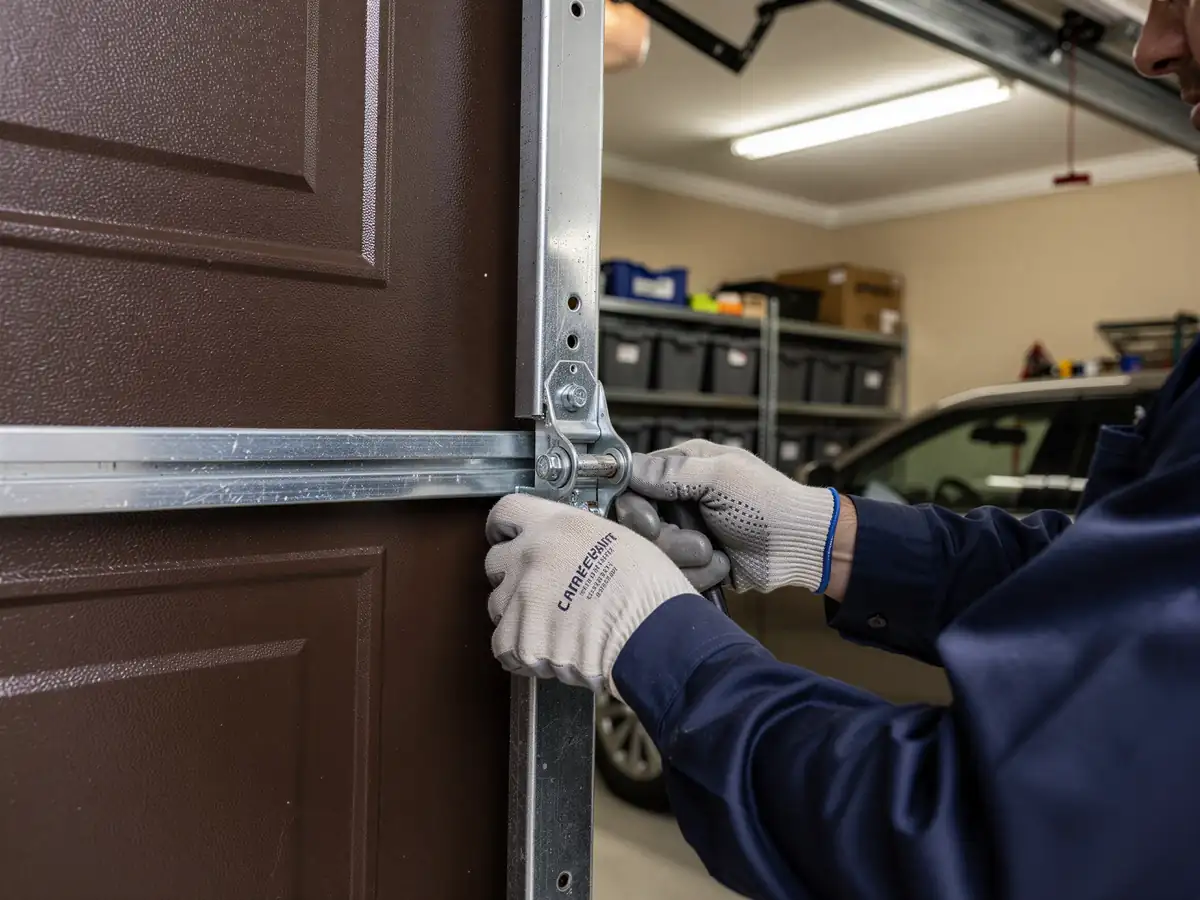
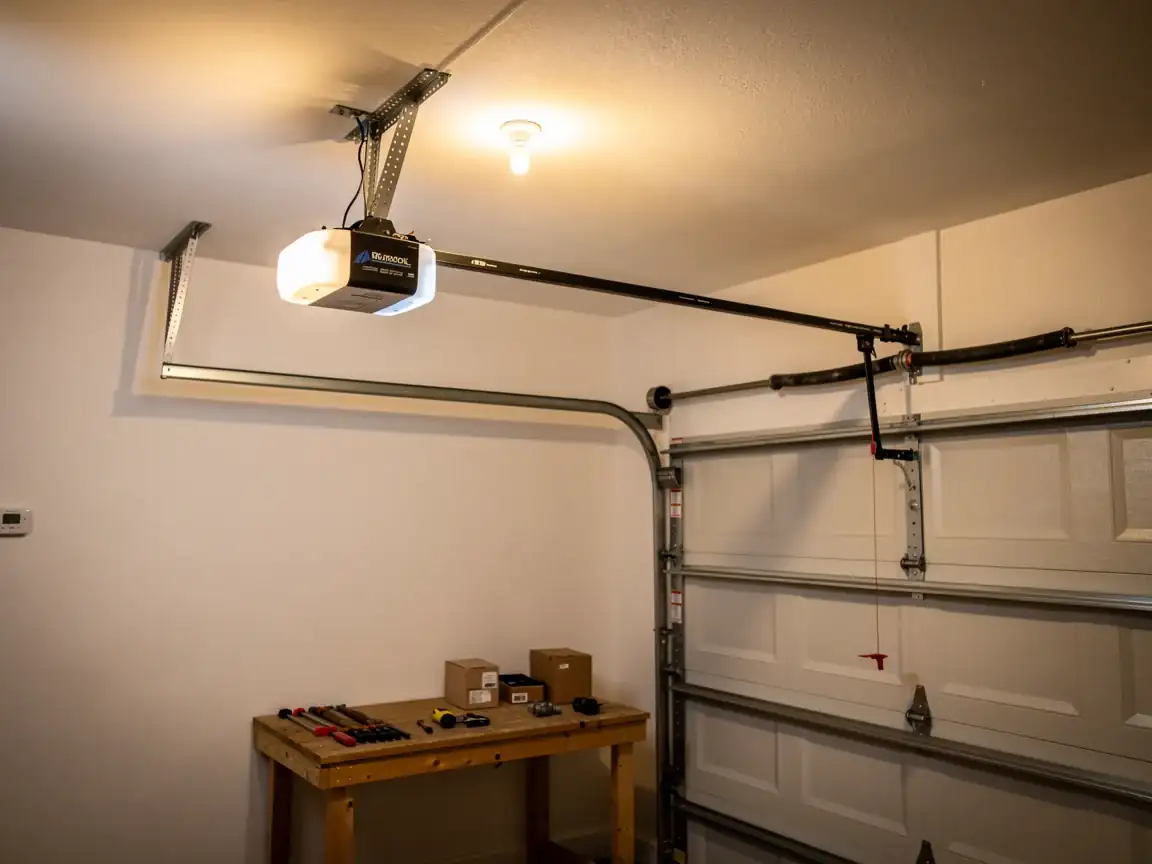
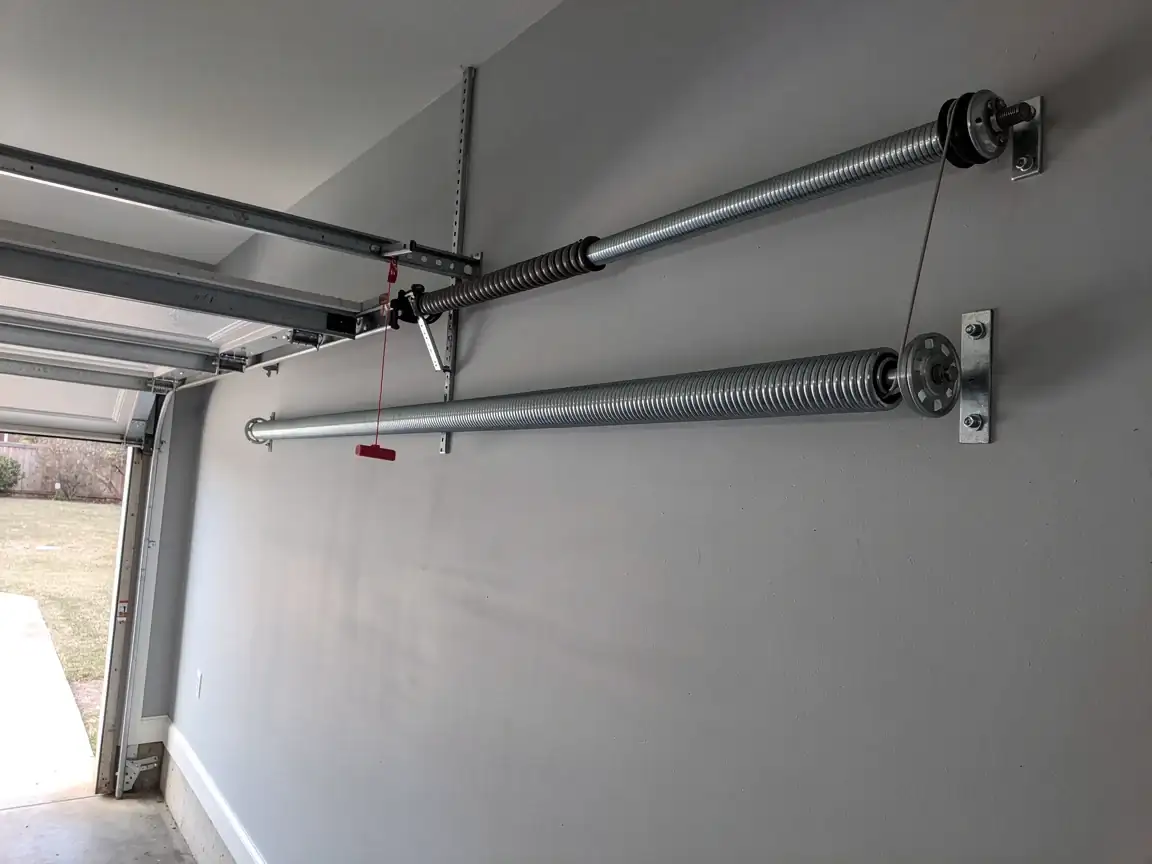
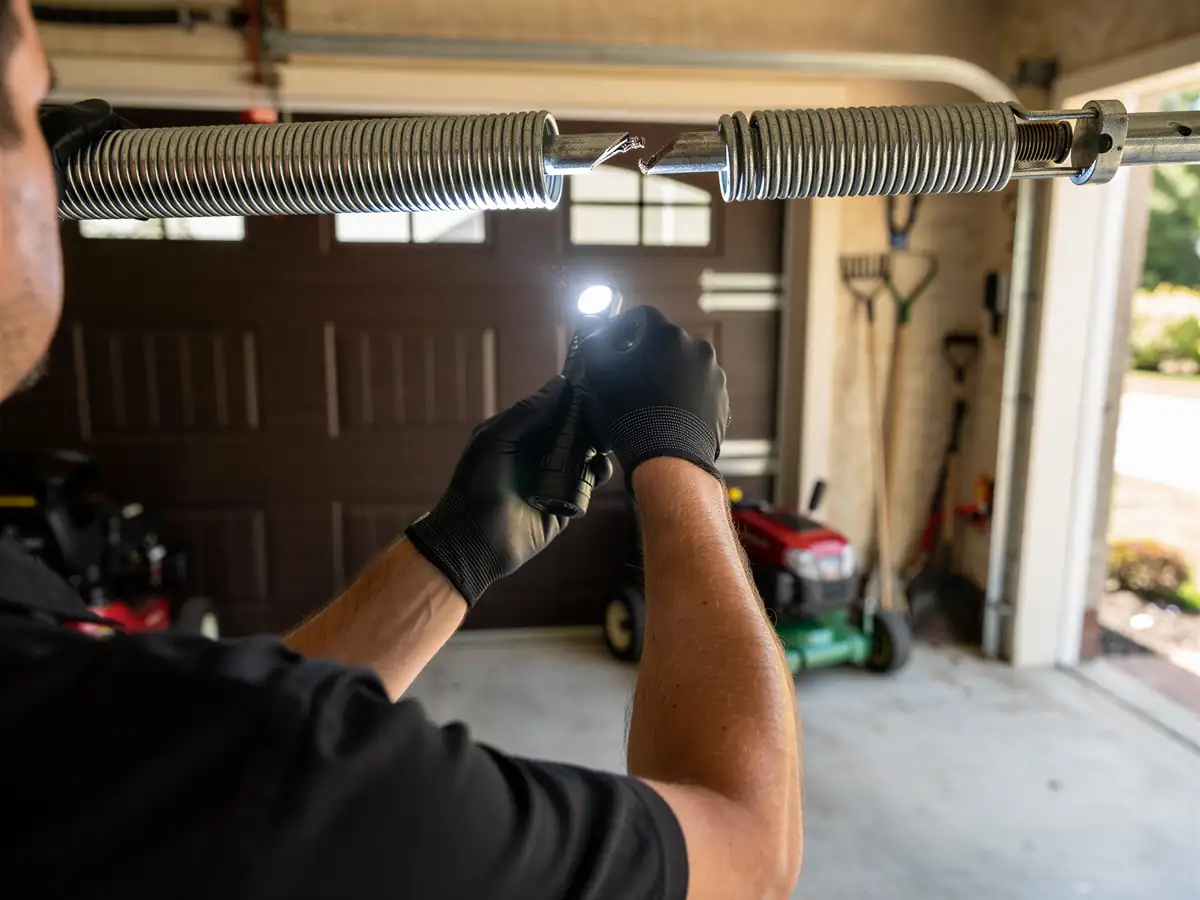
Pulling a bottom or second-row panel usually means disconnecting cables or loosening a torsion spring that's been holding that door's full weight for decades. Spring hardware that old doesn't always release the way it's supposed to, and that's the point where a straightforward panel swap turns into a bigger repair.
Doing It Yourself
A single panel on a sectional door is one of the more doable DIY jobs in this trade, and we'll say that plainly - we're not going to tell you every repair needs a truck. If the door is newer, the panel is still in production, and you're comfortable with a ratchet strap and a torsion spring that isn't under load, you can get it done on a Saturday.
Where it stops being a weekend job is exactly where the housing age in this area bites you. If your door went up anywhere near that 1964-2007 window, the odds that the manufacturer still stocks your panel profile are low, and ordering the wrong one wastes the afternoon and the drive to the supply house. Spring tension is the other line we'd draw. A one-piece torsion spring on a double door holds real force, and releasing it wrong is how people end up with a trip to urgent care instead of a finished repair.
Our honest limitation here: we don't carry every discontinued panel profile in stock, and a few of the oldest doors in this area need a special order that takes longer than a same-week fix. On those, we'll tell you straight whether replacing just the door makes more sense than waiting on one panel.
What Causes It Around Here
This is a cold-moderate climate, not a hard-freeze one, but it's enough to matter for panel failure. A dented seam lets water sit, and when that water freezes and thaws over a winter, it's what turns a cosmetic dent into a panel that won't seal against the weatherstrip anymore. That cycle repeats every year a dent goes unrepaired, and it's slower than storm damage but just as certain.
With 15,851 owner-occupied houses across this area, a lot of them built in that same 1980s-90s window, we see the same wear pattern over and over: foam-core panels from that era were built to a lower insulation standard than what's sold today, and the foam itself has had decades to shrink slightly away from the steel skin. That gap is what lets a dent propagate into a crack instead of staying a dent.
At a median household income of $78,351 here, most owners are weighing a single-panel repair against a full door swap, not reaching for the priciest option by default, and that's usually the right instinct - on a door with one bad panel and the rest sound, replacing just the section is almost always the cheaper, faster call.