Parts We Carry
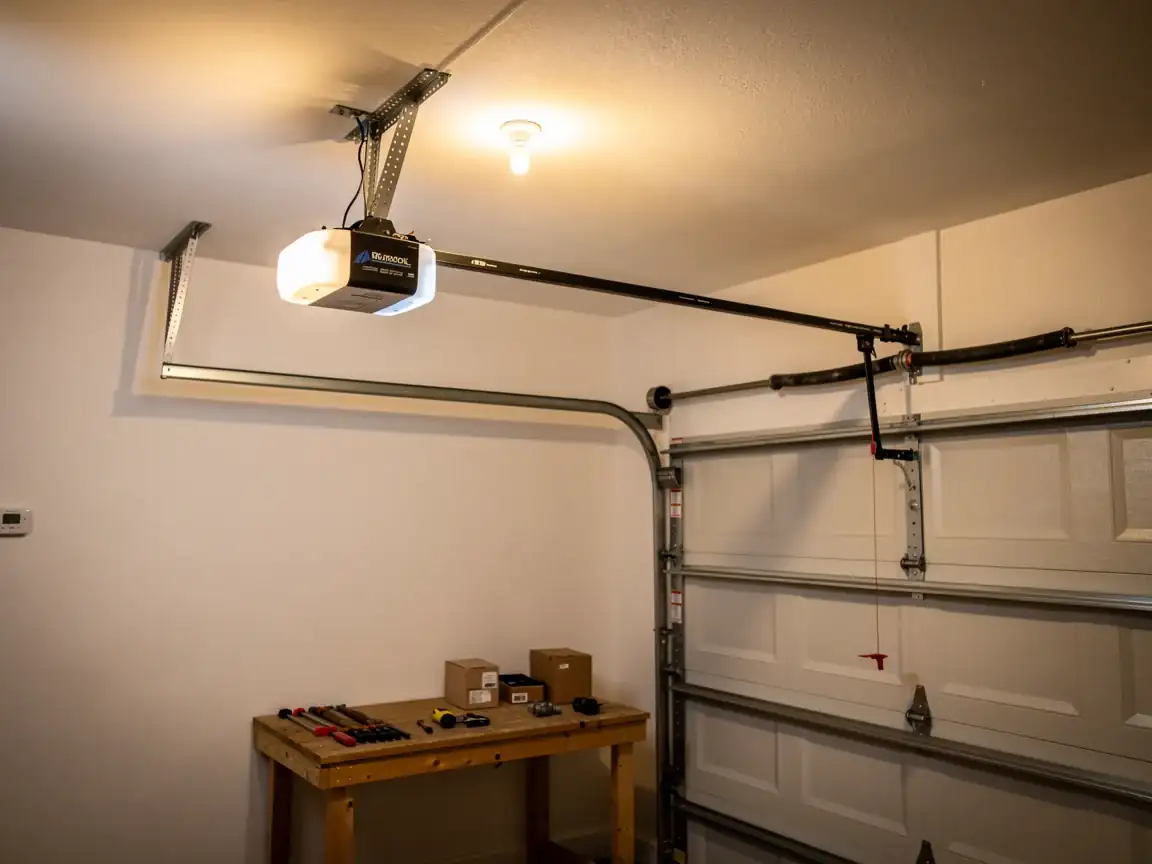
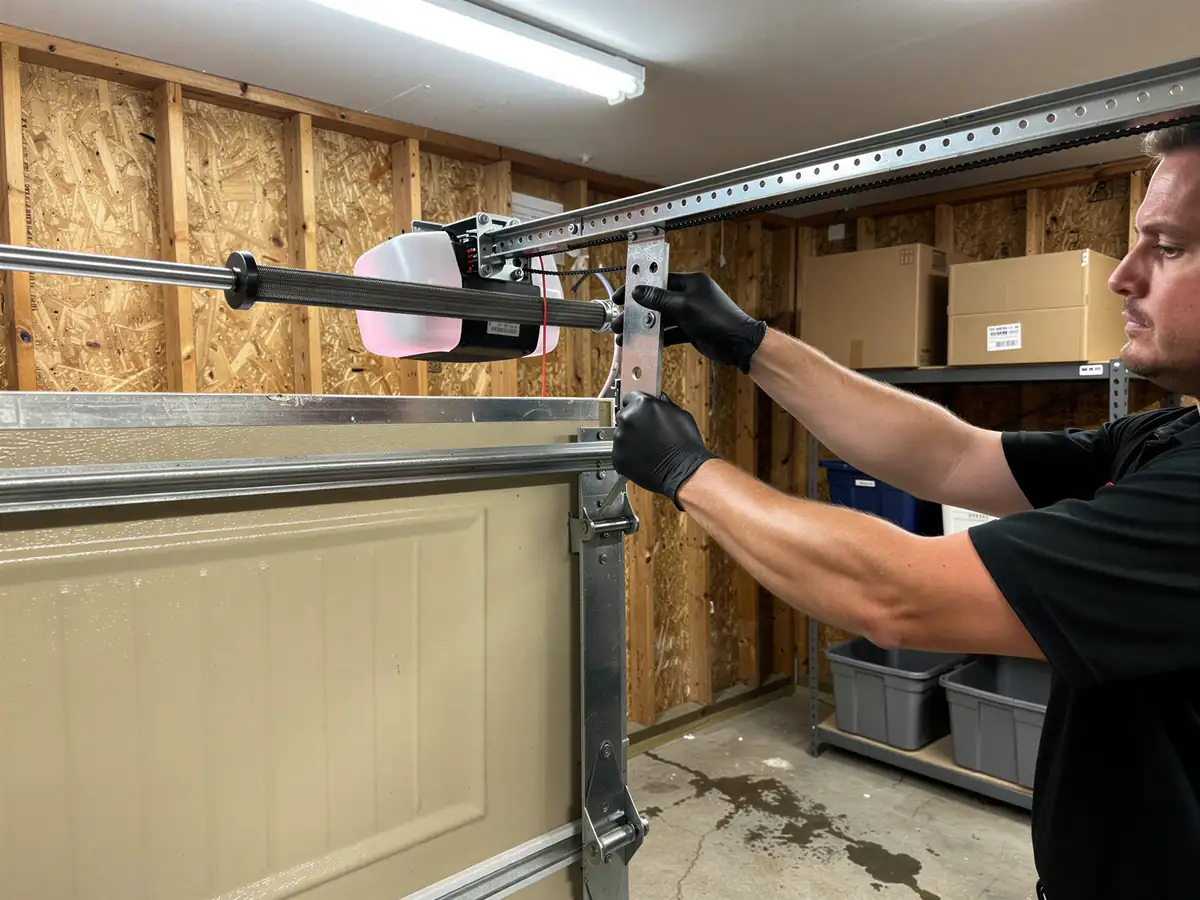
Euharlee's median build year sits around 1996, which tells you a lot before we even see the door. Builders in that stretch were putting up steel sectional doors with torsion springs mounted on a center bracket above the opening, not the older side-mounted extension setups you still see on pre-1980s houses. Rollers were usually nylon with a steel stem, and openers were chain-drive units with a 1/3 horsepower motor and an early circuit board for the safety reversal sensors.
We stock torsion springs in the sizes that match that generation of door, nylon rollers, and the steel hinges and center brackets that wear out on a 25-to-30-year-old sectional. We also carry the photo-eye sensor kits that replace the first-generation safety sensors a lot of these houses still have, since those boards fail more than the doors themselves.
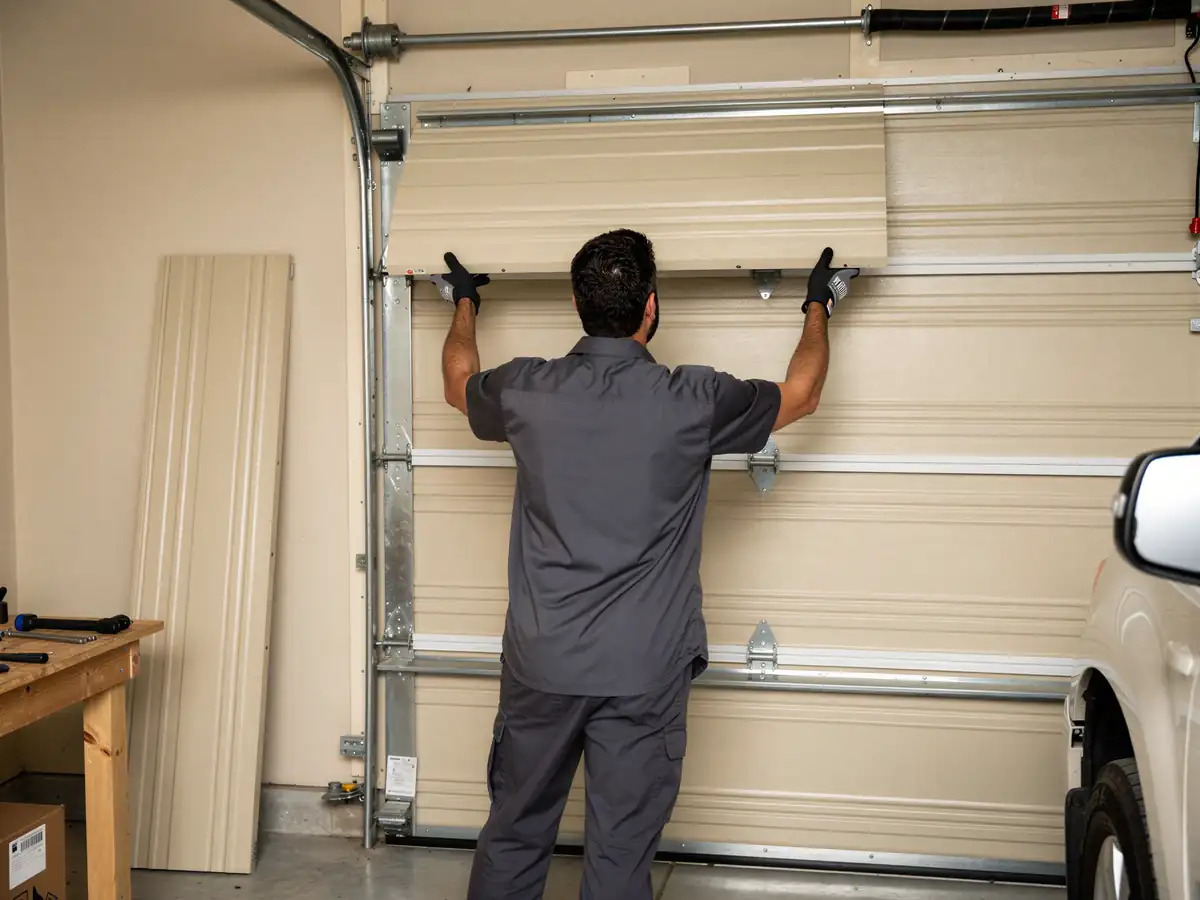
What we don't carry on the truck: obscure discontinued panel inserts or custom window inserts some builders used for a short run in the late 90s. If your door has one of those, we'll order it, and that adds a few days versus a same-visit fix.
How We Fix It
Most calls in this area break down into one of three jobs
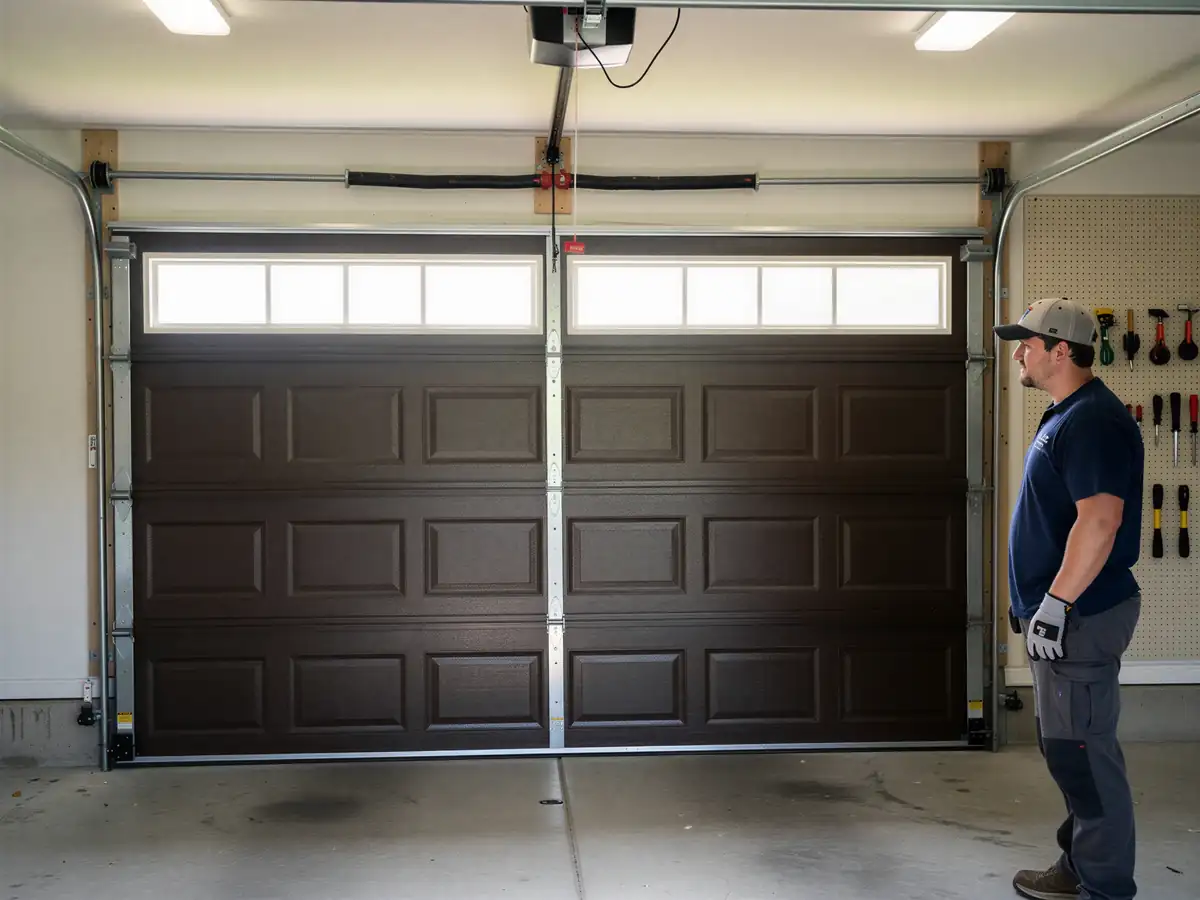
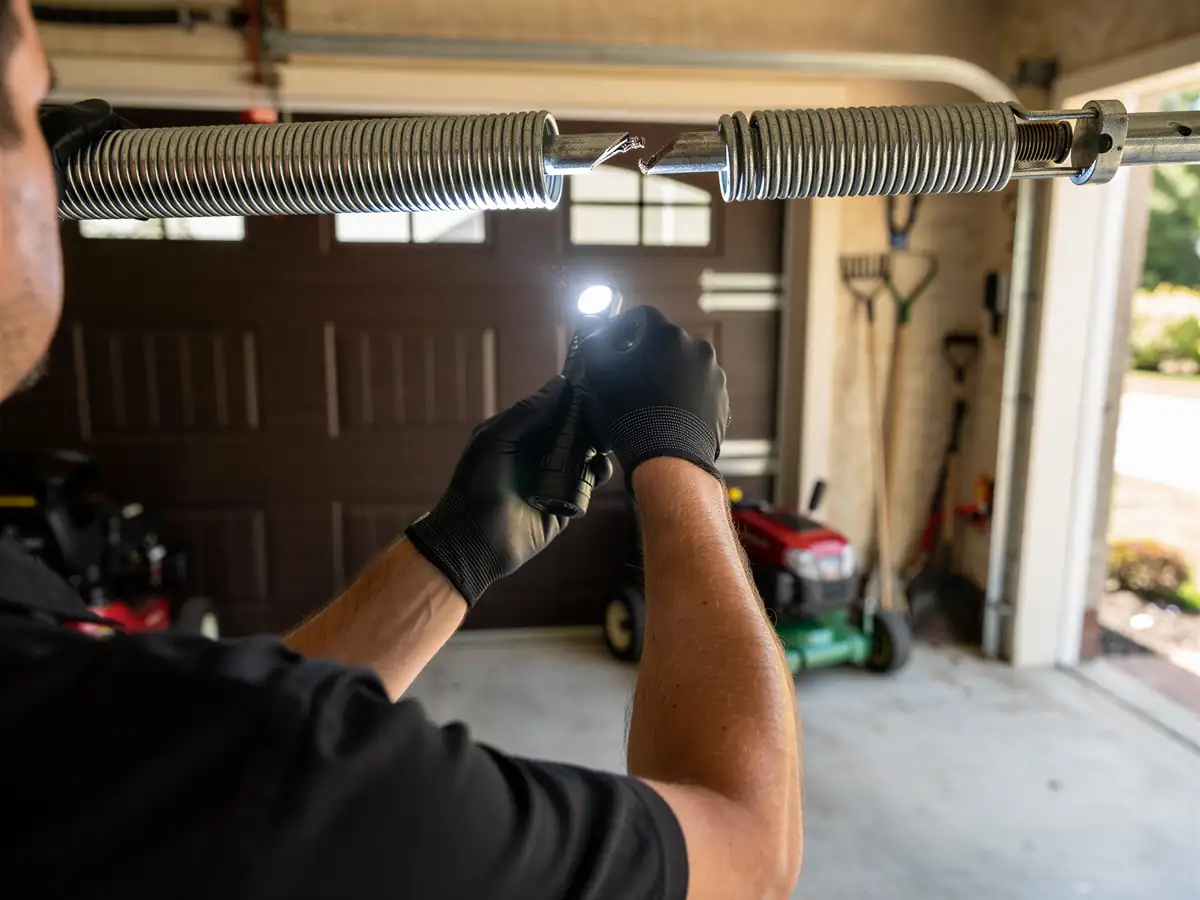
A torsion spring that's let go, an opener board that's stopped talking to the sensors, or a roller track that's bent from age and use. For a torsion spring, we unwind the old one, measure the wire gauge and wind count off the broken spring, and set a matched replacement under tension with the door balanced so it holds at any height without the opener straining.
For the 1990s-era chain-drive openers common on these houses, a dead board often looks like a dead opener
But the motor and gears are usually fine. We test the board, the sensors, and the wall switch separately before we replace anything, because swapping a whole opener when the board is the actual problem costs you money for nothing.
Track and roller wear shows up as a door that shudders or binds partway through its travel
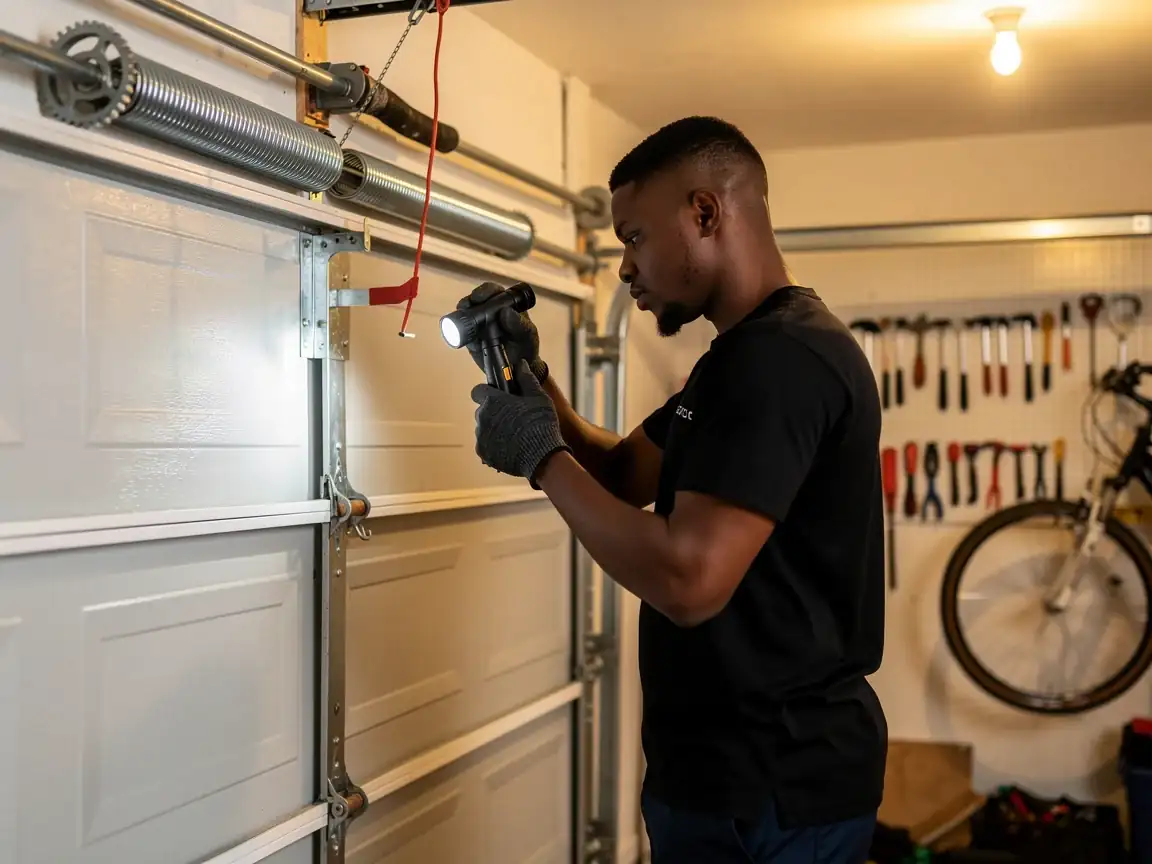
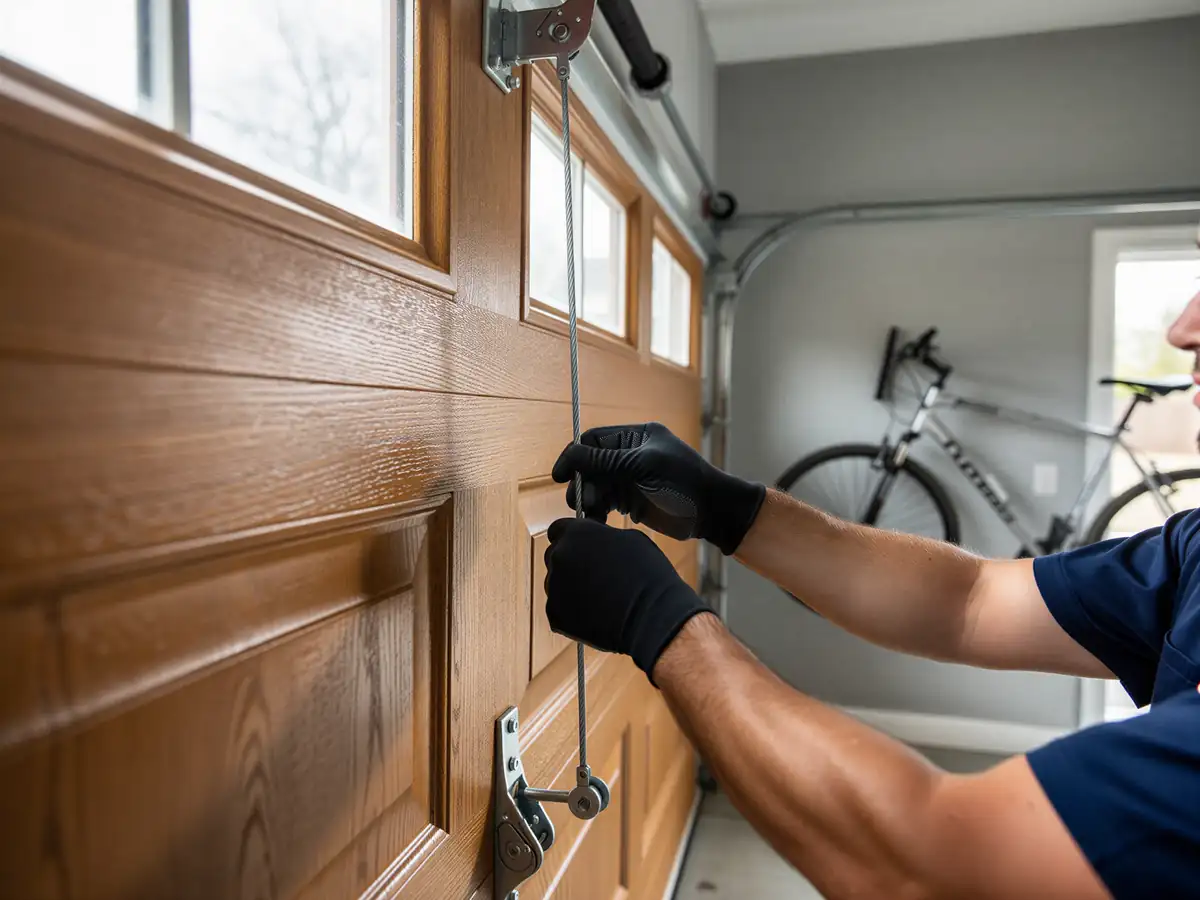
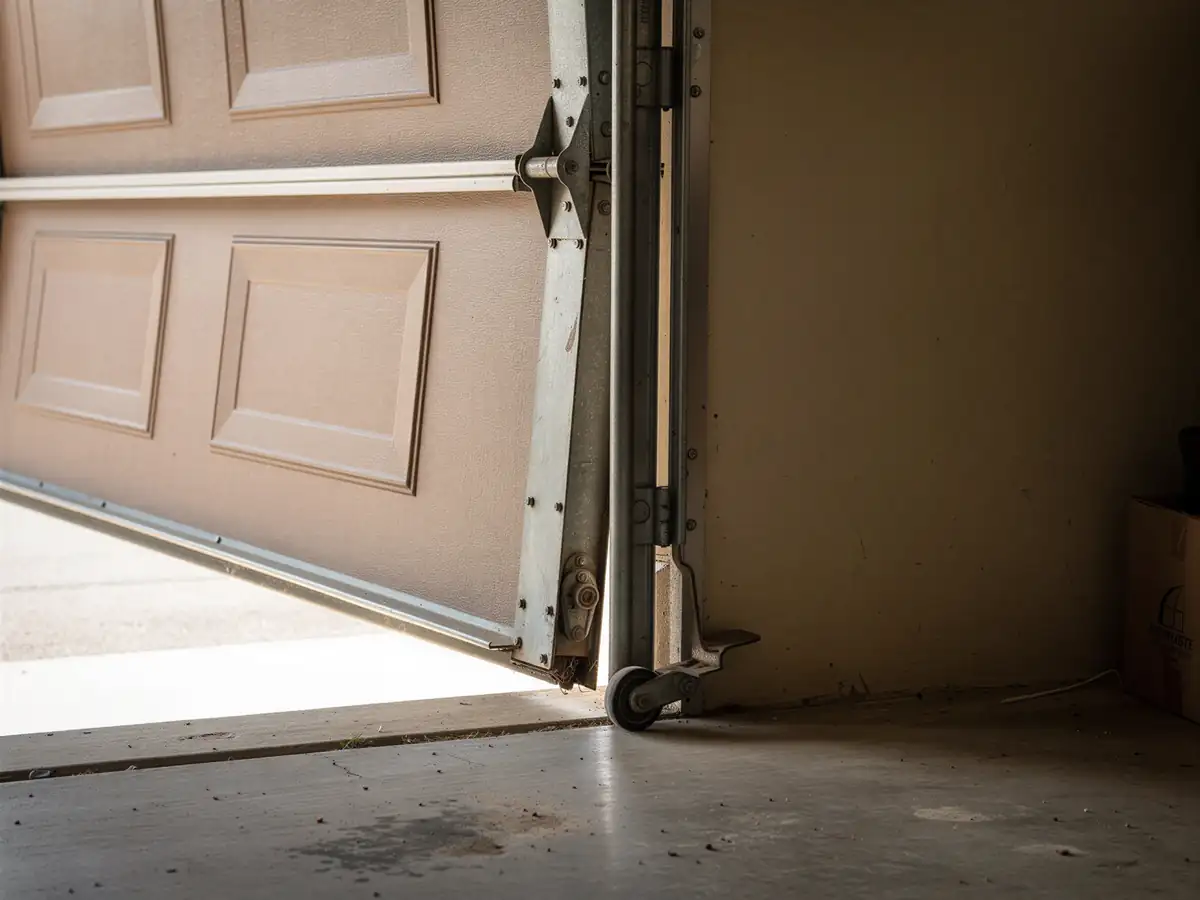
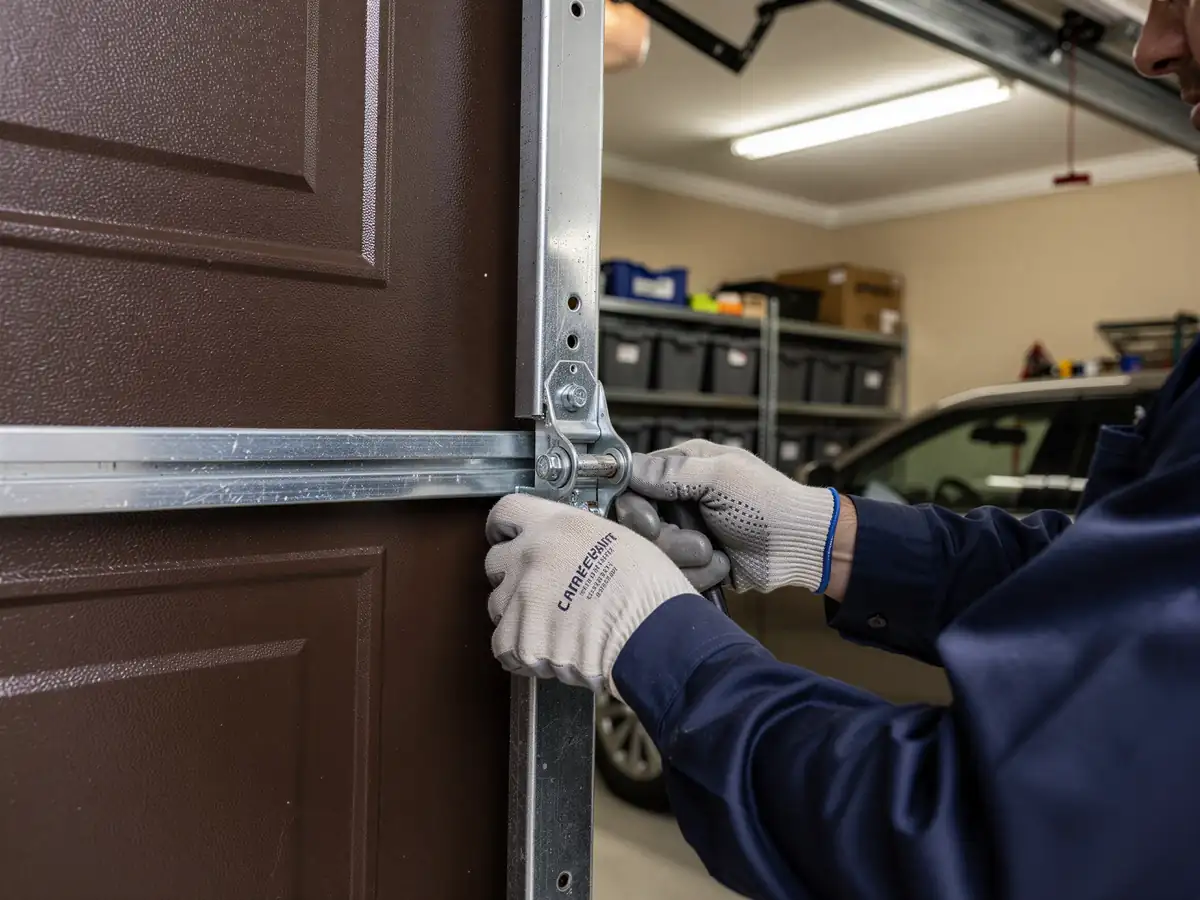
We realign the track, replace worn rollers, and check the cable drums for fraying, since a frayed cable on an older torsion system is the kind of thing that lets a door drop without warning.
What Causes It Around Here
Euharlee sits in a cold-moderate climate band, which means steel doors here see real freeze-thaw cycling through the winter without the deep-freeze stress that cracks hardware further north. What that does over thirty years is slower and sneakier: condensation inside the garage corrodes spring coils and roller stems from the inside, and the galvanized coating on older torsion springs wears thin enough that rust finishes the job.
With households here at 1,336 and median income around $83,750, most of the stock is owner-occupied single-family homes that have had one owner's worth of maintenance, not a landlord's. That usually means the door itself got looked at occasionally, but openers rarely got serviced until something actually broke. We see a lot of first-generation safety sensor failures for exactly that reason: nobody touches them until the door won't close.
Doing It Yourself
Lubricating hinges and rollers with a garage-door-specific lubricant twice a year is worth doing yourself, and it's the single best thing you can do for a mid-90s torsion system. Tightening loose bolts on the track brackets is fine too, as long as the door is down and the opener is unplugged.
Do not touch the torsion spring itself. It's wound under enough tension to cause a serious injury, and on a door this age the spring has likely never been replaced, which means it's closer to failure than a newer one. If the door feels heavy to lift by hand with the opener disconnected, that's a spring losing tension, not something to diagnose by trial and error.
Where This Job Goes Sideways
The most common mistake we see on these mid-90s doors is someone replacing a broken spring with a universal one that's close enough on paper but off on wire diameter or wind count
The door looks fine for a few weeks, then the opener starts straining, and six months later a second spring goes because it was carrying unequal load the whole time.
The second mistake is replacing an opener instead of a sensor board when the door won't close
We've driven out to swap a $20 part on openers that someone else quoted for full replacement. Not every failure needs the expensive fix, and we'll tell you when the cheaper one holds.
How It Shows Up
On a door this age, the warning signs are usually loud before they're dangerous. A grinding or popping sound when the door moves is often a roller or hinge on its way out. A door that reverses on its own partway down, or won't close at all, is almost always the photo-eye sensors, especially if they're the original units from the mid-90s install.
If the door slams the last foot instead of settling, or feels noticeably heavier to lift by hand than it used to, that's spring tension going. We come out from Acworth, 16 miles away, and we'd rather diagnose it over the phone first than have you wait on a visit for something you can describe in two sentences.