How It Shows Up
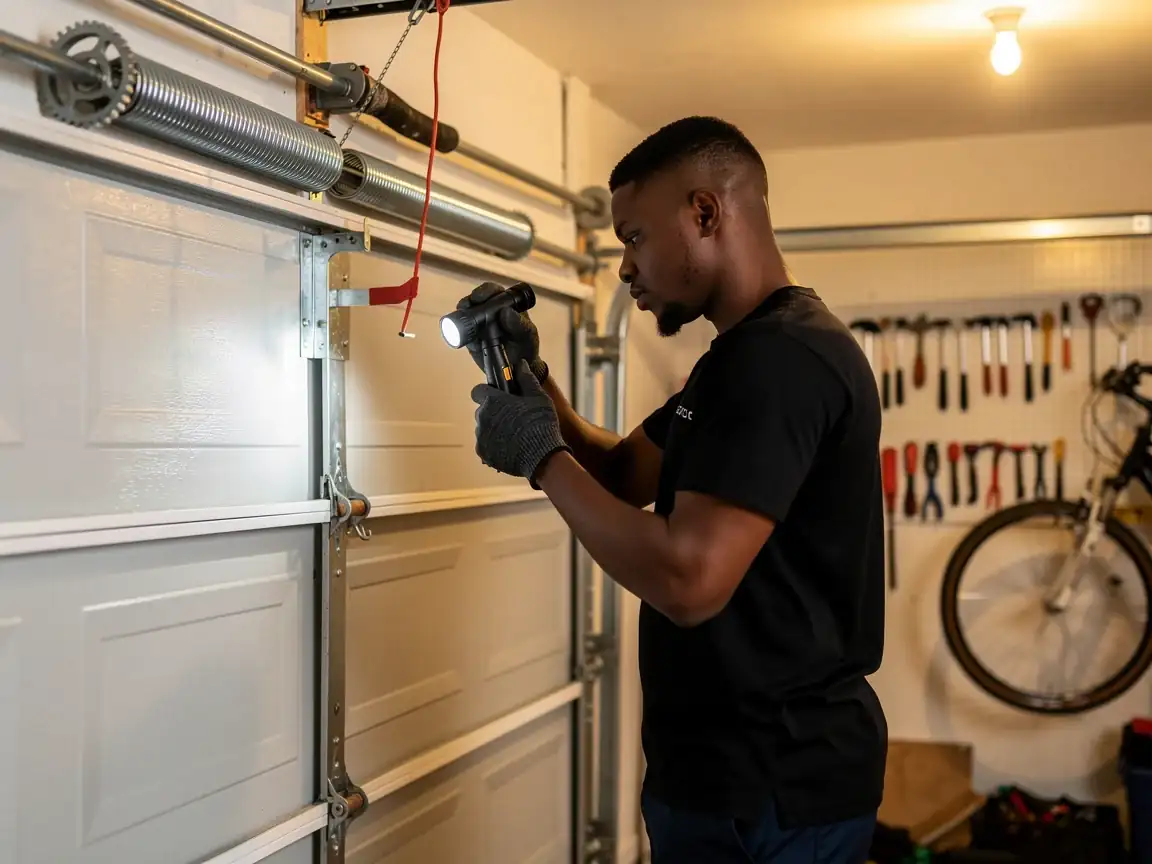
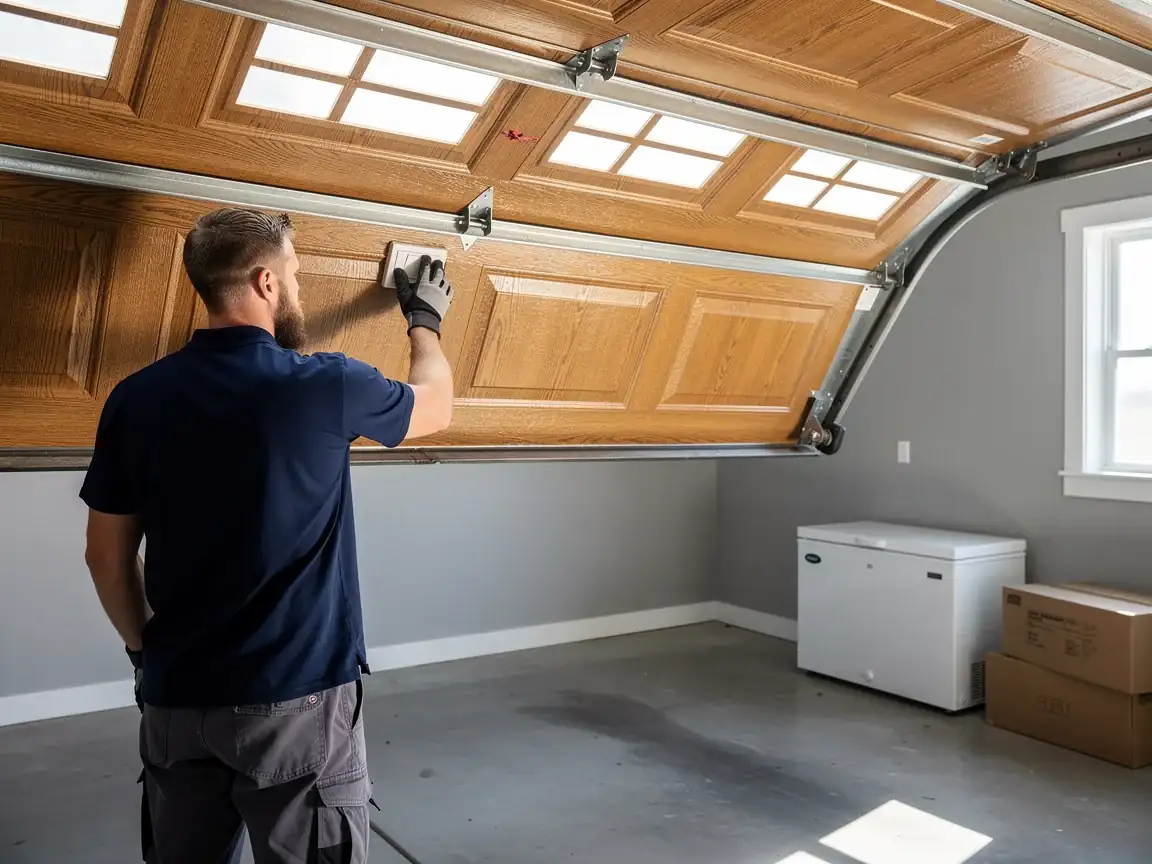
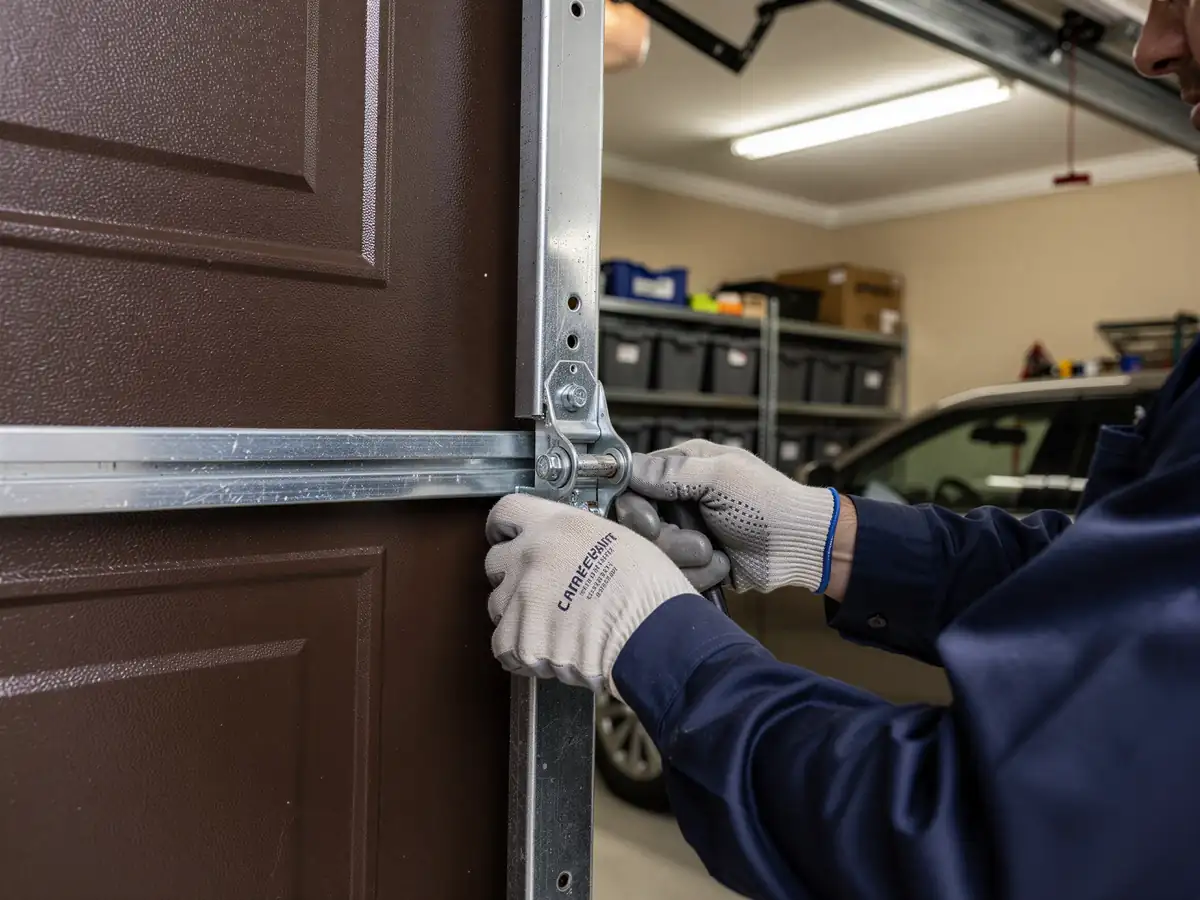
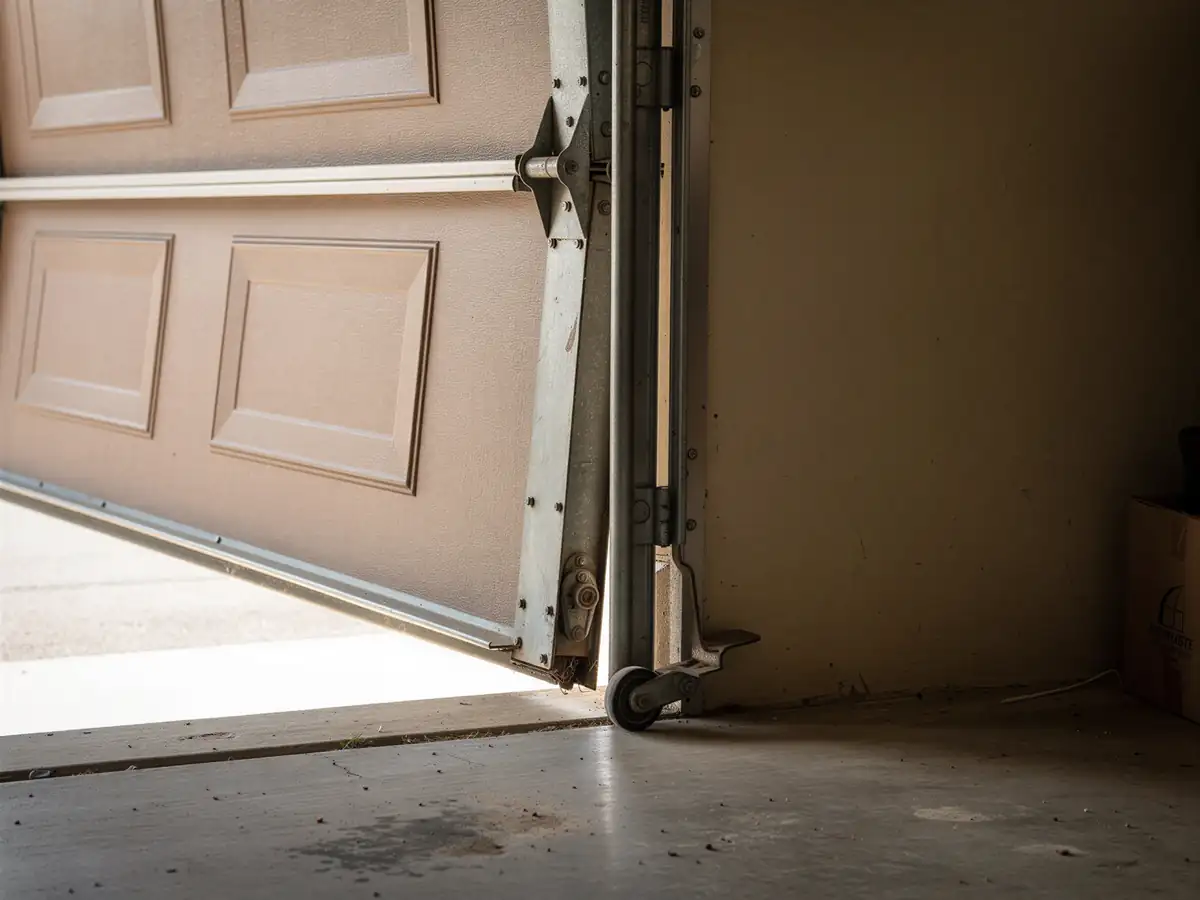
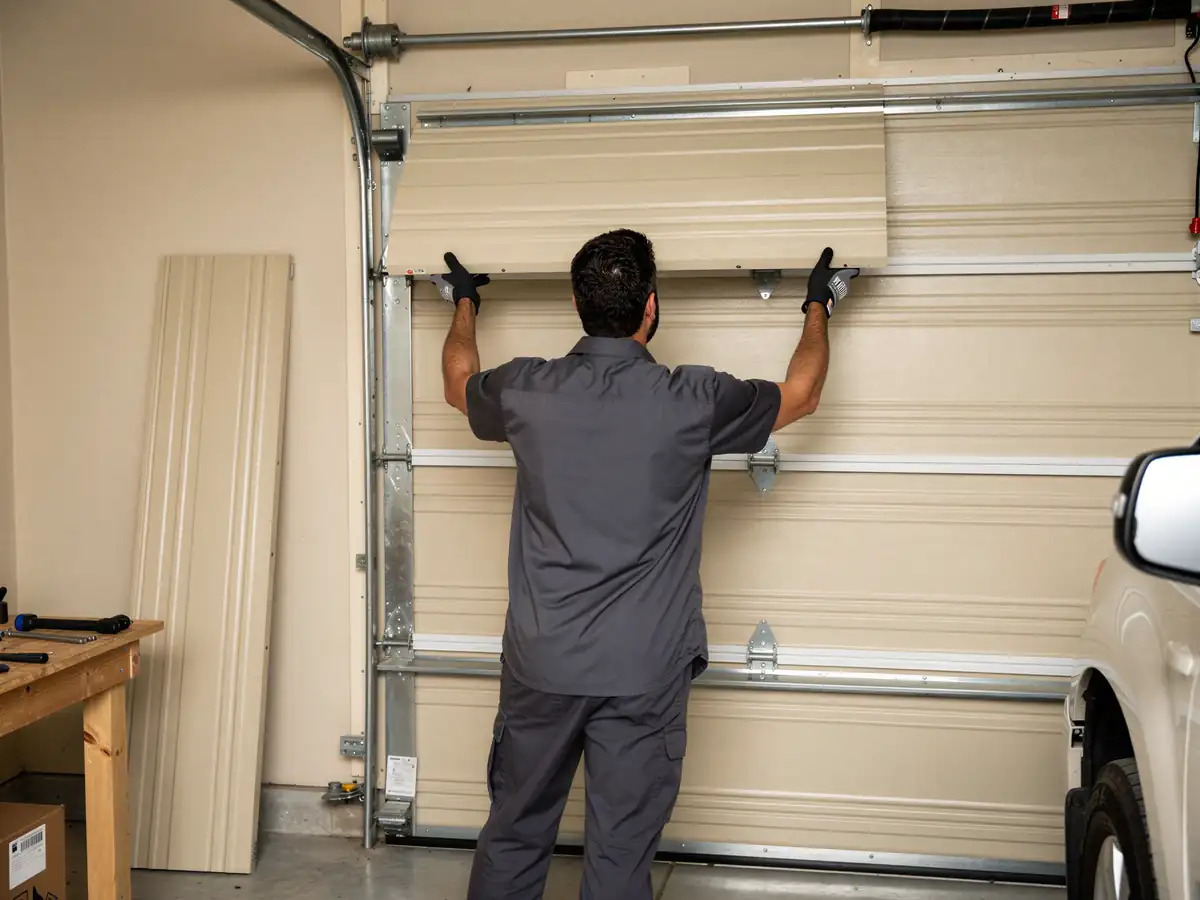
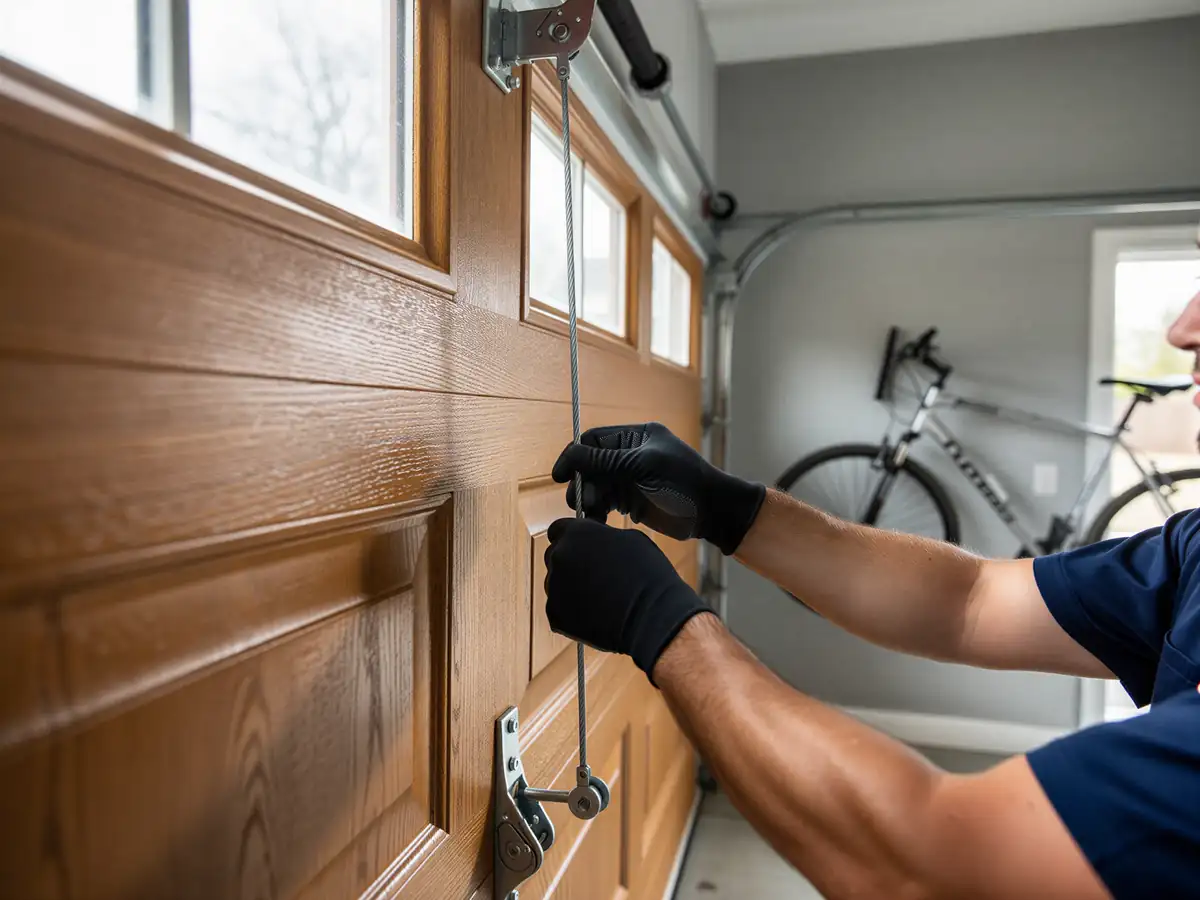
The first sign is usually a door that hangs crooked, dropping lower on one side than the other, or a door that jerks and stutters partway up the track instead of rising smooth. Sometimes you'll spot the problem before it fails completely: a cable strand poking out near the bottom bracket, or a thin wire starting to unwind off the drum. Once a cable actually snaps, the door usually won't move at all, or it slams down hard and fast because nothing on that side is holding tension anymore.
Most of the homes we work on in this area went up between 1964 and 2007, with a lot of that stock clustered in the 1980s and 90s build years across the twelve or so named neighborhoods we cover. That window matters here because a big share of those doors still run on the original lift cable and drum setup, or a replacement installed without upgrading the hardware around it. Cables don't last forever even when nothing else is wrong - they're a wear item, same as a serpentine belt. On a 30-plus year old system, fraying at the drum or the bottom bracket is the rule, not the exception.
Where This Job Goes Sideways
Cable repair looks simple from the outside: unhook the old one, loop on a new one, done
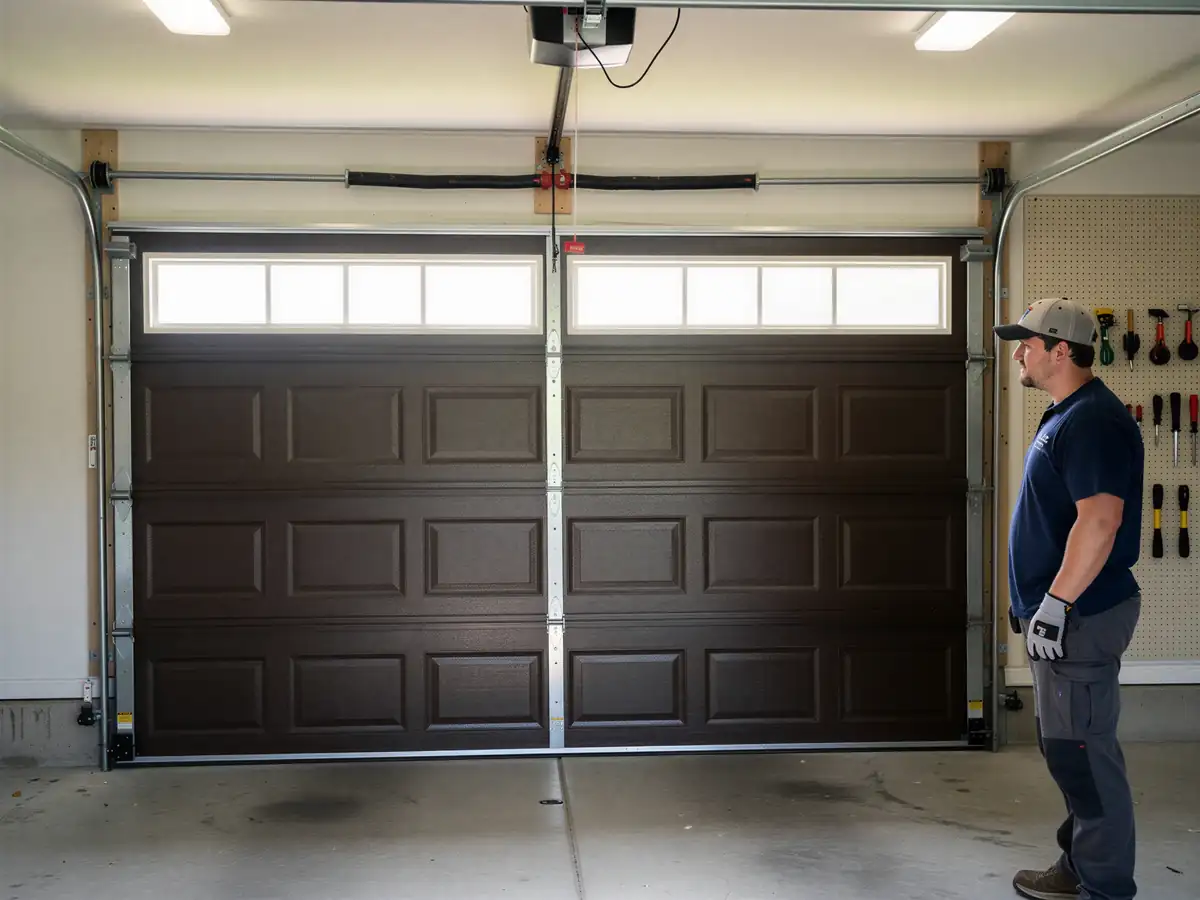
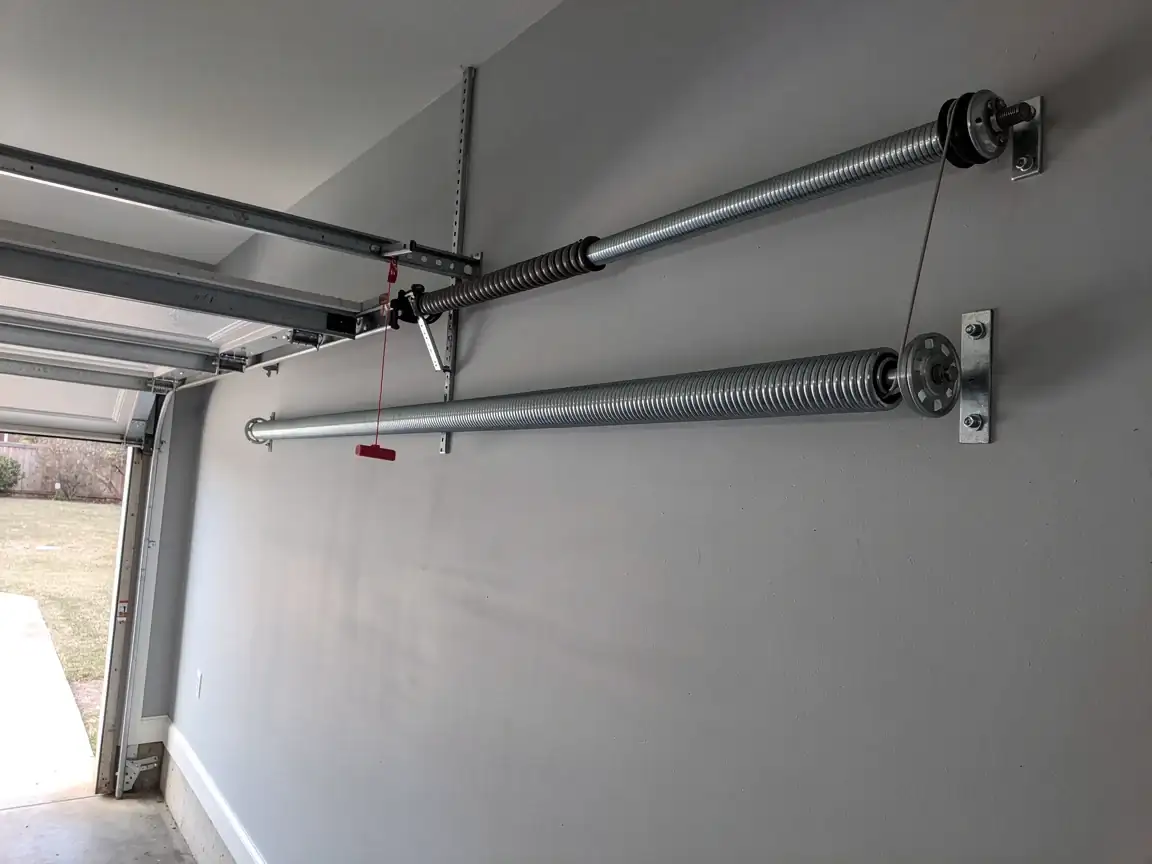
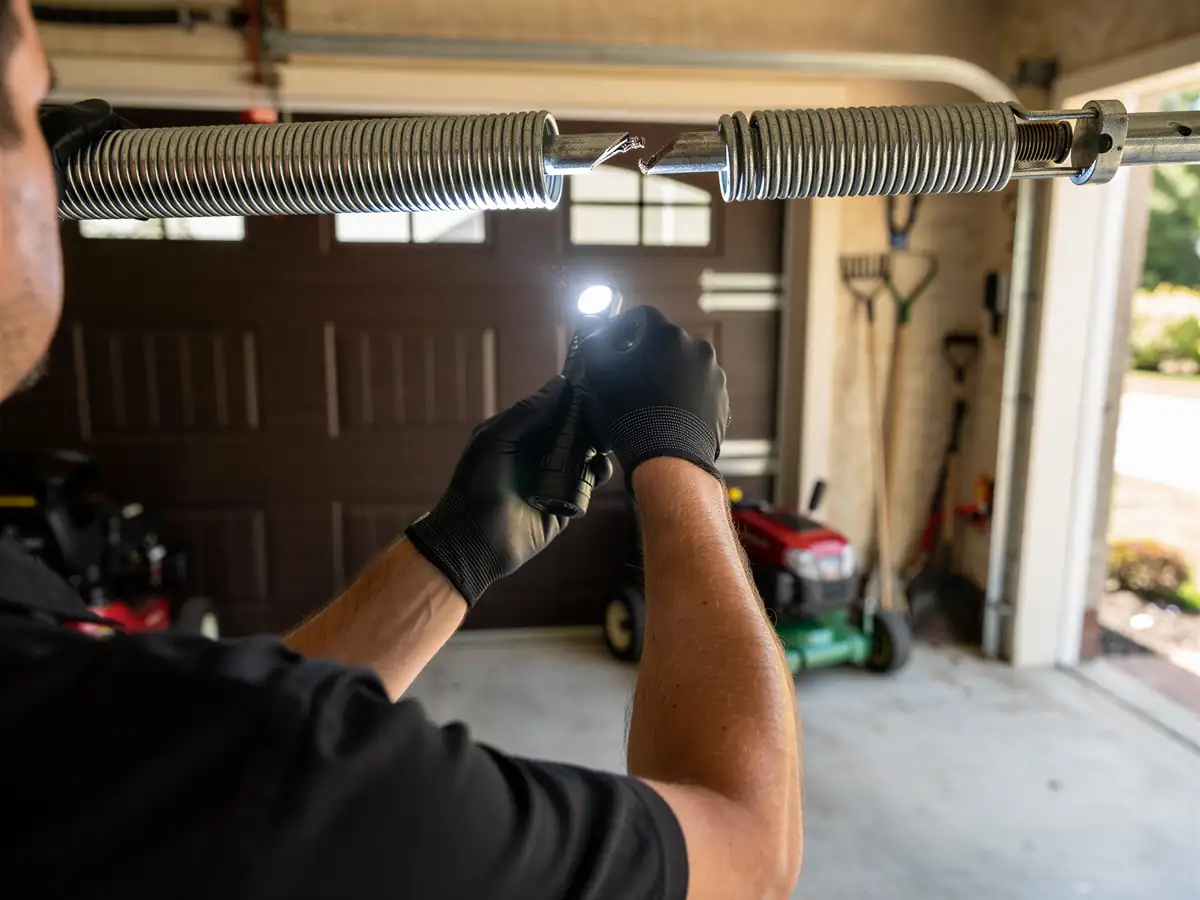
What actually goes wrong is almost always about what's still attached when you start. A broken cable means the torsion spring (or the extension springs on an older setup) is still holding stored energy, and that energy doesn't care whether you're ready for it. We see people try to muscle the door up by hand to get the car out, not realizing the opposite cable is now carrying load it was never sized for, which stretches or kinks it too.
The other place this goes sideways is on doors with two cables doing different jobs
One for lift, one as a safety cable on the extension spring side. Replace the wrong one, or replace one and leave the other worn, and you've fixed the symptom but not the problem. Within a few months the second cable lets go, usually at a worse moment than the first. On systems built across the 80s and 90s stock common in this area, we also run into drums that are pitted or slightly undersized for a thicker replacement cable, so the new cable doesn't seat right and slips.
Doing It Yourself
We're not going to tell you a cable swap is beyond anyone with tools and patience, because for some people it isn't. What we will say plainly: if the spring is still tensioned, this isn't a weekend project, it's a way to lose fingers or take a cable strike to the face. A torsion spring holds enough stored force to seriously hurt you, and there's no way to tell how much tension is left just by looking at it.
If the door is already down, the opener disconnected, and you just need the car out of the garage, that's a reasonable DIY move. Diagnosing which cable failed and why, releasing spring tension safely, and reinstalling to the correct length and winding - that's the part we don't recommend doing solo the first time. One honest limitation on our end: if the drums or track are also worn or bent, a cable-only repair won't hold, and we'll tell you that instead of selling you a part that's going to fail again in a season.
What Causes It Around Here
This area sits in a moderate cold climate band, which means real temperature swings through the year rather than steady heat or steady cold. Cables and the galvanized coating on them react to that - metal contracts in cold snaps and expands back, and that repeated cycling is what works a fraying strand loose faster than it would somewhere with flatter temperatures year-round. Combine that with a garage that isn't climate controlled, which is most garages, and the cable spends its whole life flexing with the weather.
Age of the hardware is the other half of it. With housing in this area built mostly between 1964 and 2007 and a heavy concentration in the 1980s and 90s, a lot of original cable and drum assemblies are well past the point where wear is cosmetic. Galvanized lift cable has a service life, and nobody replaces it on a schedule - it gets replaced when it breaks or when someone doing a spring job notices it's frayed and swaps it preventively. Across the household counts in this service area, that adds up to a steady, predictable repair, not a rare one.