Checking It Yourself
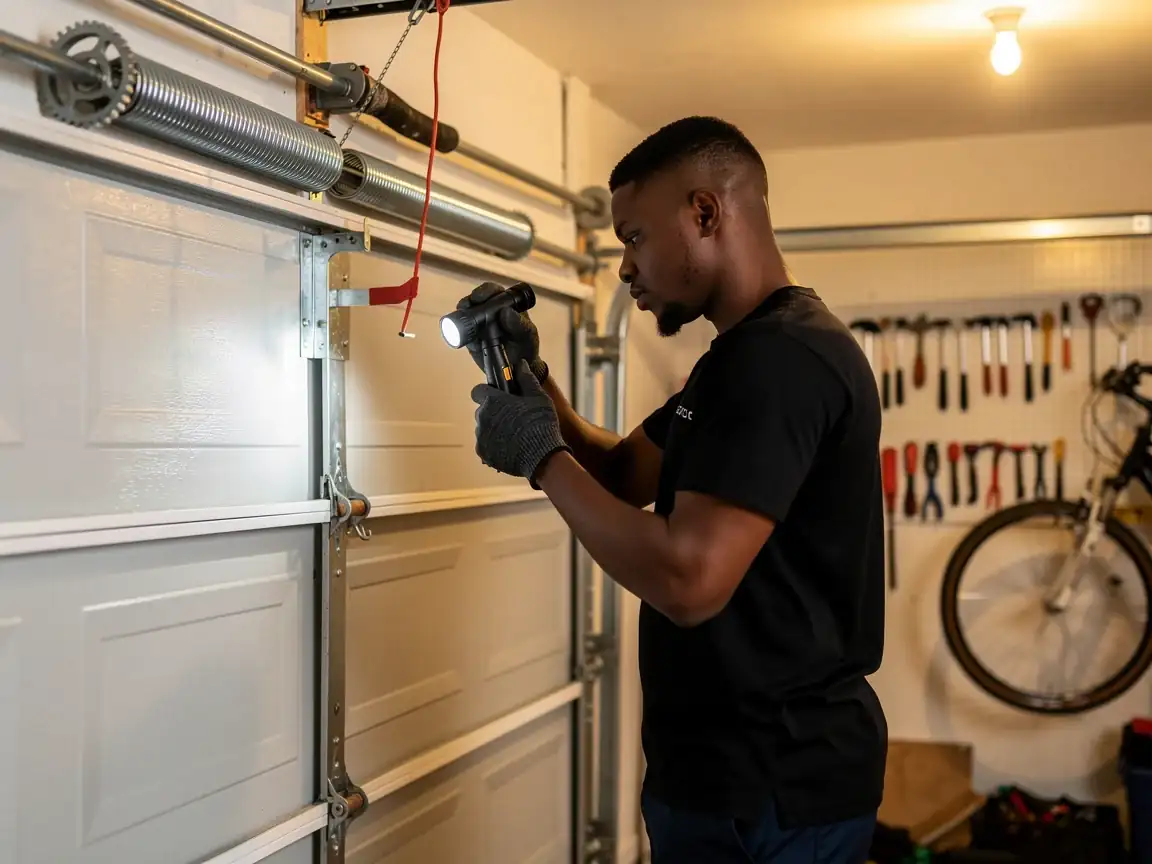
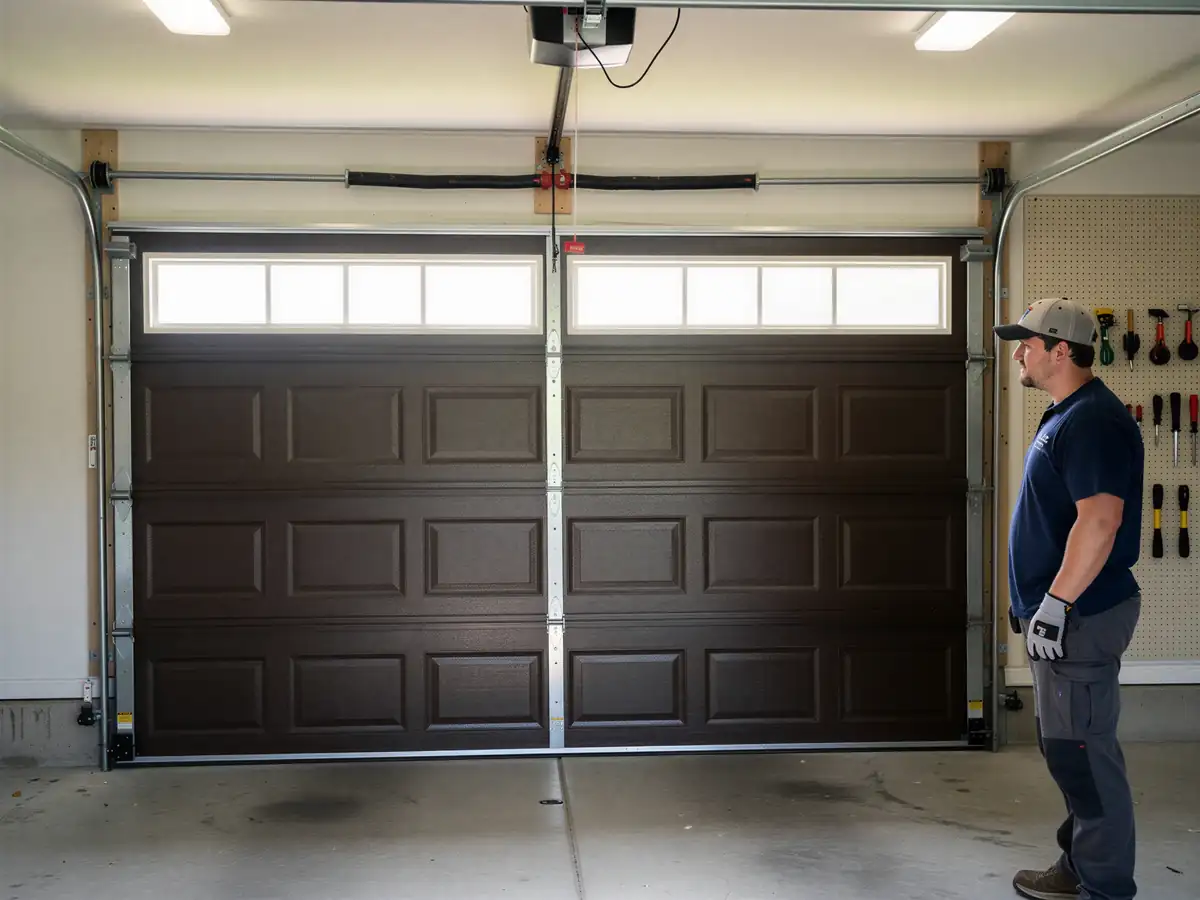
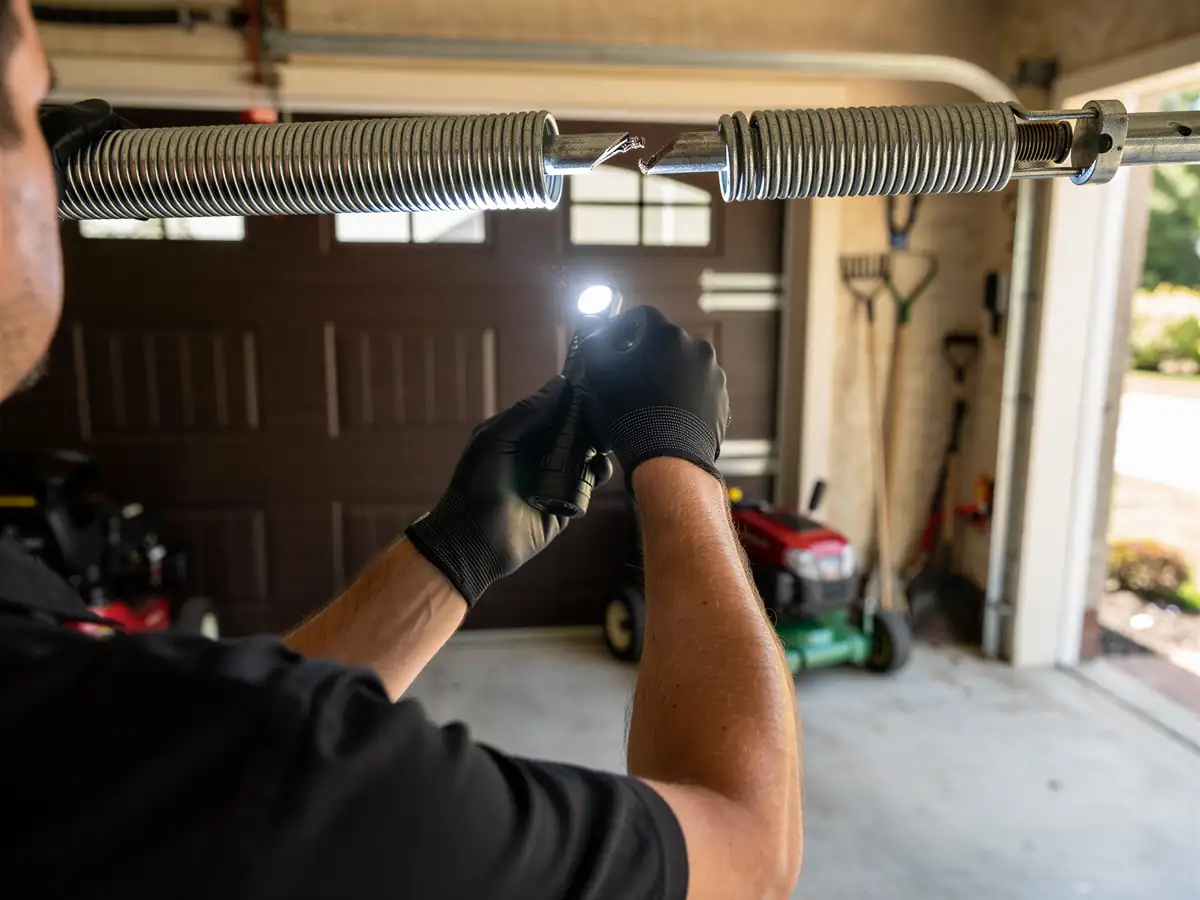
Before you call anyone, walk out and look at the door with the opener disconnected. Pull the release cord, lift the door by hand. If it moves smoothly and holds halfway up on its own, the springs are doing their job. If it drops like a stone or you can barely lift it, that's a spring problem, not an opener problem, and it's usually worth fixing on its own.
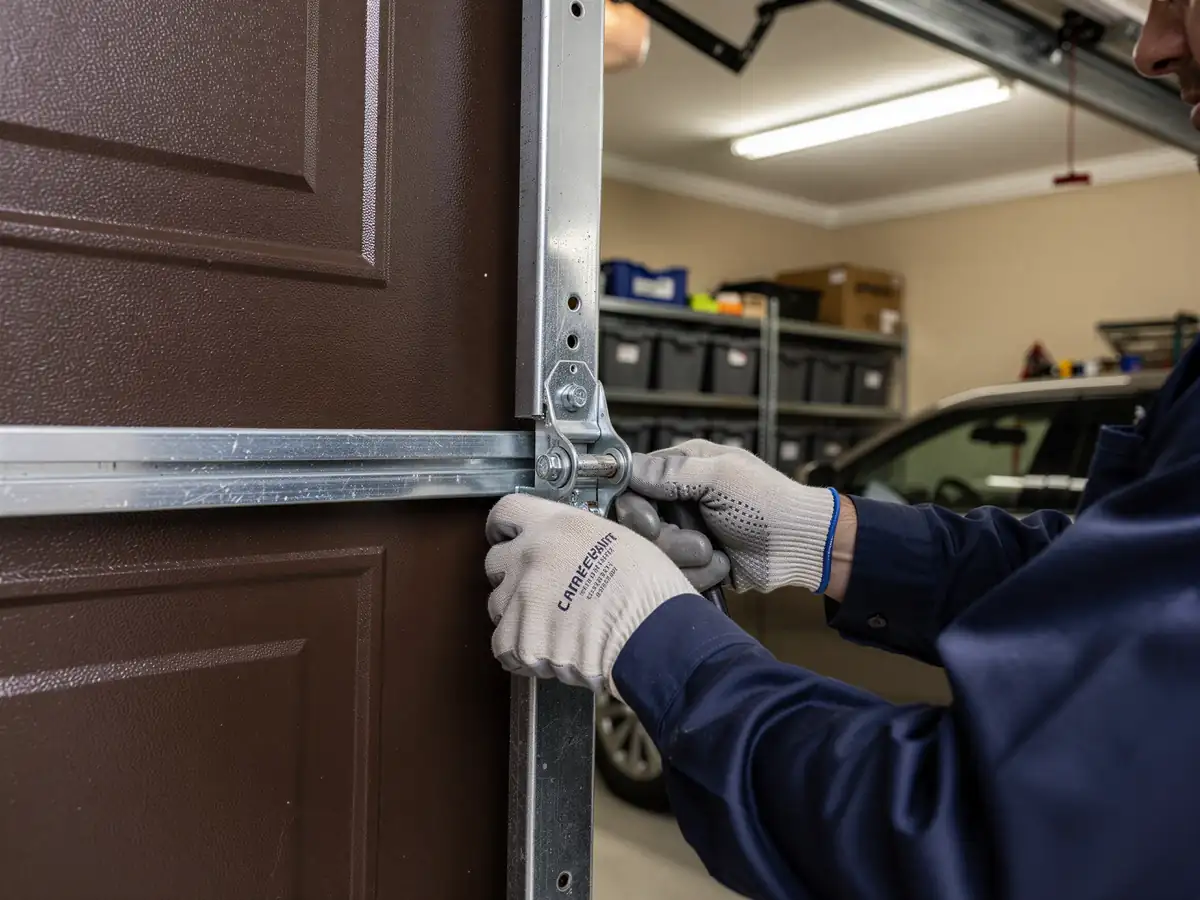
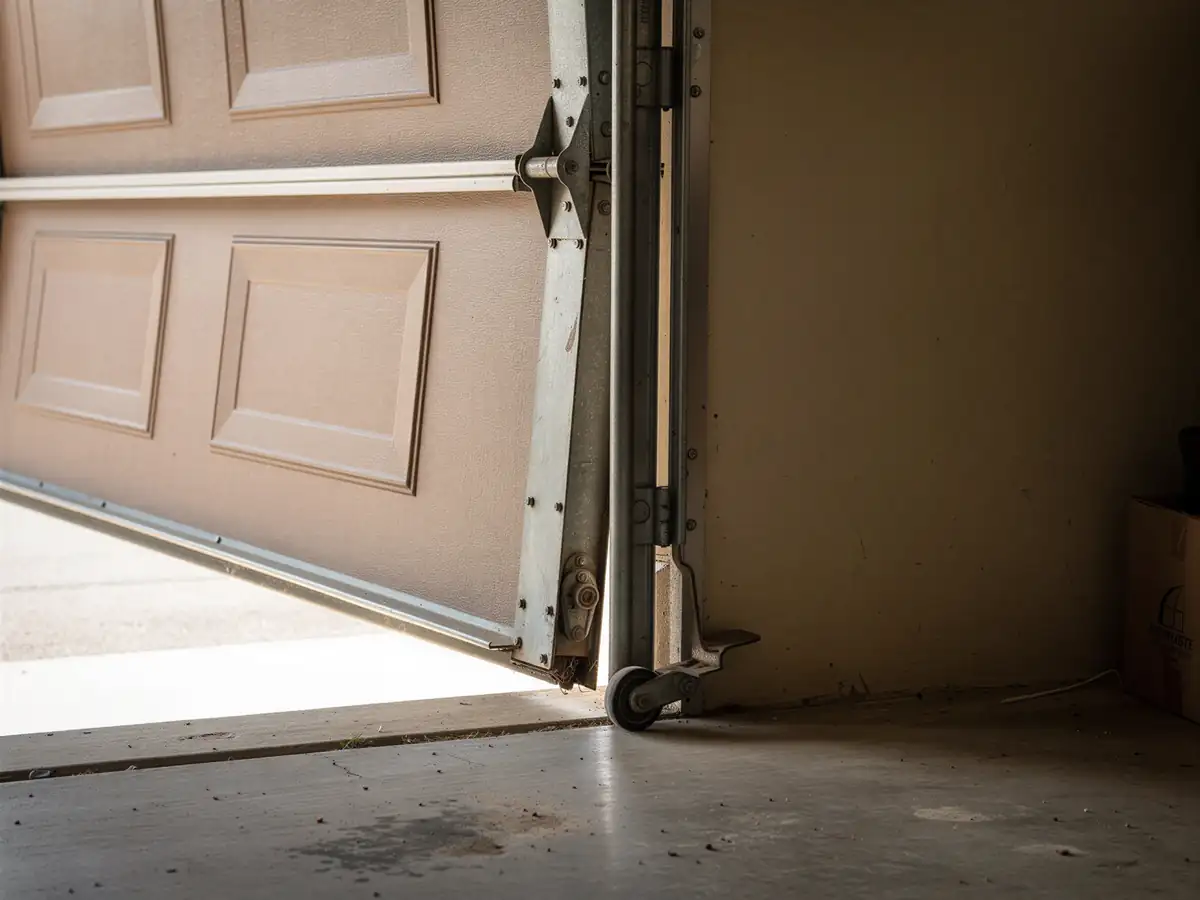
Check the tracks for daylight gaps where the rollers ride - rust pitting is common once a steel door has sat through enough of Acworth's cold-moderate winters. Run a hand along the bottom panel for soft spots; original doors from the 1980s and 90s building boom here often have thinner gauge steel than what gets installed today, and that bottom section takes the brunt of ground moisture.
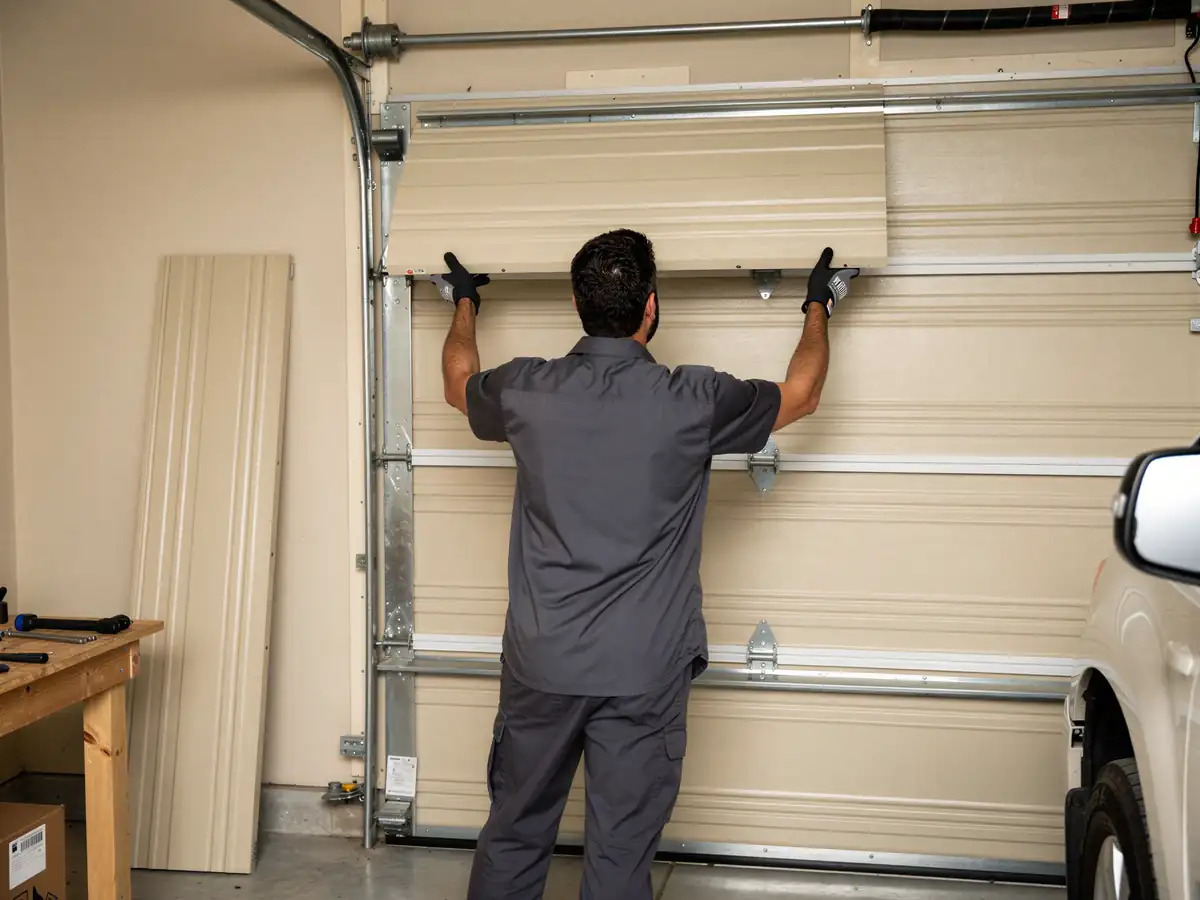
Look at the panels for horizontal cracking near the hinges. One cracked panel on an otherwise sound door is a repair. Three cracked panels with a warped track is a replacement, no matter how good the opener still sounds. None of this takes more than ten minutes, and it tells you more than a phone description ever will.
The Situation
Acworth's housing mostly went up between 1964 and 2007
With the median build year sitting around 1989. Across the twelve areas we work in day to day, that pattern holds - this isn't a town with a scattering of older bungalows next to brand-new infill. It's a long run of late-1980s and 1990s construction, which means a large share of the garage doors out here are the same age, built to the same codes, and wearing out on roughly the same schedule.
That matters for how we answer "is it worth fixing." A door installed in 1989 is now pushing 35 years old
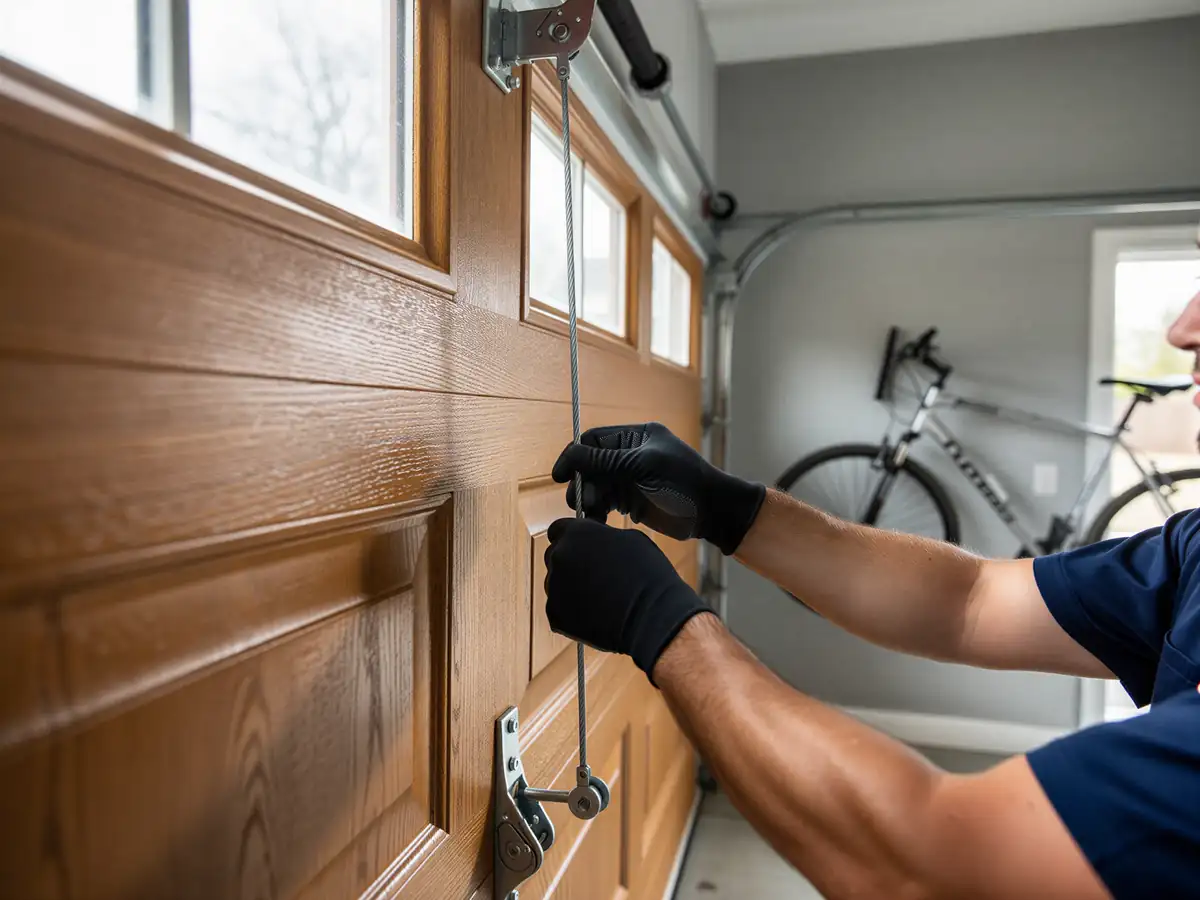
The hardware on it - torsion springs, steel rollers, a lift cable rated for a specific door weight - was sized for a door that's heavier or lighter than what gets installed new today. Swap one spring for a generic replacement and the door can lift unevenly or slam on the way down. We see this a lot because so much of the stock here is the same vintage, not because any one house did something wrong.
- 35 years
The flip side: because so many doors are the same age
Parts that fit one 1989 door usually fit the next one on the street. That keeps most of these jobs in repair territory longer than you'd expect, at least until the rust sets in.
How Local Conditions Play In
This part of Georgia sits in a cold-moderate climate band - not the deep freezes you'd get further north, but enough freeze-thaw cycling each winter to work on steel and wood both. A garage door built in the late 80s or 90s wasn't always insulated to today's standard, and on an uninsulated steel door that temperature swing shows up as condensation on the inside face, which is what starts the bottom-panel rust we see on so many original doors.
Springs feel this too. Torsion springs lose a bit of tension as the metal cools, which is why a marginal spring that lifted fine in August can fail outright on a cold January morning. If your door has been getting harder to lift as the weather's turned, that's not your imagination - it's the spring telling you it's near the end, and it's worth addressing before it lets go completely rather than after.
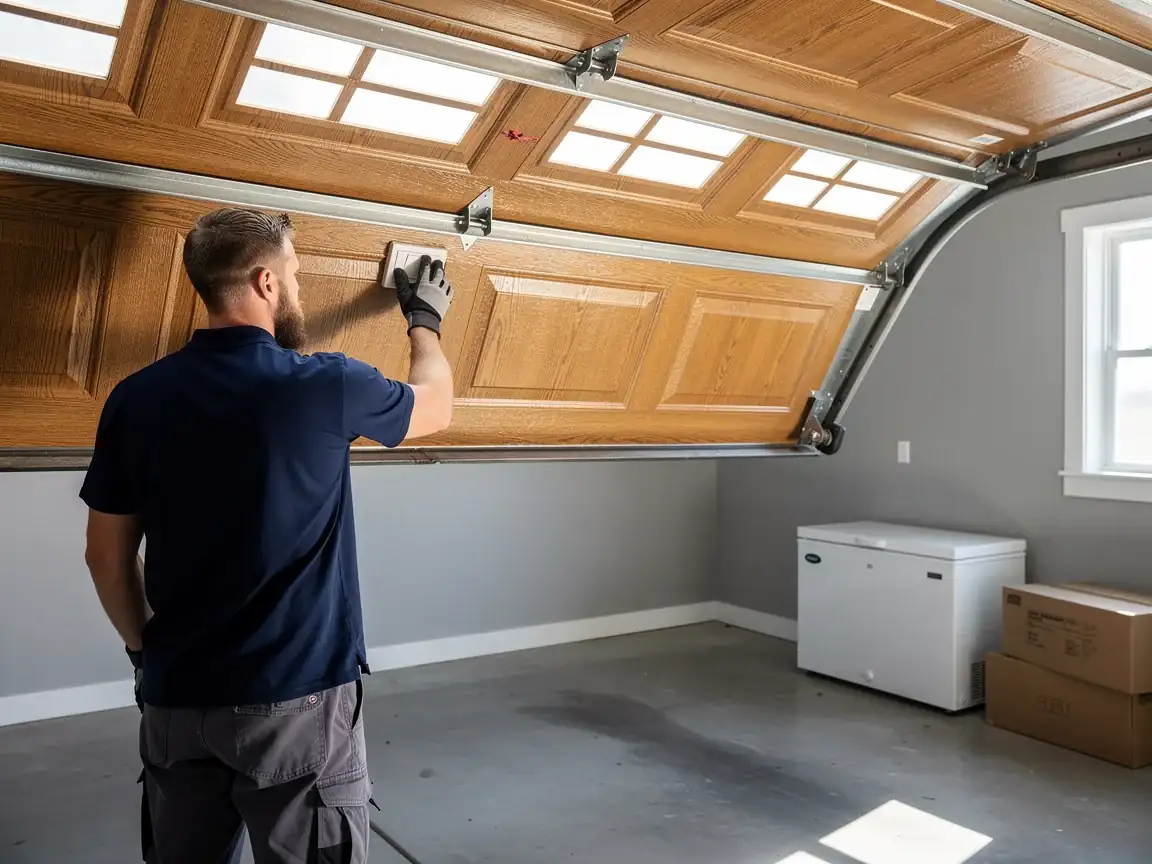
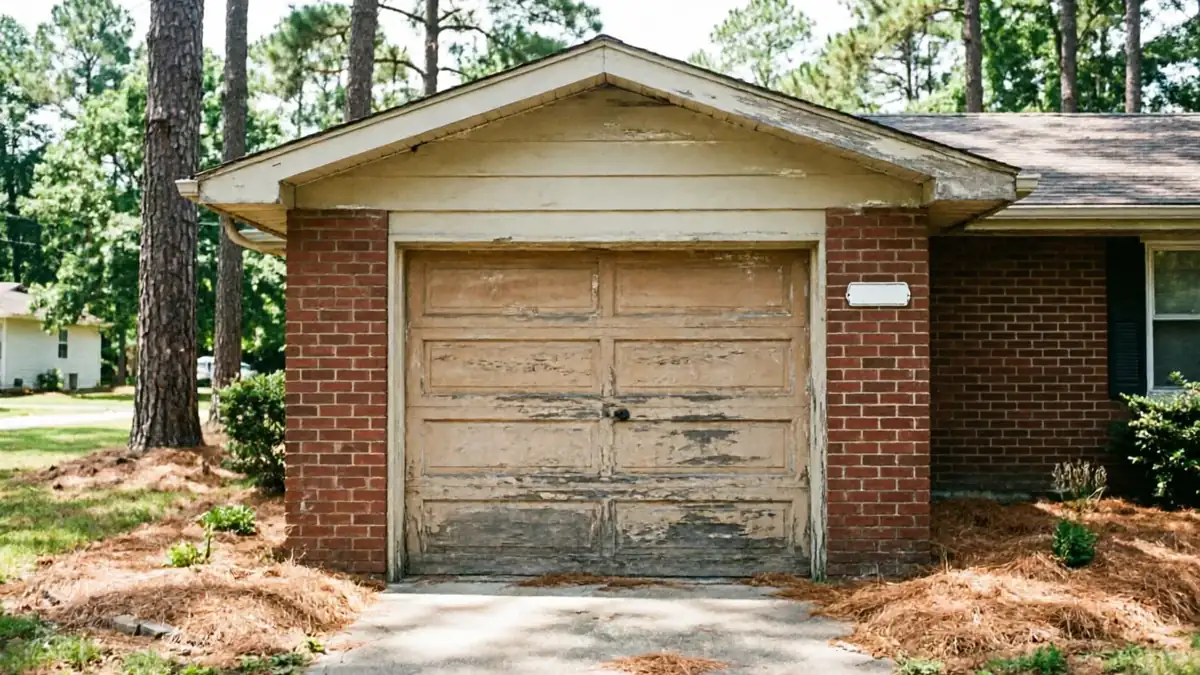
Wood doors from the same era - less common here but still around - are more exposed. Moisture cycling rots the bottom rail first, usually where the weatherstrip has already failed. Once that rail is soft, you're not fixing a wood door, you're buying a new one; there's no patch that holds up through another winter.
What Most People Get Wrong
The biggest mistake we see is treating a noisy door and a failing door as the same problem. A door that squeals but opens and closes on time just needs rollers and hinges lubricated - a quick fix, not a replacement conversation. A door that's gone quiet but hesitates, reverses, or won't fully seat is a different animal, usually a spring or cable issue underneath the quiet.
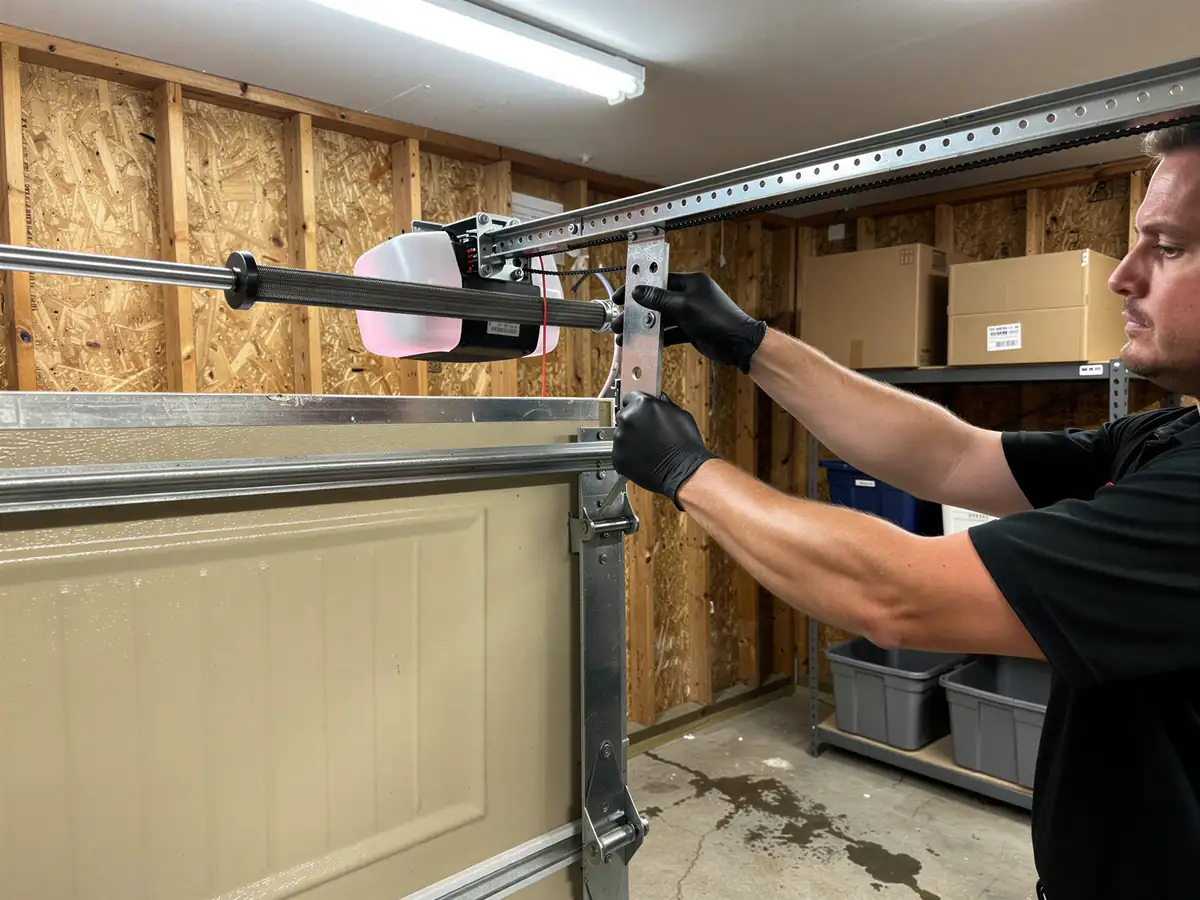
Second mistake: assuming an opener replacement fixes a door problem. If the door itself is dragging on a bent track or riding on a weak spring, a new opener motor just works harder to compensate and burns out faster. Fix the door first, then decide if the opener still needs attention.
Here's the honest limit: once a door's steel has rusted through at the bottom corners, or the panels are cracked across more than one section, we're not going to try to patch it into another five years. Parts for some of the older 1980s-era doors are slow to source and sometimes don't exist in the right size anymore, and a patched-together door that fails again in eight months isn't a good use of anyone's money. At that point the honest answer is replace it, and we'll say so instead of running up a repair bill that doesn't hold.