Checking It Yourself
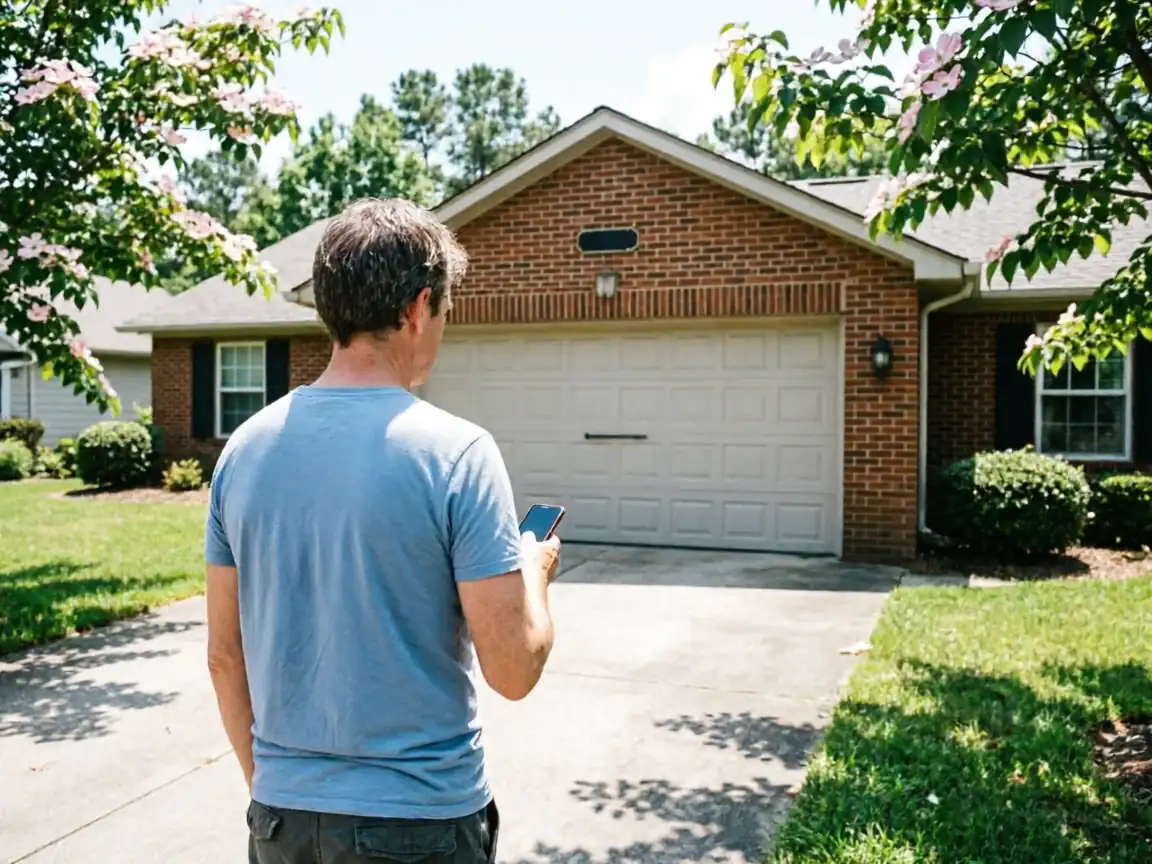
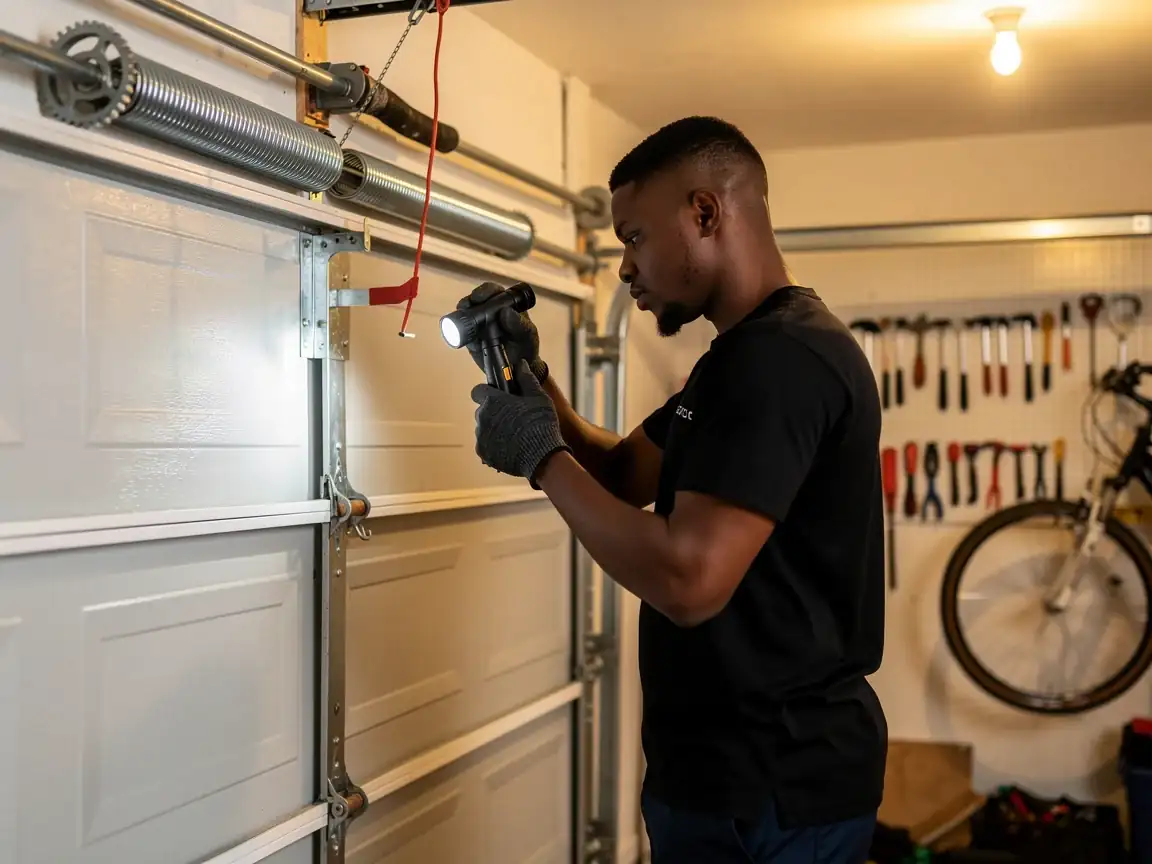
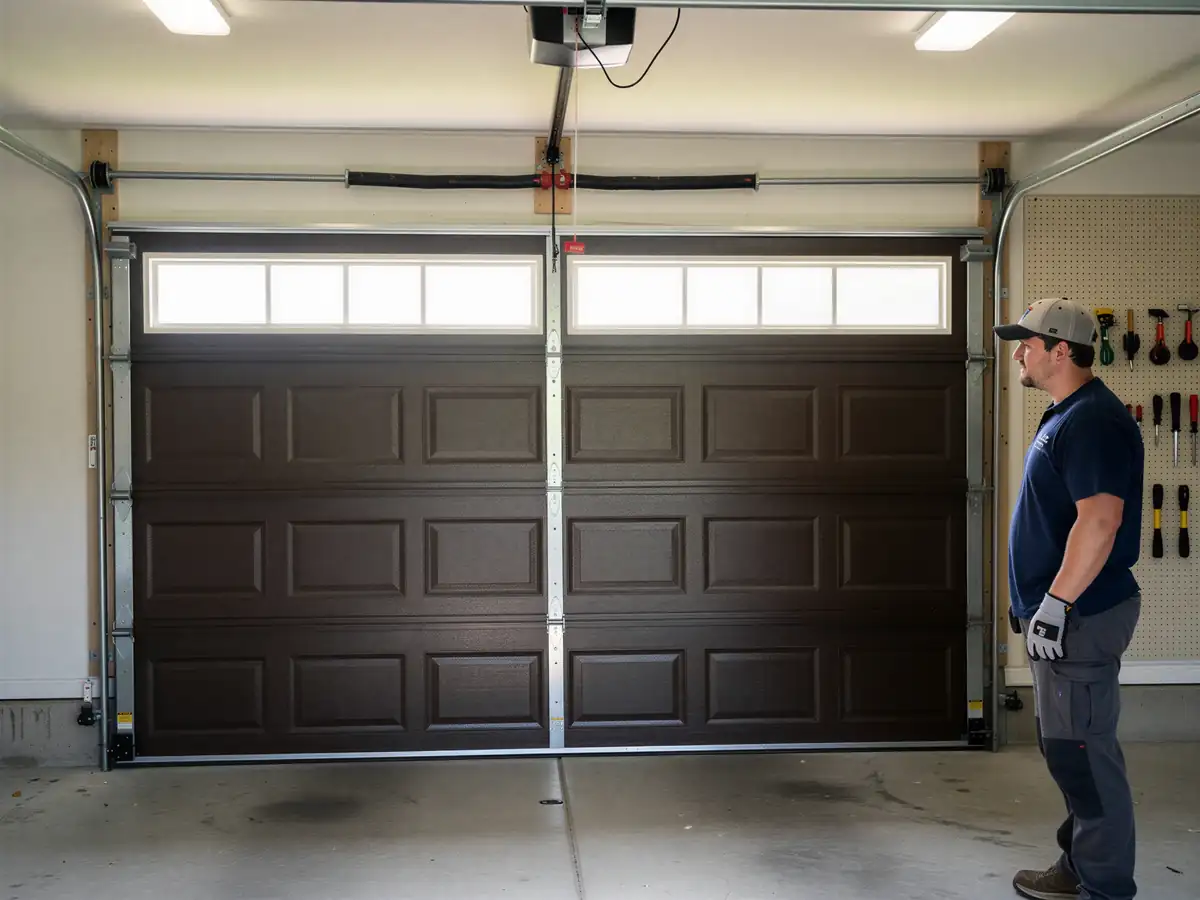
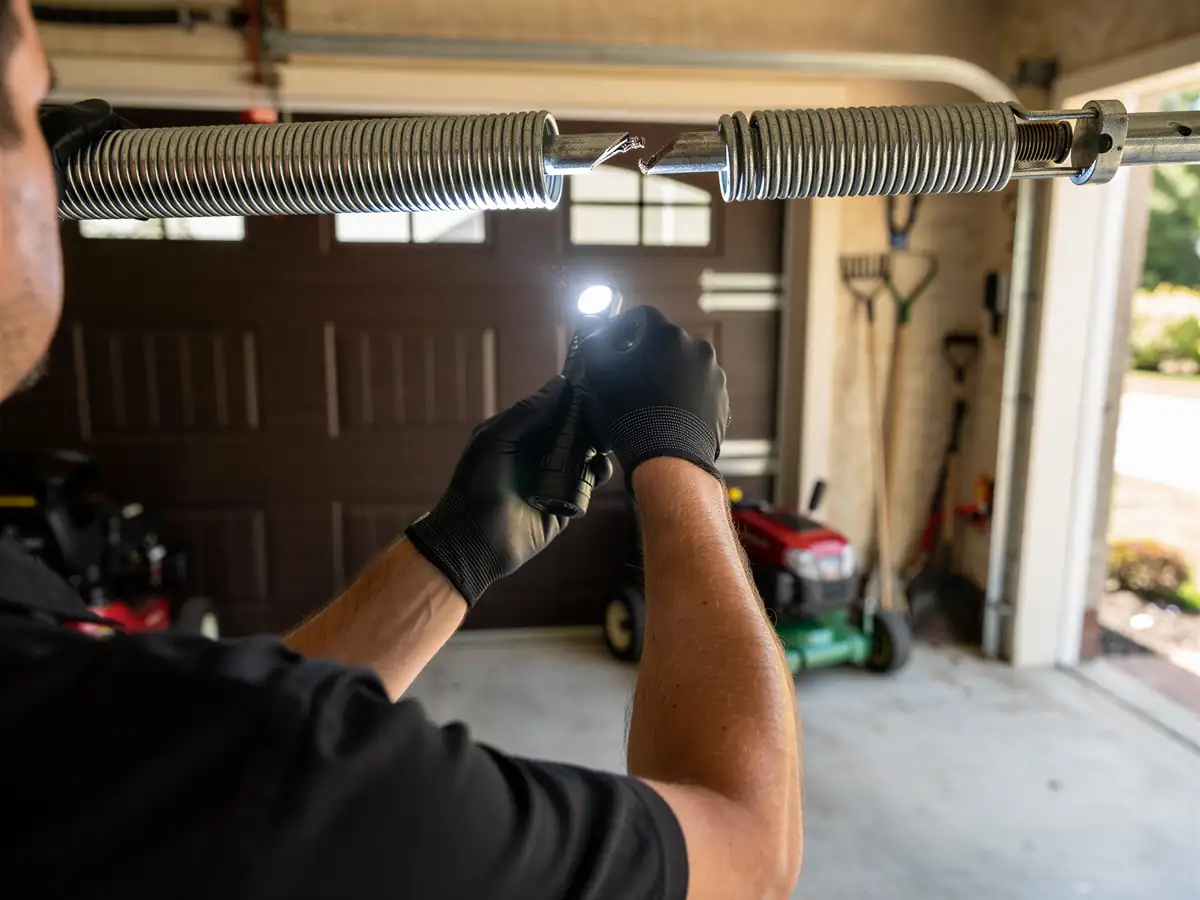
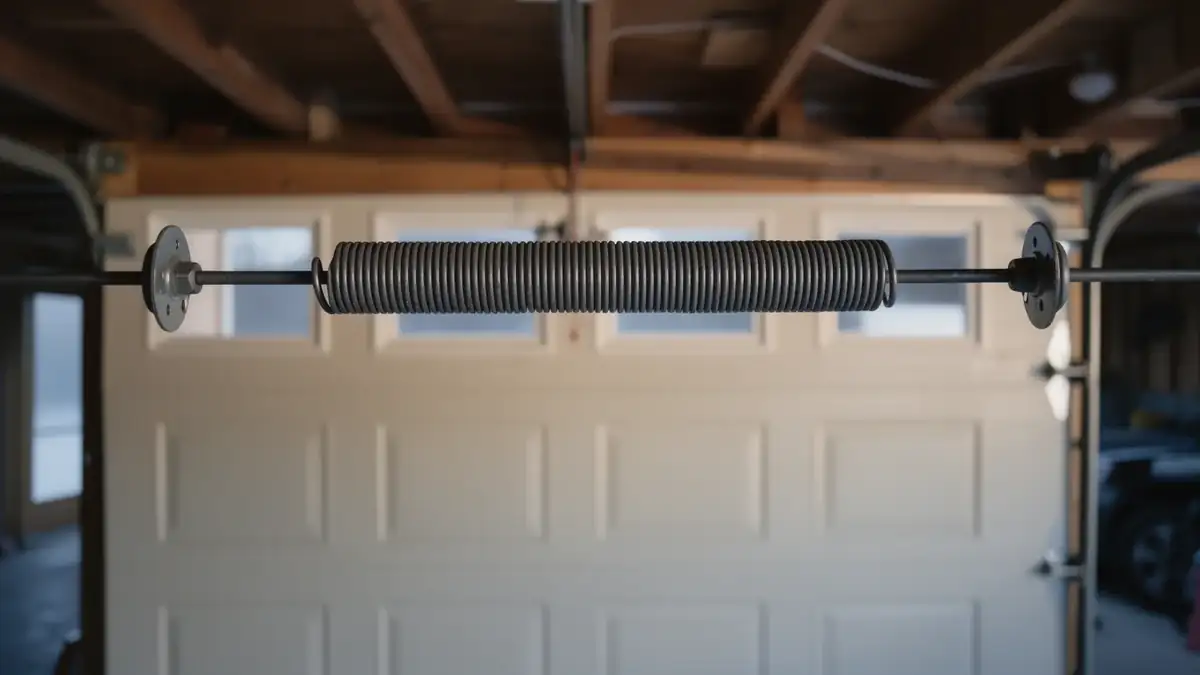
If your garage door won't budge and you hear a bang from the garage before it happens - usually early, on the coldest morning of the stretch - that's a torsion spring letting go, not a dead opener. Look up at the spring across the top of the door. A broken one shows a visible gap in the coil, sometimes with the two ends pulled apart by an inch or more. The door will feel like dead weight if you try to lift it by hand, because the spring is what counts for most of the weight, not your arms or the opener motor.
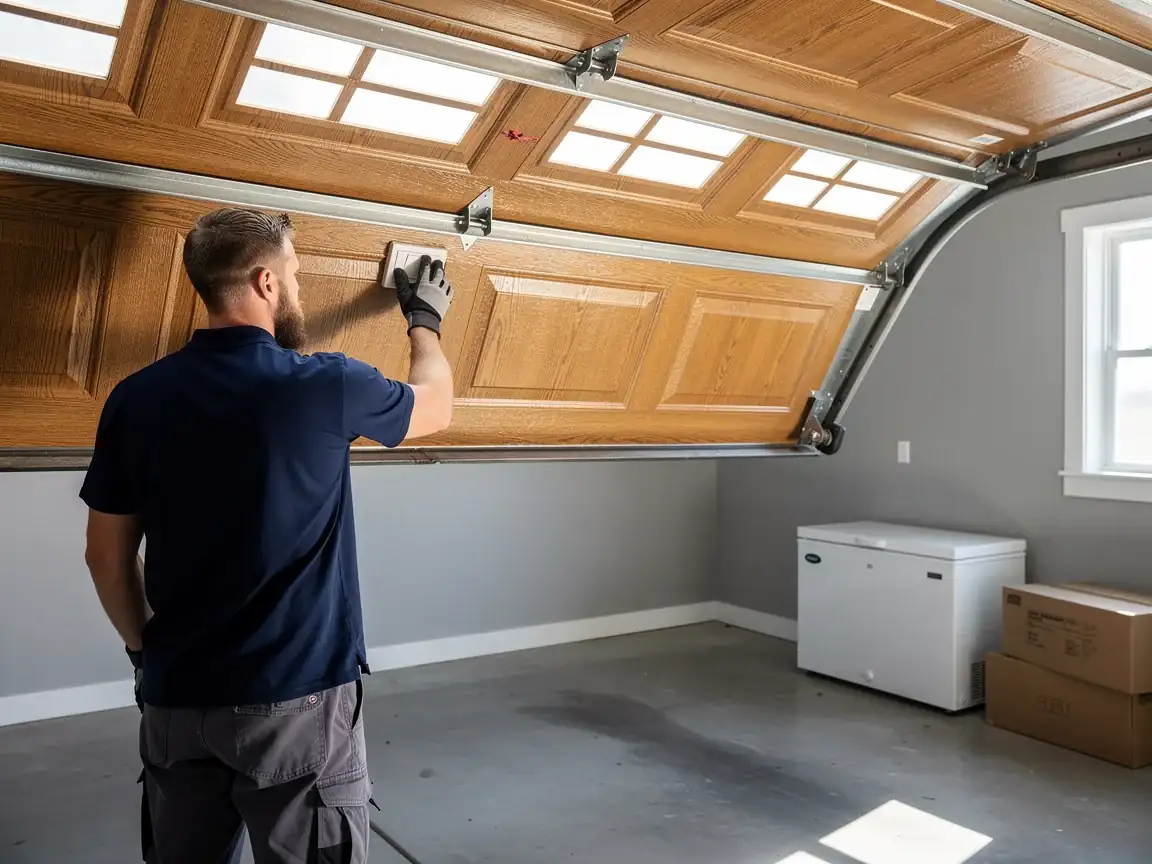
Don't try to wind or unwind the spring yourself. A torsion spring under tension can take a finger off, and on an older double door the hardware doing that job has been loading and unloading for twenty, thirty years in some cases, given how much of this area's housing dates to the 1980s and 90s. If the opener runs but the door doesn't move, or moves and then reverses, that's consistent with a spring failure too - the opener is doing exactly what it's built to do when it senses too much resistance.
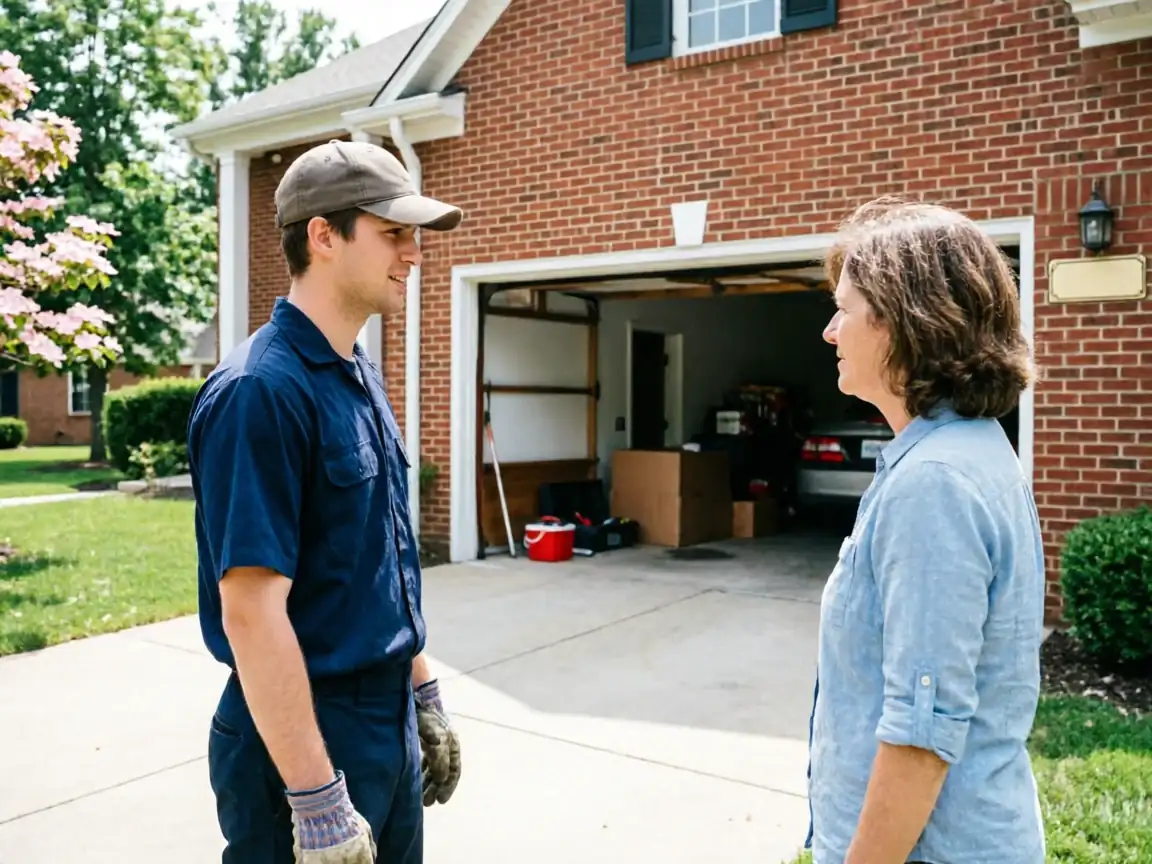
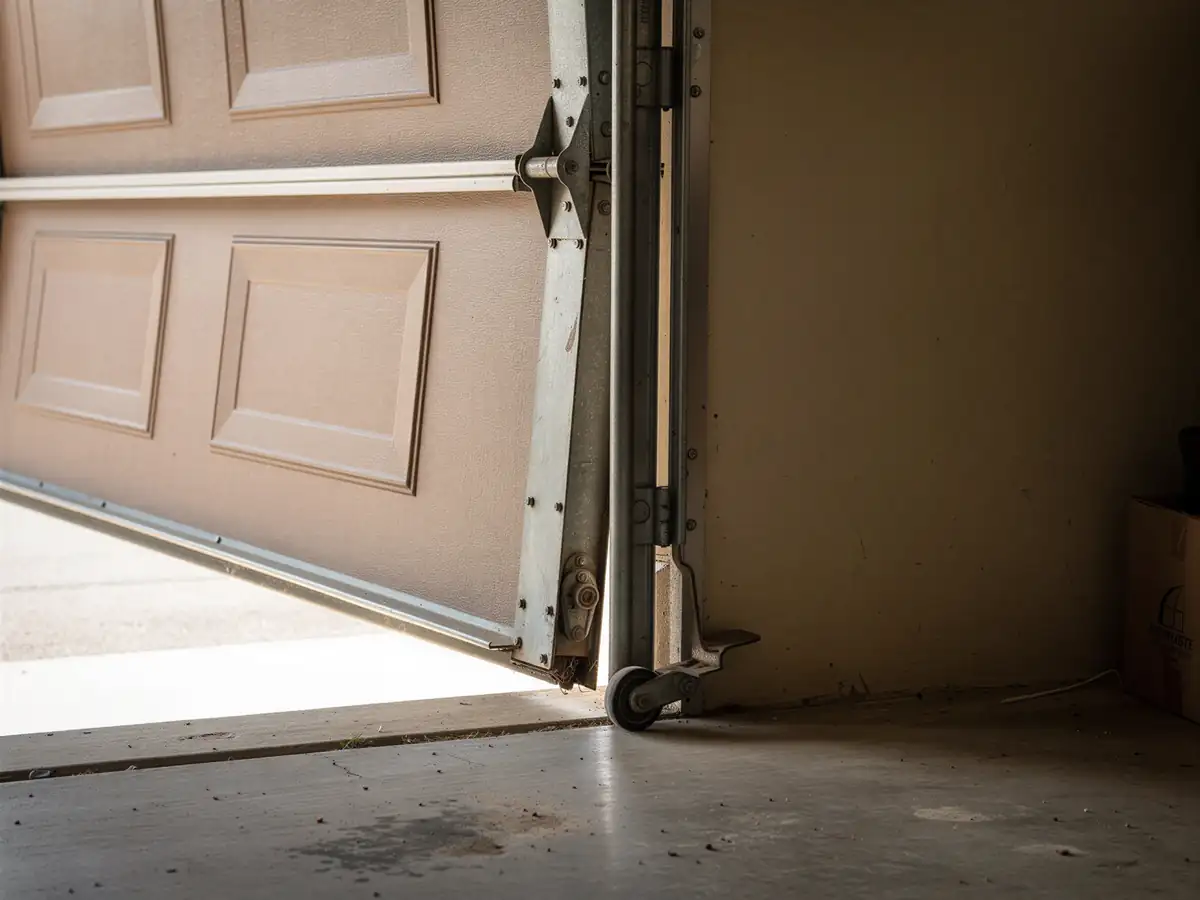
What you can't tell from the driveway is whether it's one spring or both, and whether the cables took damage on the way down. That part needs eyes on it in person.
The Situation
Houses in this service area mostly went up between 1964 and 2007
With the bulk of the stock from the 1980s and 90s and a median build year of 1989. That matters for springs because most garage door torsion springs are rated for a set number of open-close cycles, not years, but age plus cold does the same job faster than years alone. A spring installed when a house was built in the late 80s has been through three or four decades of door cycles by now, and a lot of them are past due.
We cover a wide stretch of this area, out to Emerson six miles off, and further out toward Hiram, Fair Oaks, Holly Springs, Powder Springs, Mountain Park, Euharlee, Austell, Vinings, Kingston, Waleska, and Lithia Springs
The housing pattern repeats across all twelve of those areas - same era, same mix of original hardware still hanging in a lot of garages. With roughly 15,851 owner-occupied houses and a median household income of $78,351 across this region, a good chunk of that housing is owner-occupied and old enough that the original springs are either already replaced once or still original.
- 15,851 owner-occupied
- $78,351 median household income
How Local Conditions Play In
This area sits in a moderate cold climate band - not the kind of hard freeze that splits foundations, but enough real cold mornings each winter to matter for steel under tension. A torsion spring that's fatigued from decades of cycling doesn't usually fail on a mild afternoon. It fails on the first morning the metal contracts hard, which is exactly what a cold snap does. The steel gets slightly less forgiving, the coil that's already got a hairline stress fracture finally gives, and you find out early when the door won't open for the school run.
This is why spring failures cluster around cold stretches rather than spreading evenly across the year. It's not that cold weather damages a healthy spring - a spring in good shape handles a cold morning fine. It's that a spring already near the end of its cycle life loses its last bit of margin when the temperature drops. If your door has been making noise or feeling heavier than usual over the past few weeks, that's the spring telling you it's close, and a cold snap is often just the thing that finishes the job.
What Most People Get Wrong
The most common mistake is treating a heavy or noisy door as an oiling problem. Lubricant helps rollers and hinges, but it does nothing for a spring that's lost tension from age - no amount of spray adds cycles back to thirty-year-old steel. The second mistake is assuming the opener is the problem because it's the part that makes noise and has a light on it. The opener is rarely what fails first; it's usually reacting correctly to a spring that can no longer do its share of the lifting.
The third mistake, and the expensive one, is trying to adjust or replace a torsion spring without the right bars and clamps. This isn't a part where a determined homeowner with a wrench saves money - it's one of the few jobs in a house where the margin for error is a trip to the ER, not a redo. We won't walk a homeowner through that over the phone, and any company that will is one to be wary of.
Last: if a spring on a double door breaks, the other one is usually close behind, even if it looks fine. Replacing both at once, rather than waiting for the second failure, is the honest call in most cases - even though it's not what sells the smaller job.