What Causes It Around Here
Austell's median household income sits at $67,500, noticeably under the $78,351 median across our wider service area. That gap matters when you're staring at a dented panel: at this income level, a full door replacement competes hard against groceries and the mortgage, so the repair-or-replace line falls differently here than it does in the higher-income suburbs we also cover. If one panel took the hit and the rest of the door tracks straight, panel replacement almost always wins over full replacement at this price point.
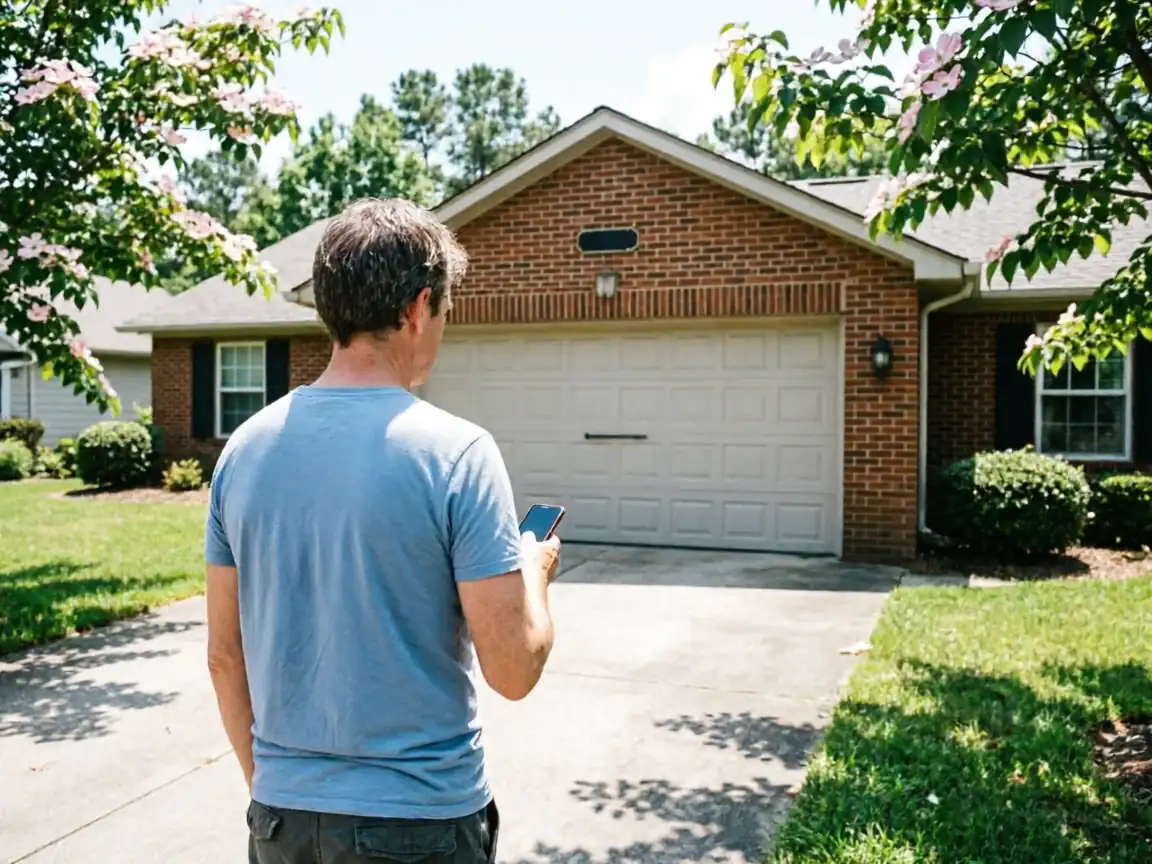
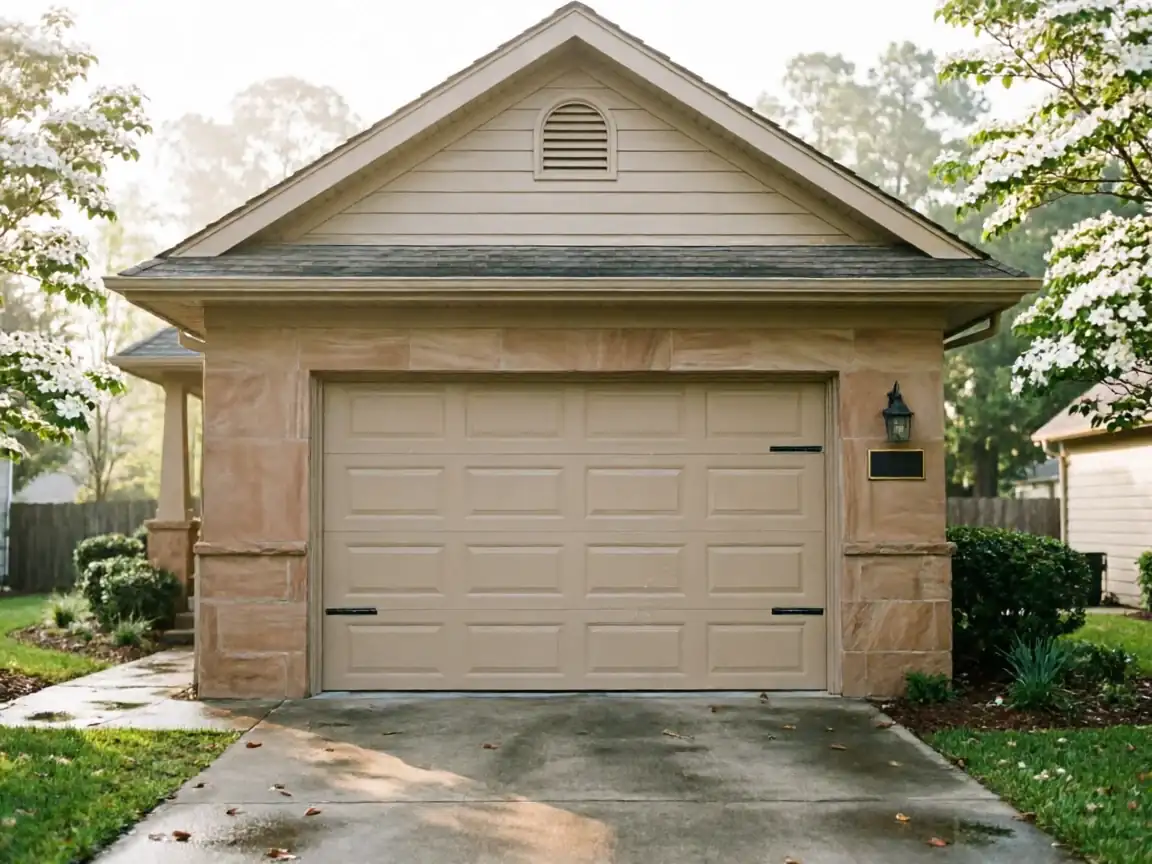
The cause itself ties to when the house went up. Austell sits about 17 miles from our Acworth shop, and most of the houses out here date to around 1988, square in the middle of the 1964-2007 build window we see across the service area. Doors from that era are steel sectional, usually non-insulated or lightly insulated, hung on galvanized track that wasn't built for 30+ years of temperature swings. Our climate band here runs cold-moderate, not brutal, but enough freeze-thaw cycling over three decades works moisture into the seams and rust into the bottom panel first - that's the one closest to the slab and the one that takes the car bumper, the trash can, and the errant basketball.
So the pattern on an '88-built Austell door is almost always the bottom one or two panels: rust-thinned steel, a dent from impact, or both working together.
Booking a Visit
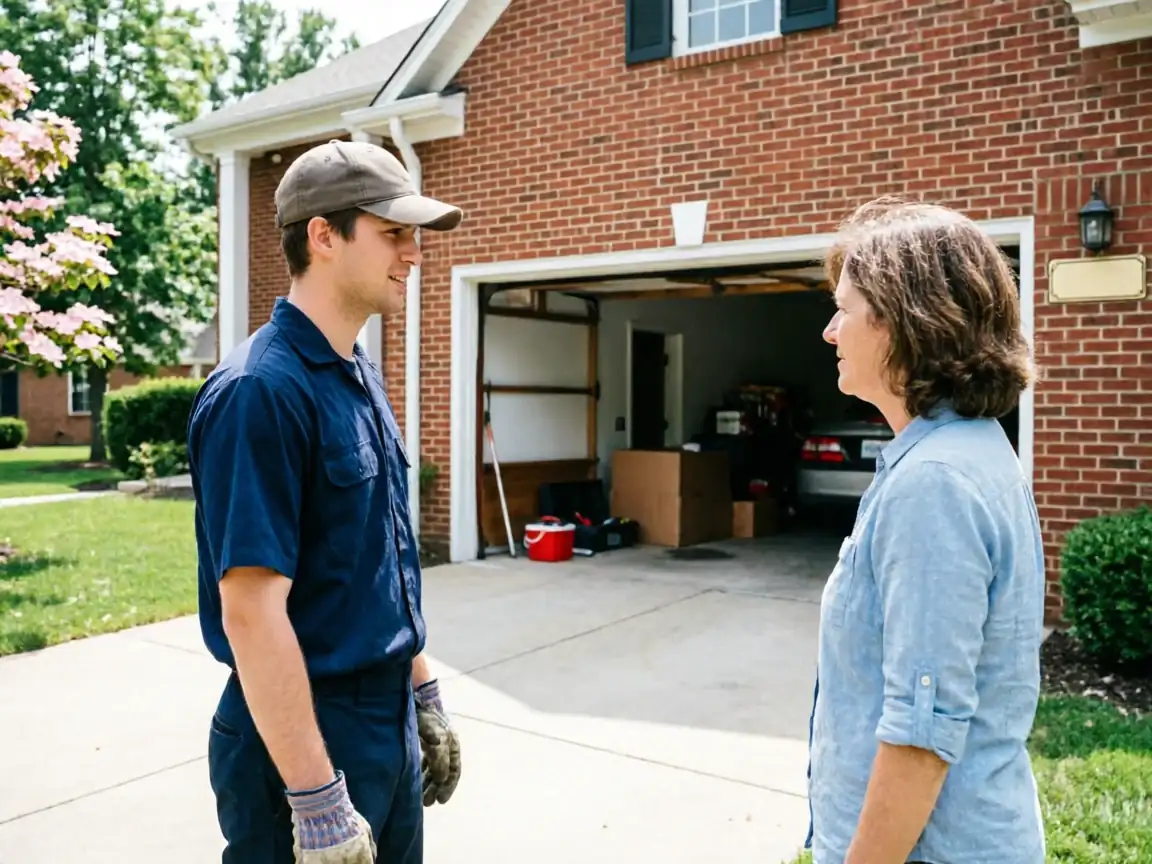
We run this job out of Acworth, roughly 17 miles from Austell
So we're not a branch office sitting around the corner - we schedule the drive as part of the job, not as an add-on. Tell us the make and the panel location (bottom, middle, which side) when you call, and we'll bring stock sized for 1980s-era sectional doors, since that's what most of Austell is running.
- 17 miles
One limitation worth saying up front
If your door is older or newer than the typical late-1980s build here, or it's an import brand we don't stock commonly, we may need to order the panel before we can finish the job in one visit. We'd rather tell you that on the phone than show up and discover it.
Doing It Yourself
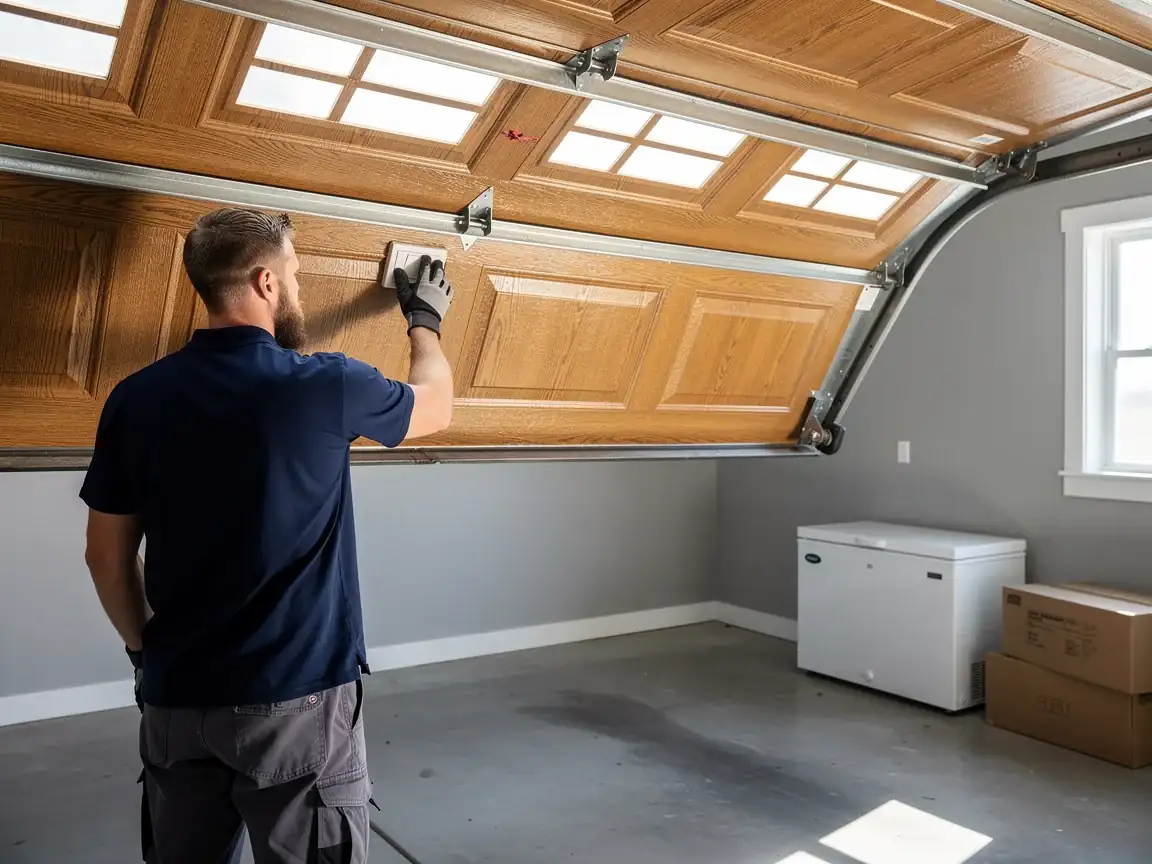
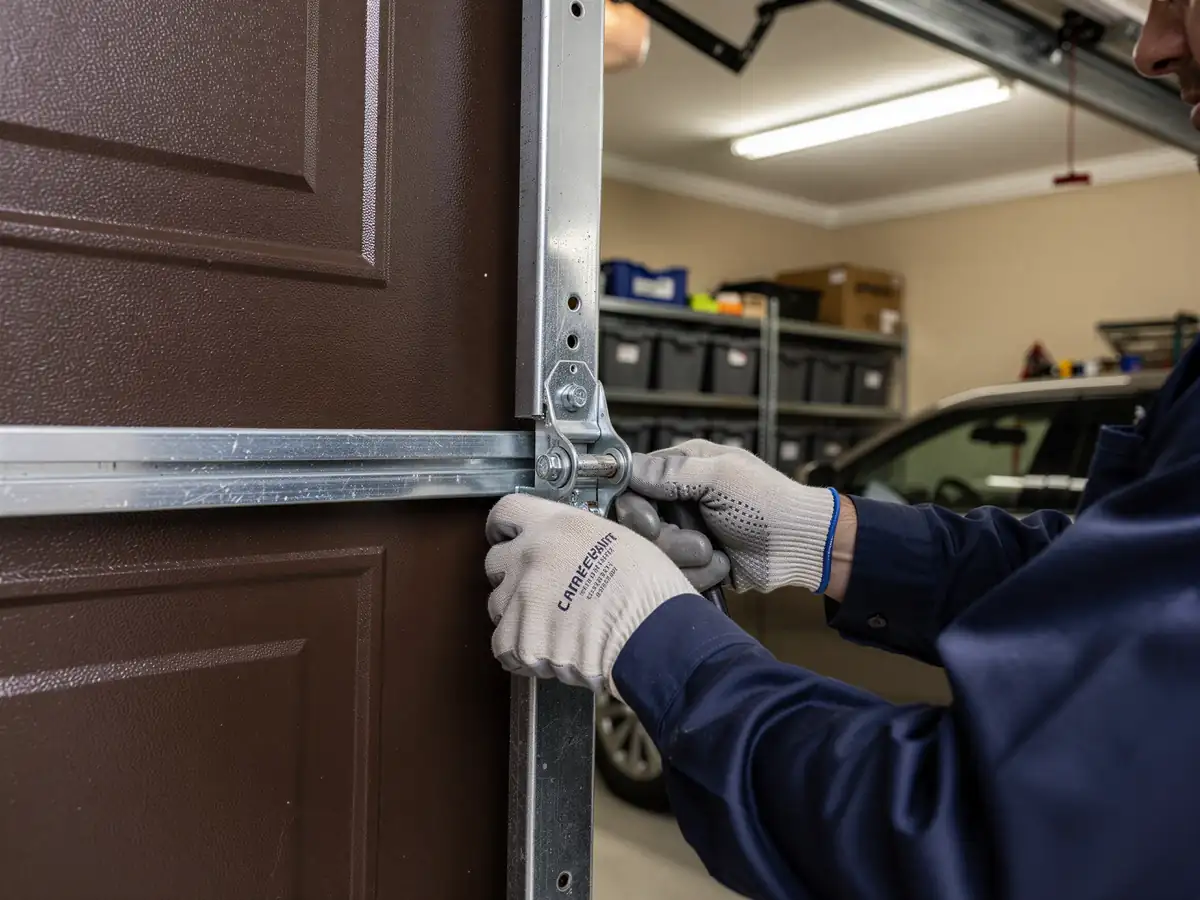
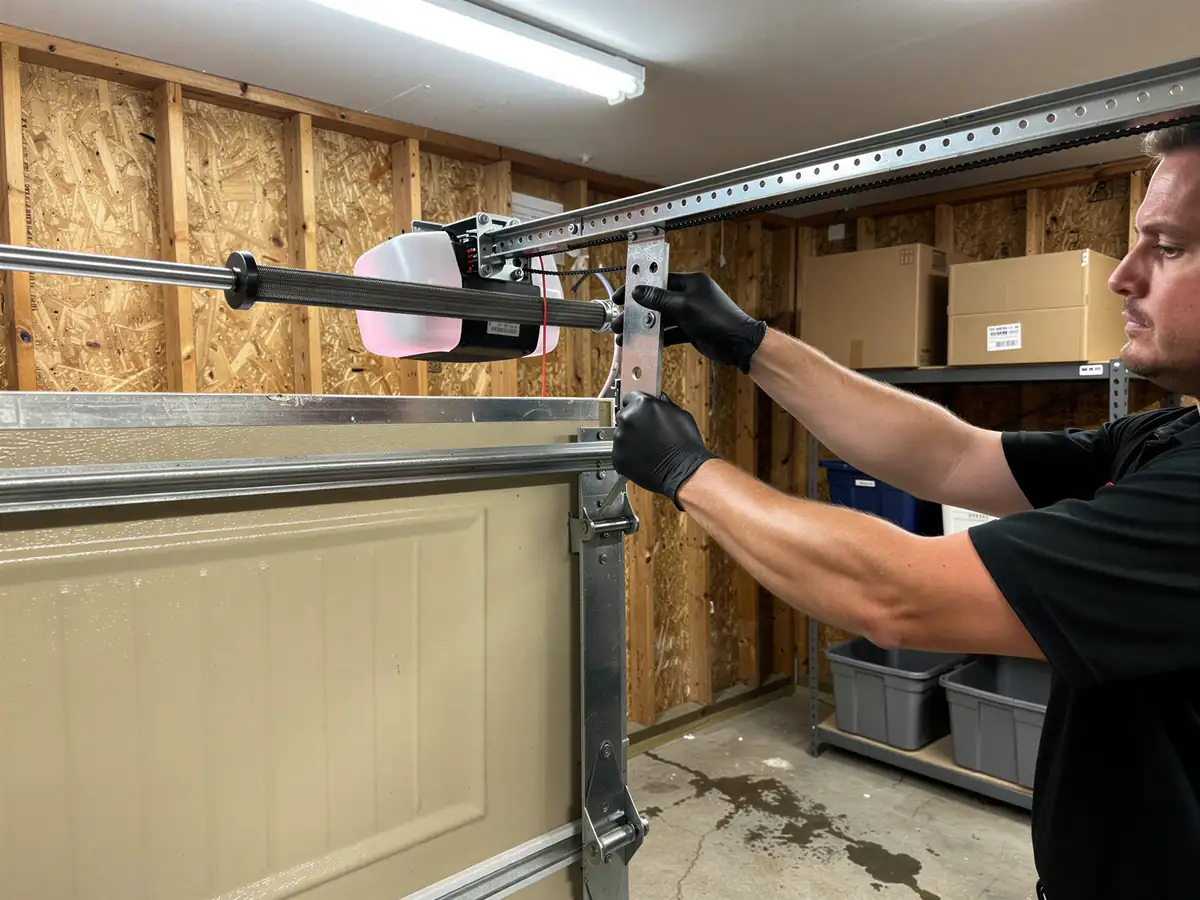
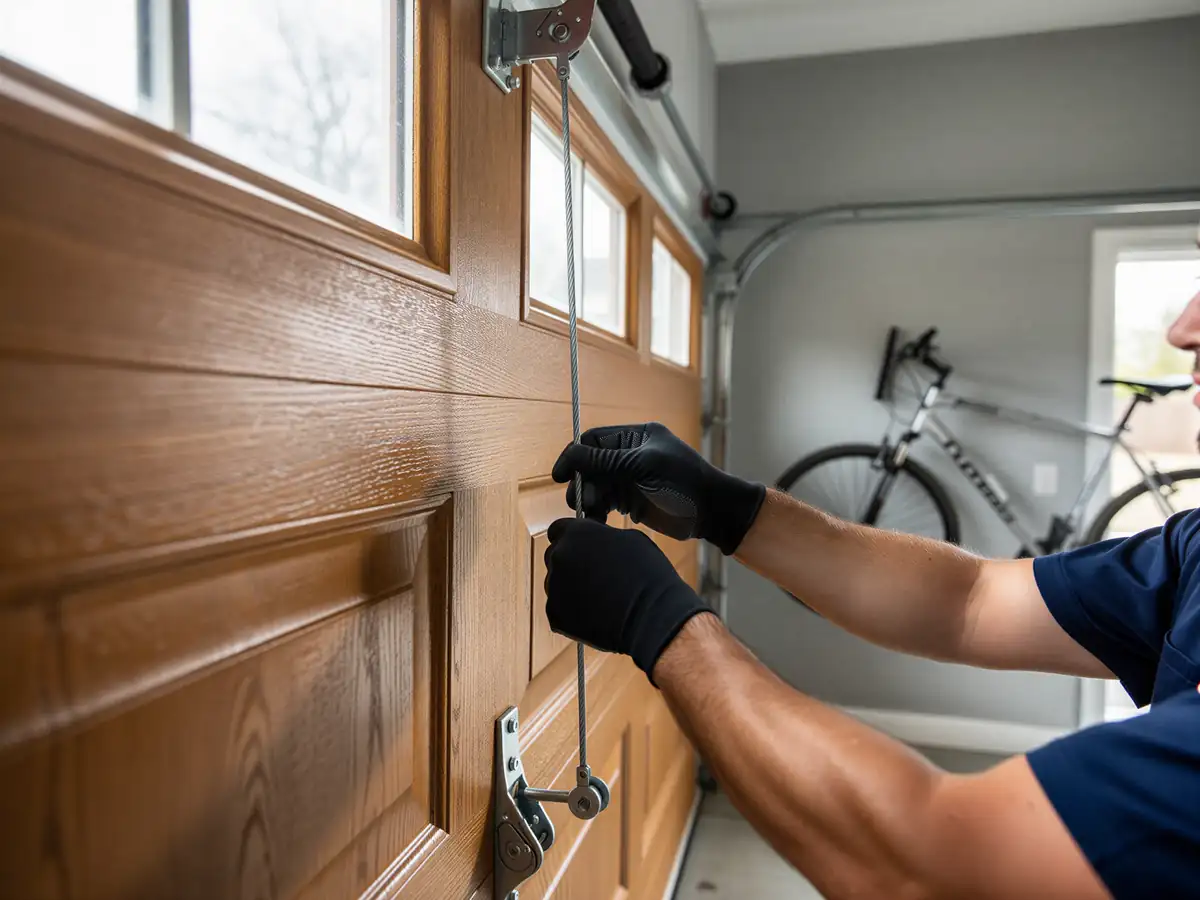
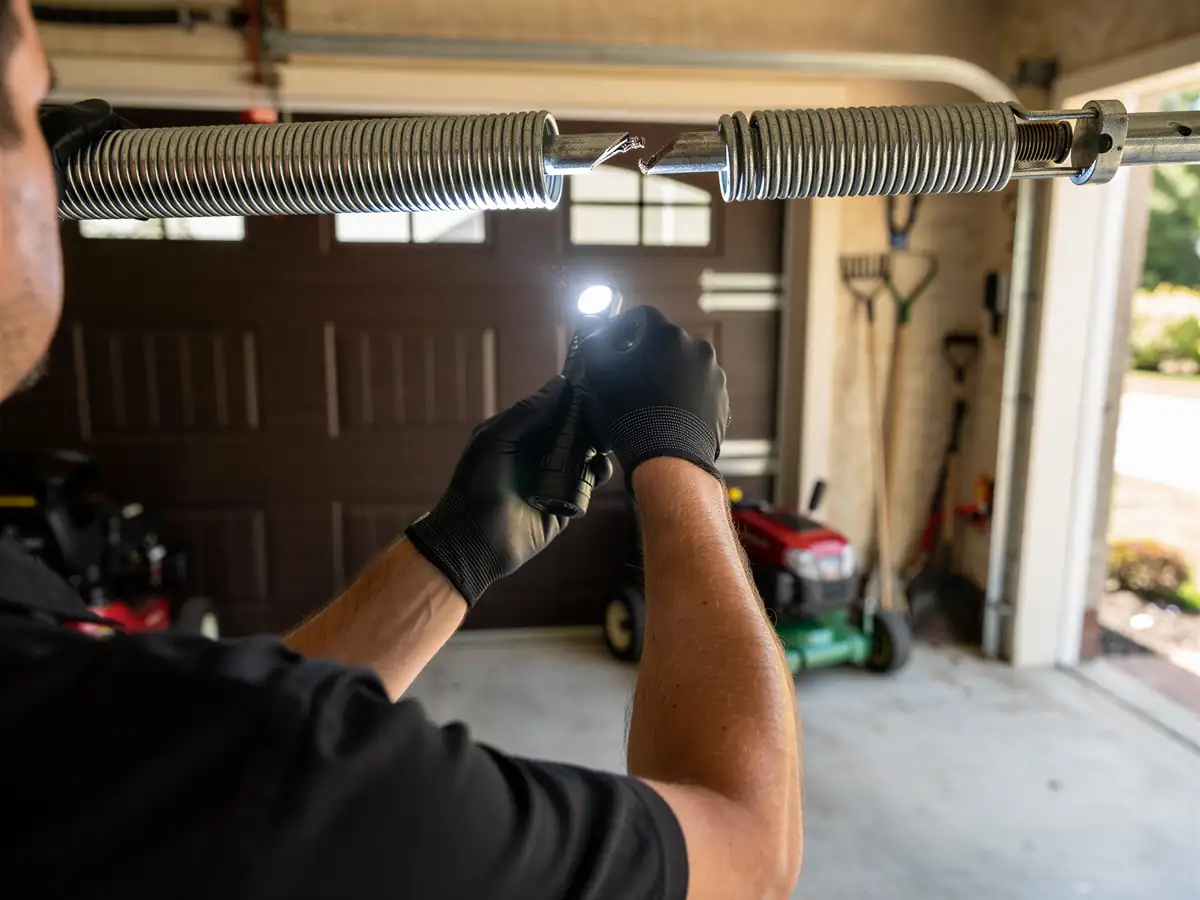
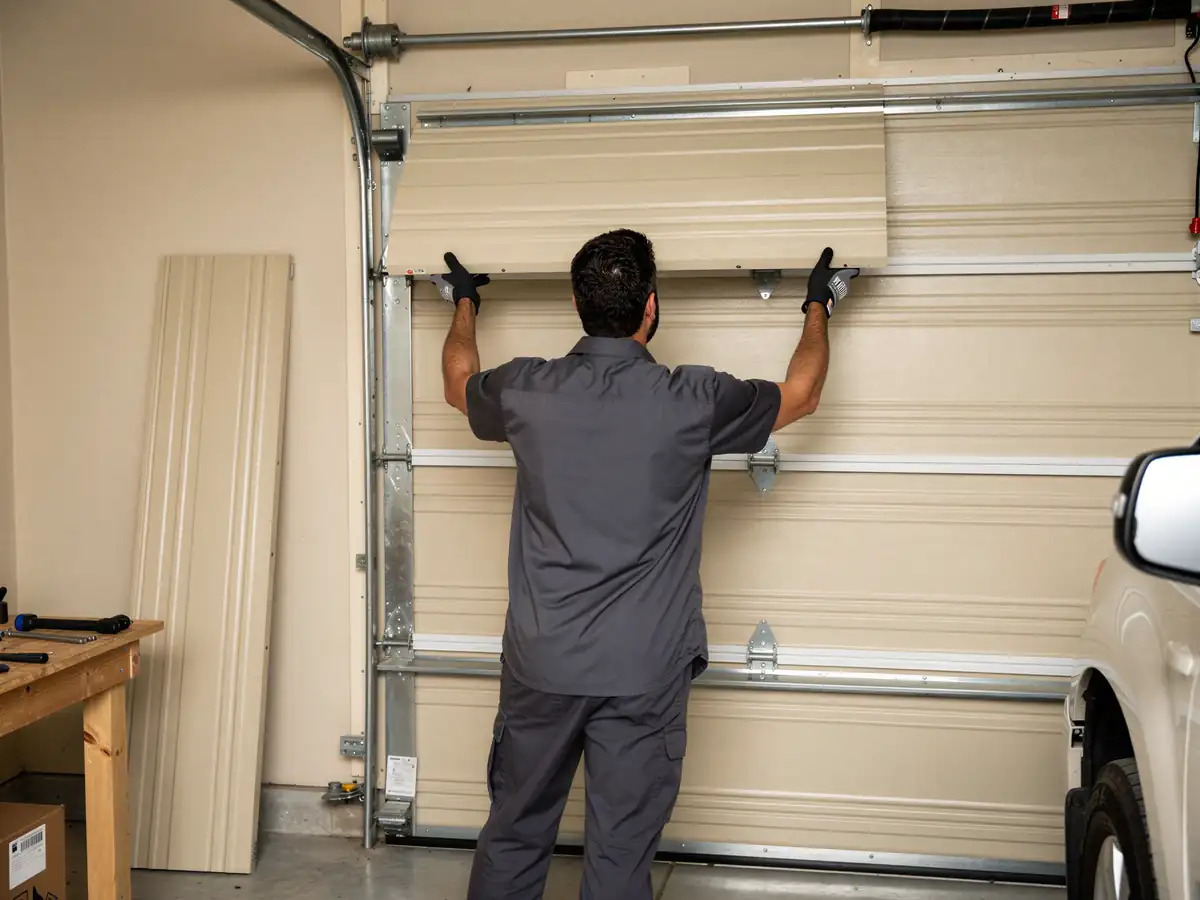
A single cracked or dented panel is one of the few garage door repairs a reasonably handy homeowner can actually take on, provided the door is a standard steel sectional from the 1980s-2000s build era common around Austell. The panel bolts to its neighbors and to the end hinges; with the door down and the opener disconnected, you can usually swap a single section without touching the torsion spring at all.
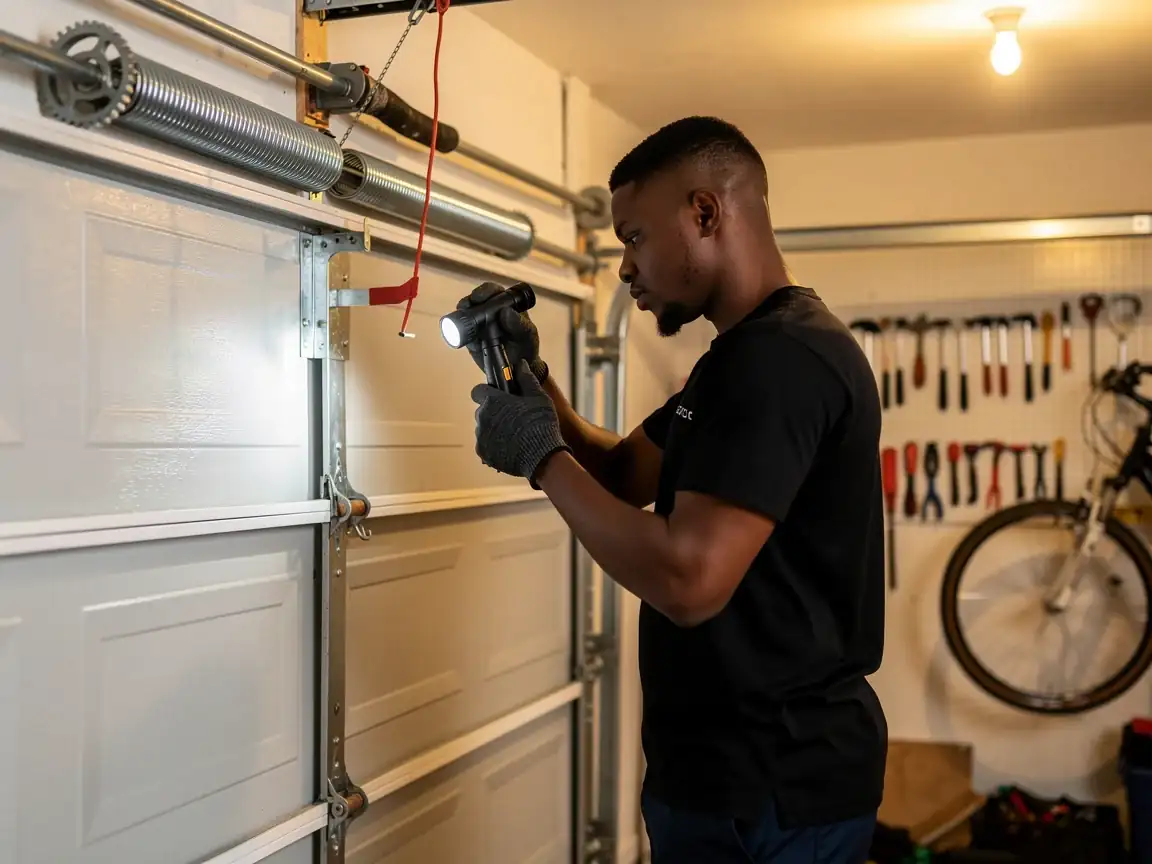
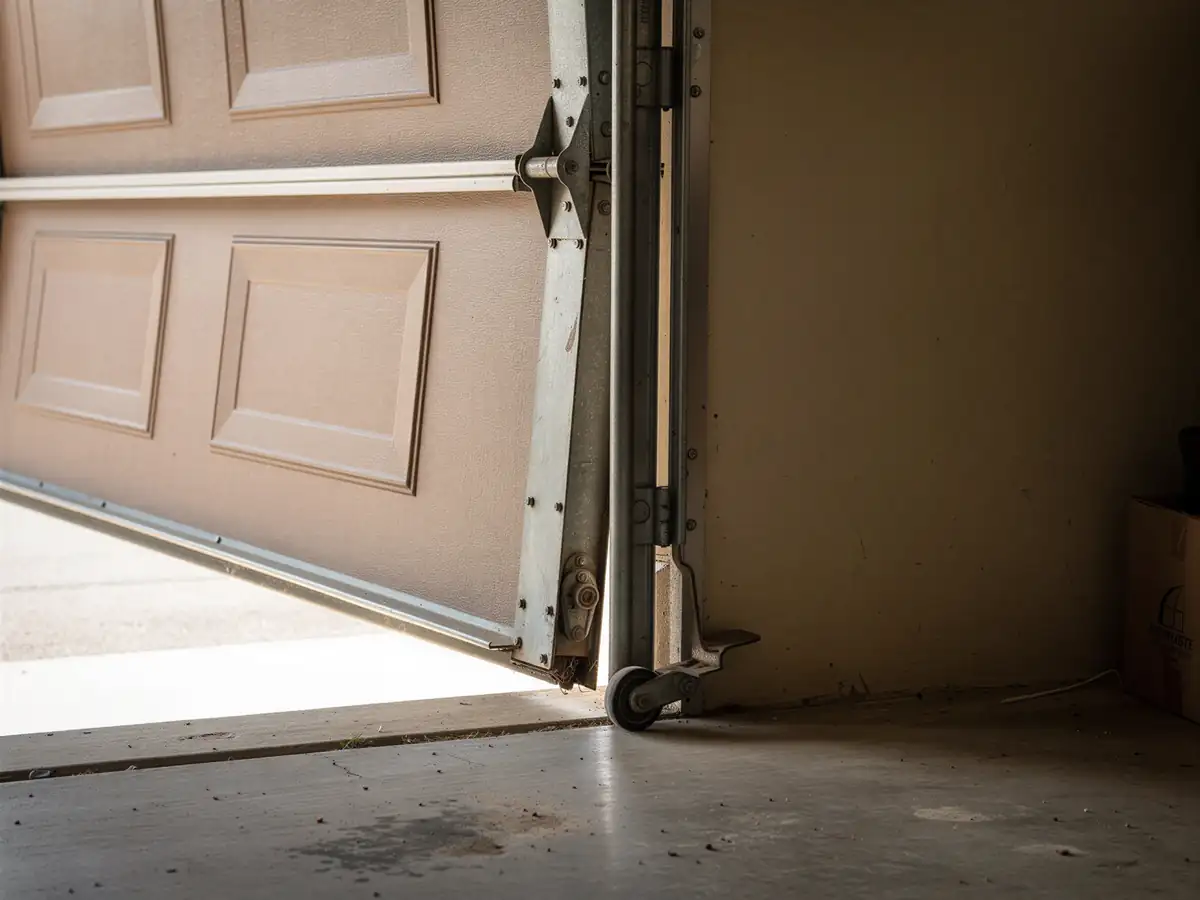
Where people get hurt is when the dented panel also carries a hinge mount or when the track got bent in the same impact that creased the steel. At that point you're not swapping a panel, you're realigning track under spring tension, and that's a different job with different risk. If you're not sure which situation you're in, that's worth a call before you start pulling bolts.
Parts We Carry
We stock steel sectional panels sized to match the non-insulated and lightly-insulated doors typical of houses built through the late 1980s and 1990s across the areas we serve, which covers most of what's on Austell garages. We carry matching end hinges and the short hardware that goes with a single-panel swap, since a rusted panel often means the hinge bolted to it has thinned too.
What we don't stock on the truck: proprietary panels for less common import brands, and custom color-matched sections for doors that have been repainted or faded unevenly over the years - those get ordered once we've confirmed the exact match in person.