What Causes It Around Here
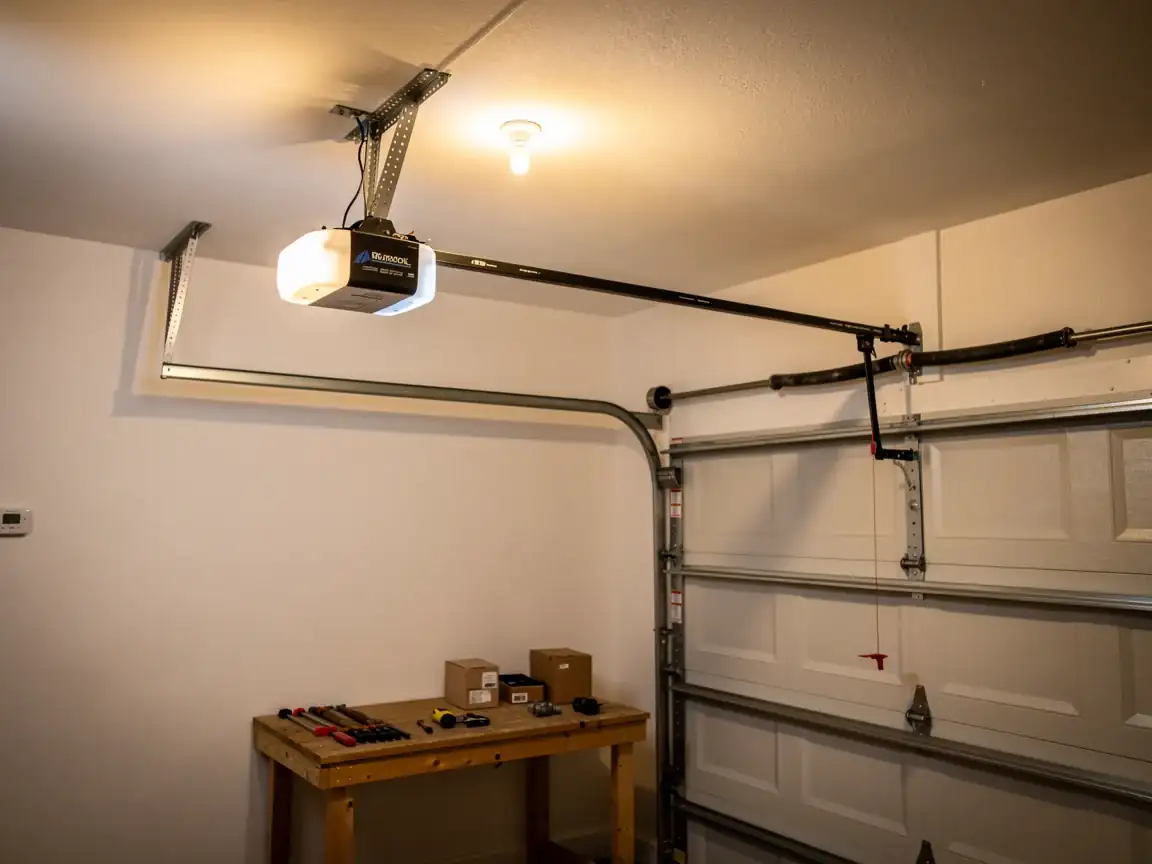
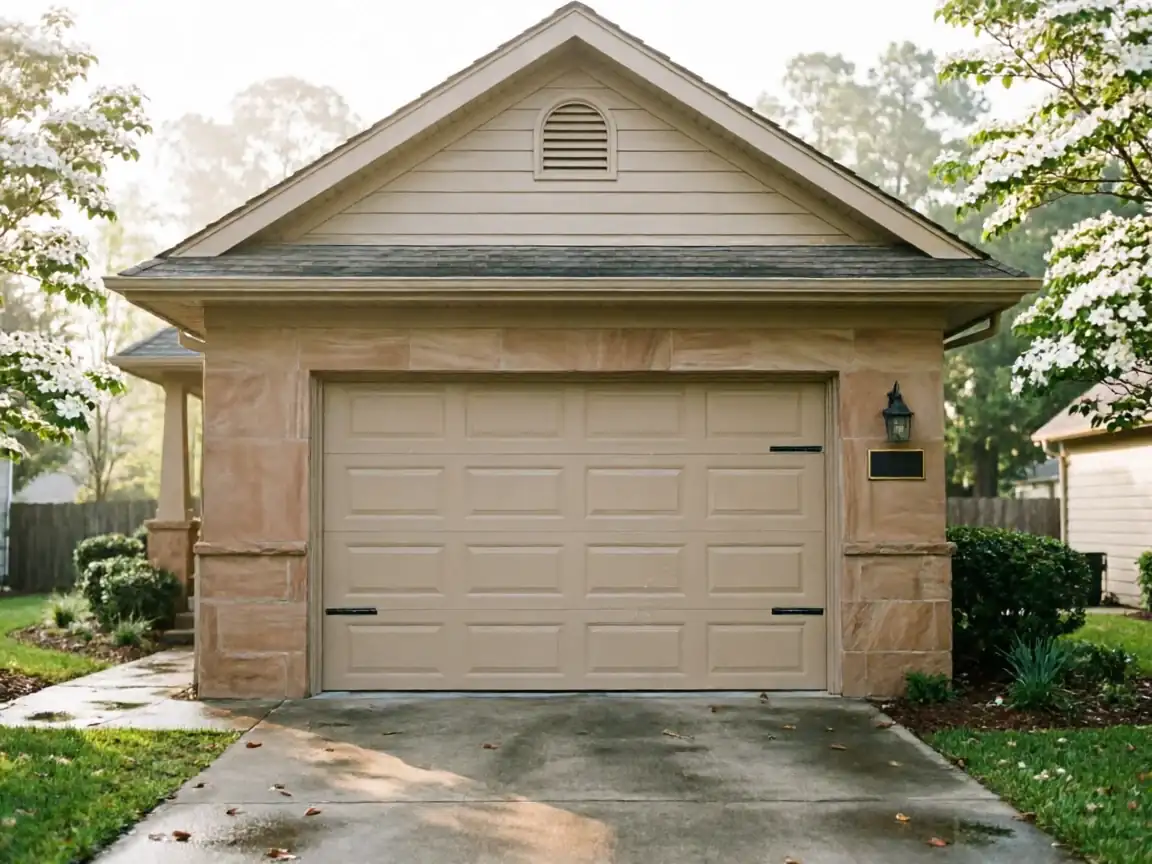
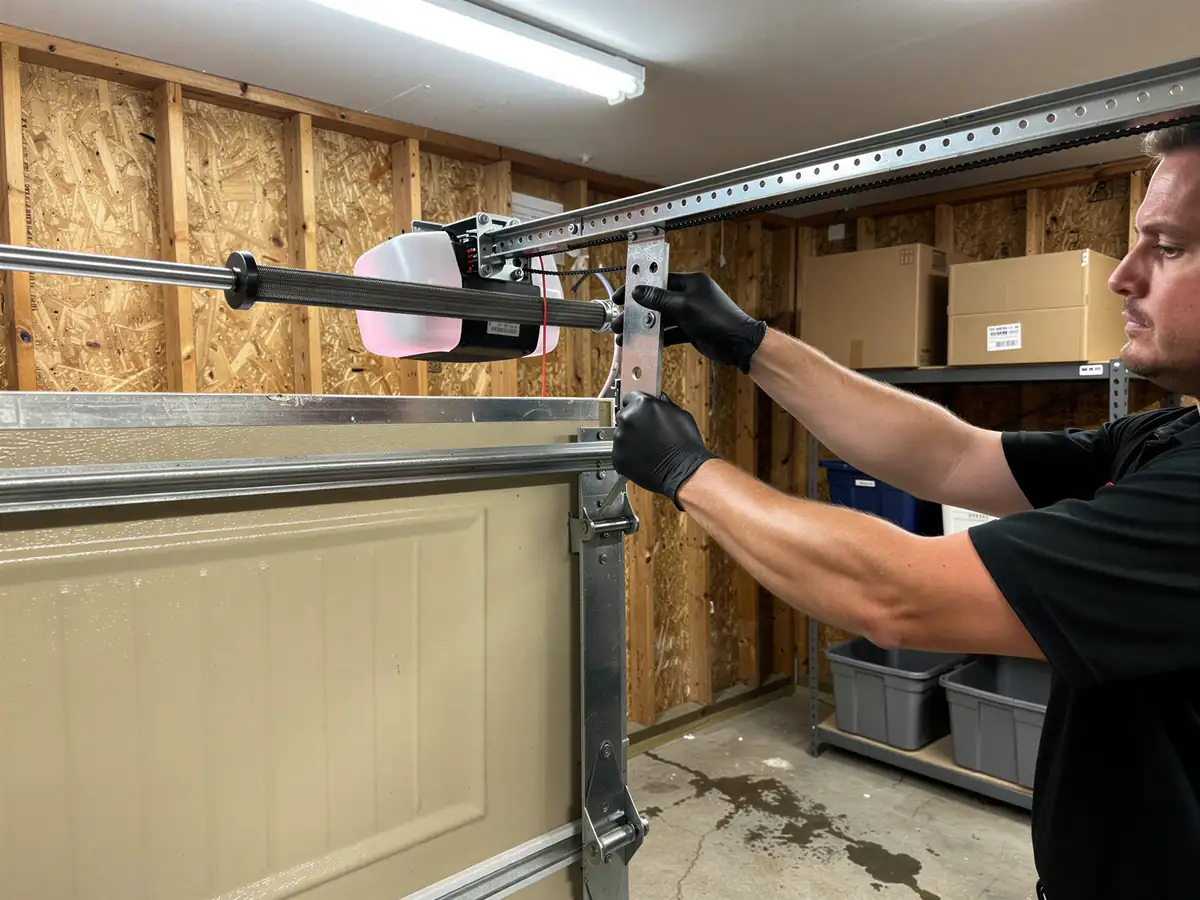
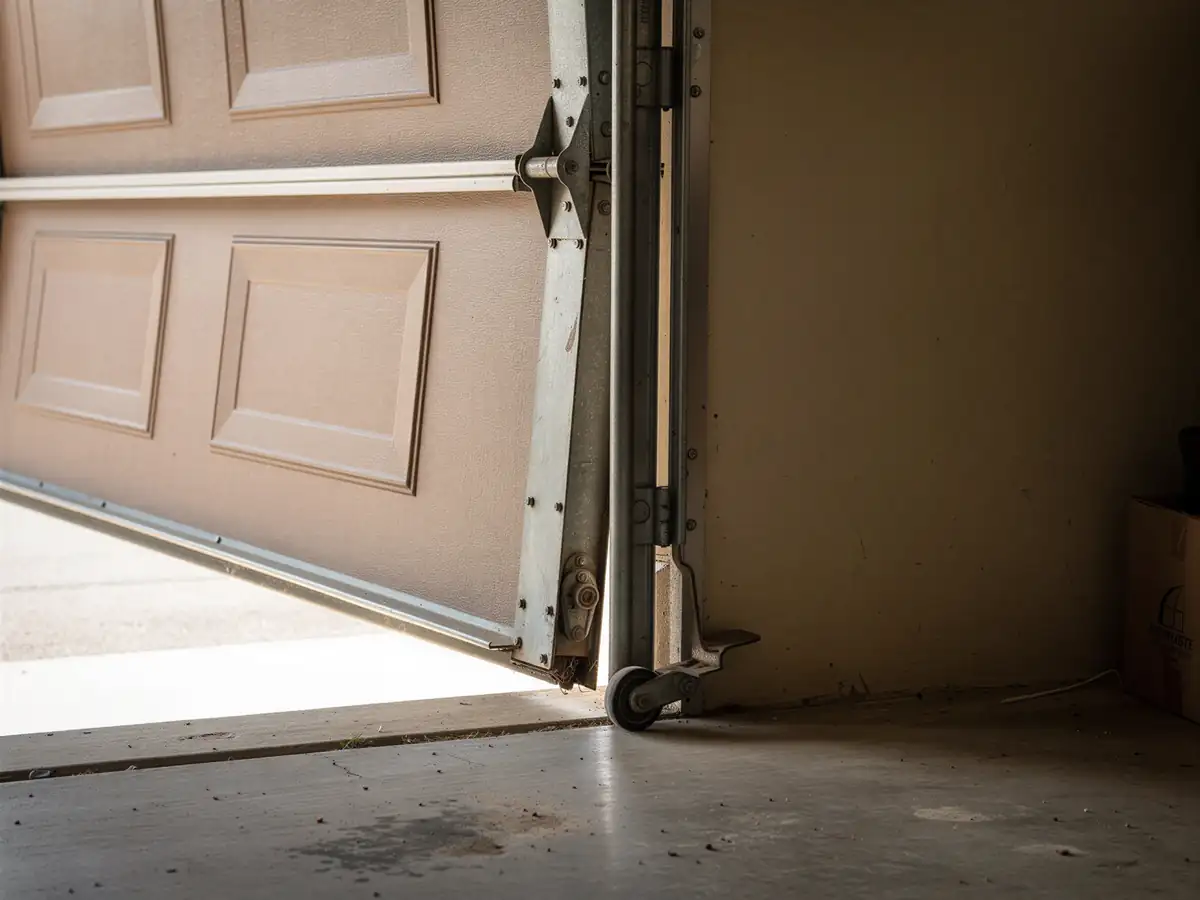
Austell sits about 17 miles out from our shop in Acworth, and that drive shapes how we schedule this kind of call - it's not a five-minute hop, so we try to bundle an off-track visit with enough time to actually finish the job instead of rushing back. Most of the houses we see in Austell went up in the late 1980s, right around 1988, which puts them square in the middle of the wider service area's 1964-2007 build range (median 1989). That era of door came with steel track that wasn't always secured as tightly as code calls for today, and after thirty-some years the mounting brackets holding that track to the jamb have usually loosened at least a little. Add a winter where the door got left open too long, or a car bumper that caught the bottom panel at an angle, and the rollers walk right out of the channel. We're in a cold-moderate climate band here, which means the metal track contracts enough in a hard freeze to widen the gap between roller and rail - not dramatic, but enough that a door already running loose finally jumps. It's rarely one single event. It's usually old hardware plus one ordinary nudge.`
Doing It Yourself
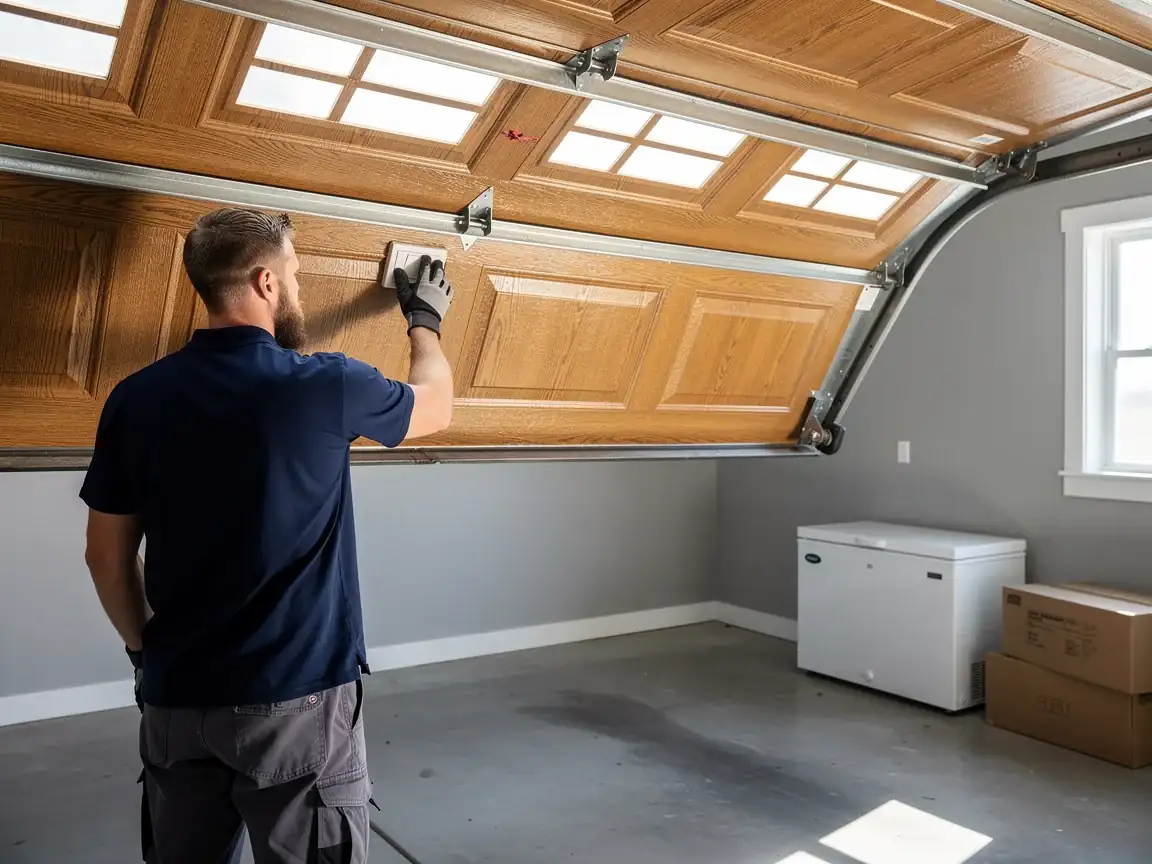
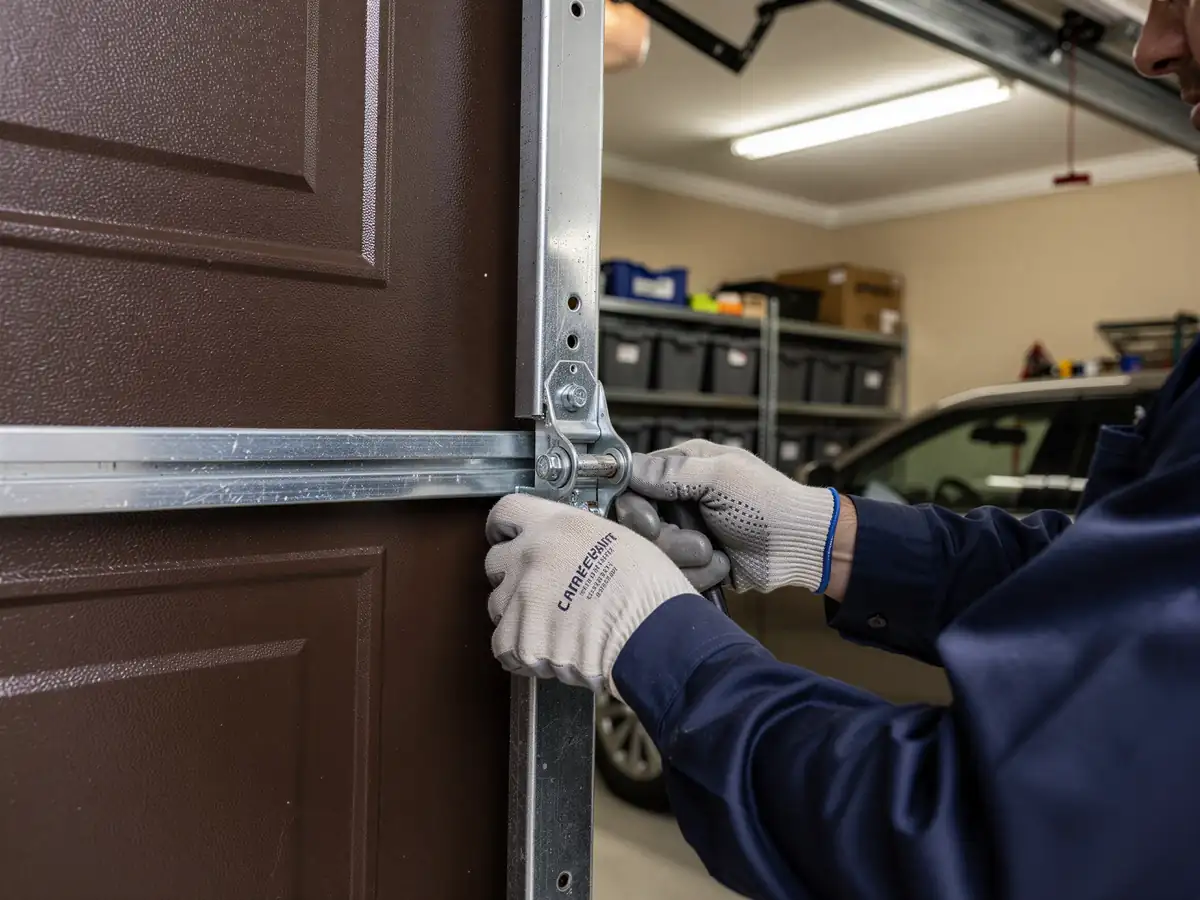
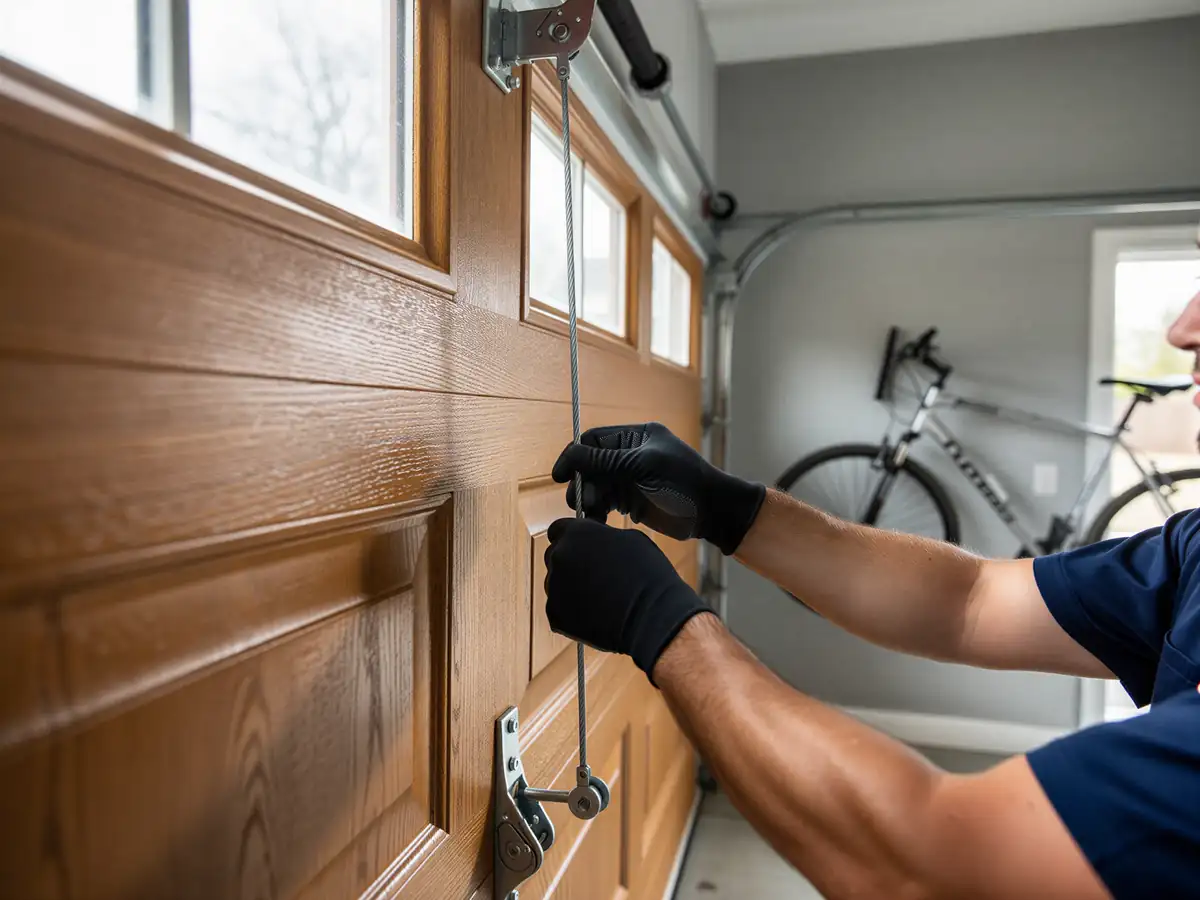
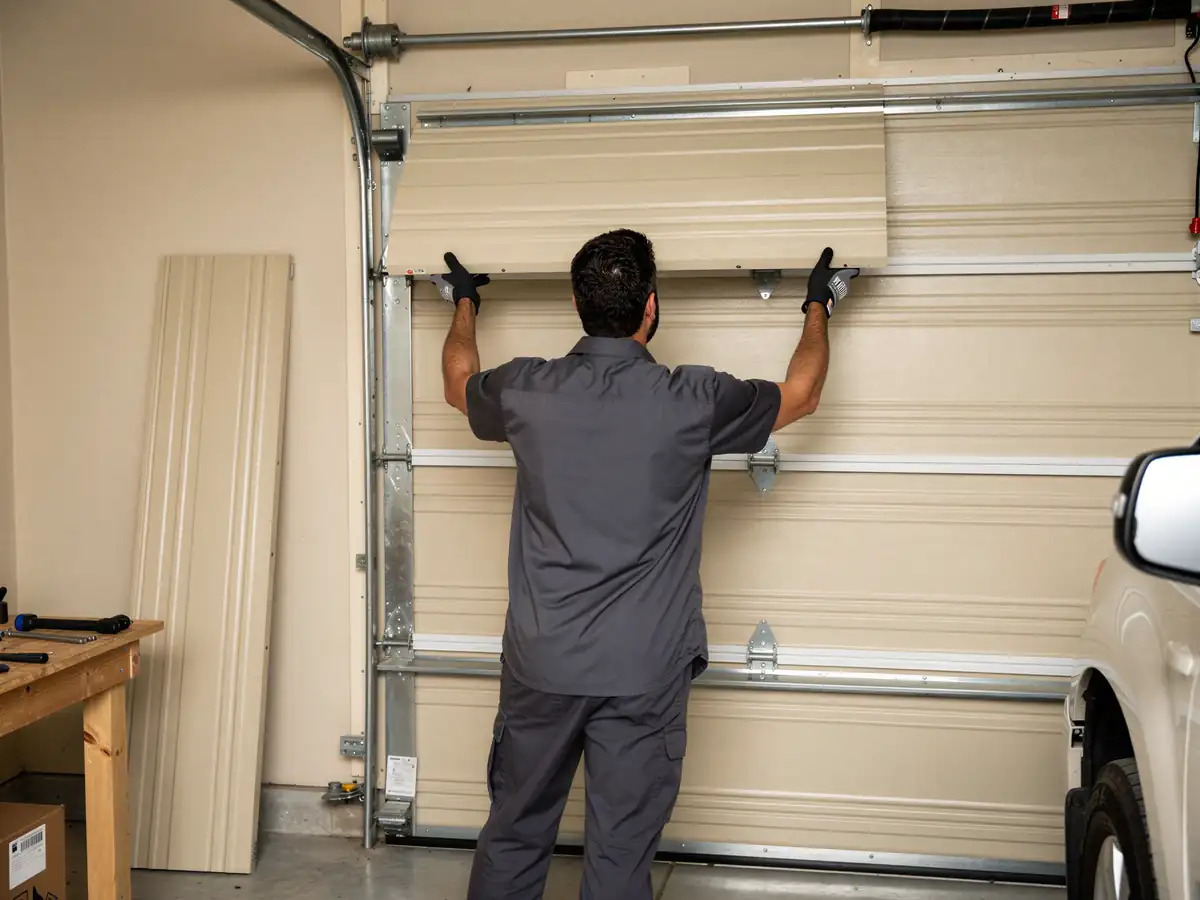
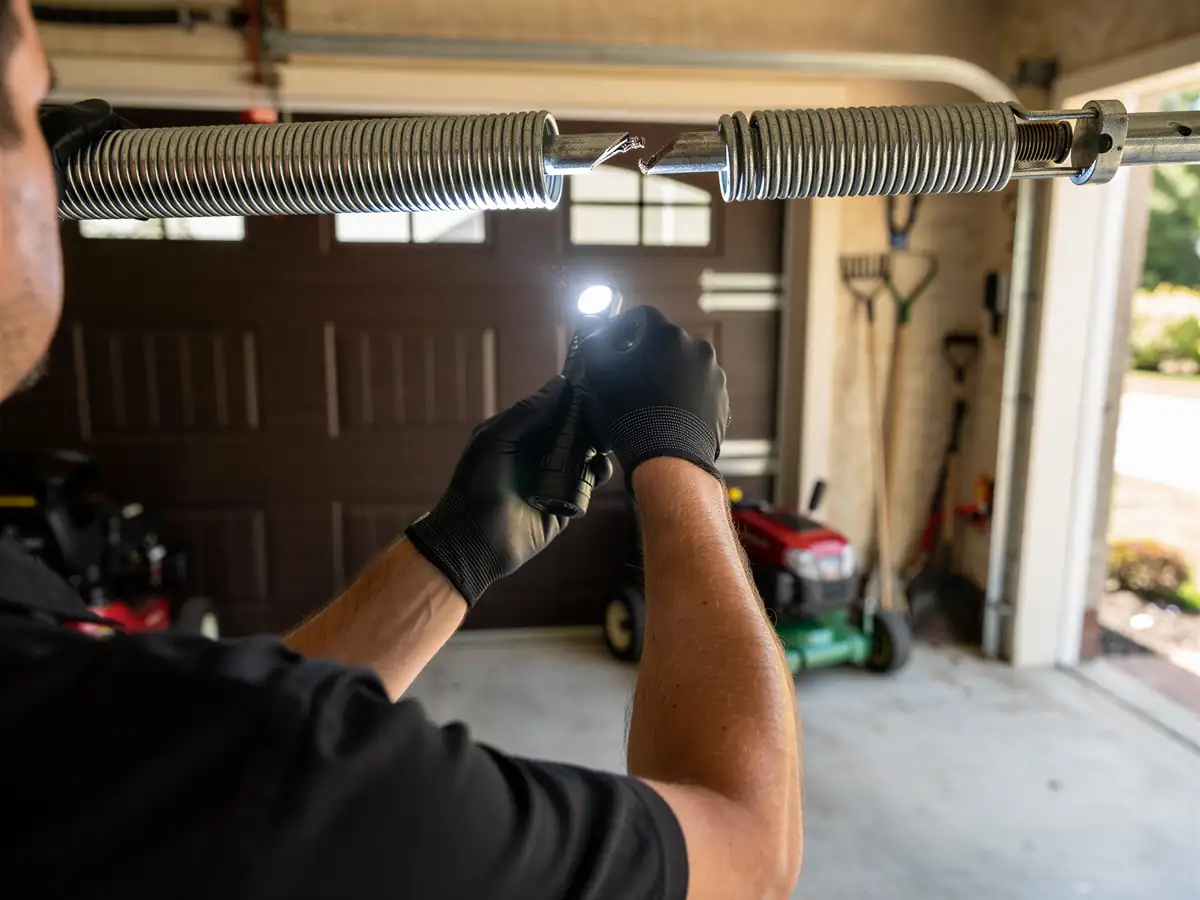
If the door is only off on one side and still sitting mostly in the opening, you can sometimes walk it back onto the track yourself with a rubber mallet and a flat bar, as long as the cable is still intact and nothing's bent. We won't talk anyone through forcing a torsion spring door back onto track with the spring still under tension - that's the fastest way to lose a finger, and it's the one thing we tell every caller not to attempt regardless of how simple it looks. If the track itself is bent, bowed, or pulled away from the wall, that's not a DIY fix; bent track almost always needs to be replaced, not hammered straight, because steel that's already yielded once will fail again under load. Our honest limit here: we don't carry every non-standard track profile on the truck, so a door with an unusual rail width built for an oversized panel may need a parts order before we can finish the job in one visit.
Parts We Carry
Given how many Austell garage doors date to that late-1980s stretch, we stock the roller sizes and galvanized track sections that match doors from that build era, plus the end bearing plates and track brackets that tend to be the actual failure point rather than the roller itself. Nylon rollers with sealed bearings are what we put back in most of the time - they run quieter and don't need the lubrication steel rollers do, which matters in a cold-moderate climate where grease stiffens up in a hard freeze. We also carry standard track hardware for the vertical and horizontal sections common to that era's door height. What we don't keep on hand is every specialty track width for custom or oversized doors; if your opening is outside the common range, we'll confirm the part before the truck leaves Acworth so the trip isn't wasted.