How It Shows Up
Mountain Park's median household income sits around $135,000, well above the $78,351 median across the wider service area we cover from Acworth. That number matters here because it changes the math on a damaged panel. At $135,000 median income, a lot of homeowners default to replacing the whole door the first time a panel gets dented or delaminates, when a single-panel swap would have done the job for less and kept the door's original look. The flip side also happens: a panel nobody can match anymore on a door that's otherwise sound, where full replacement is actually the cheaper long-run call.
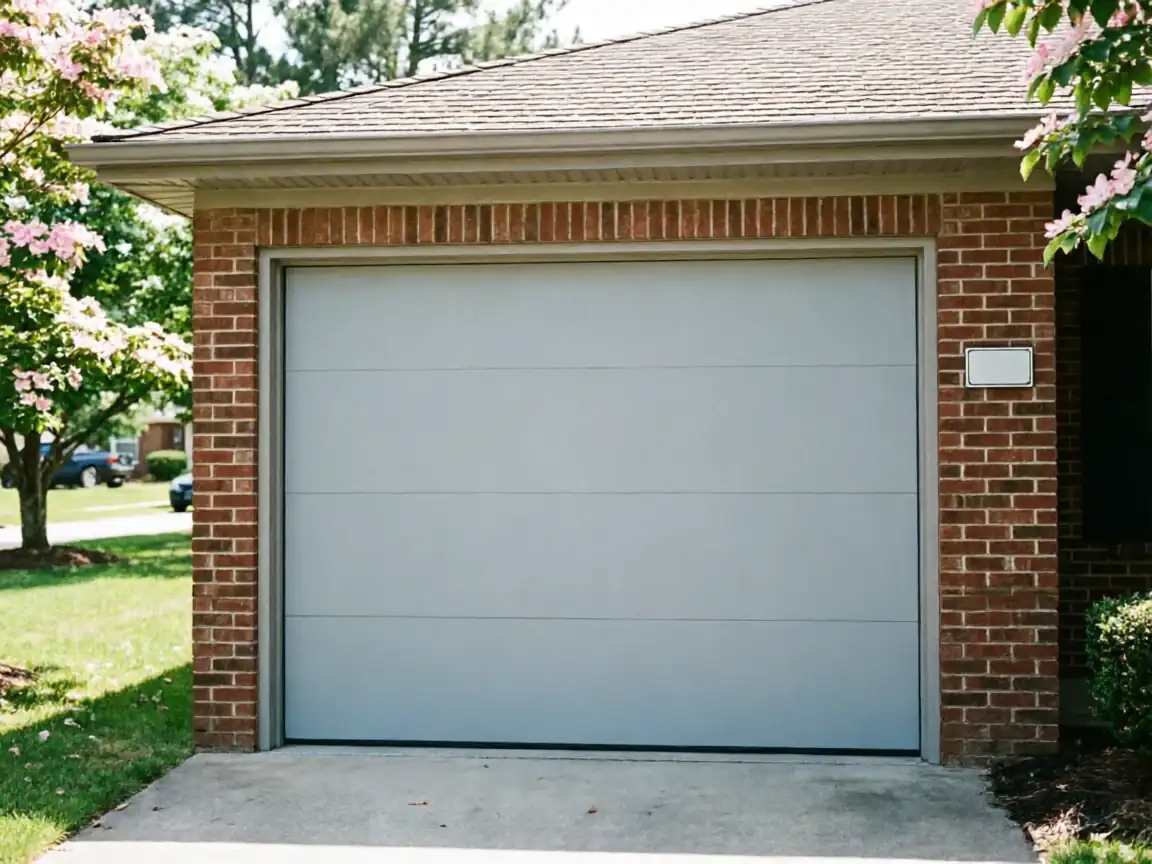
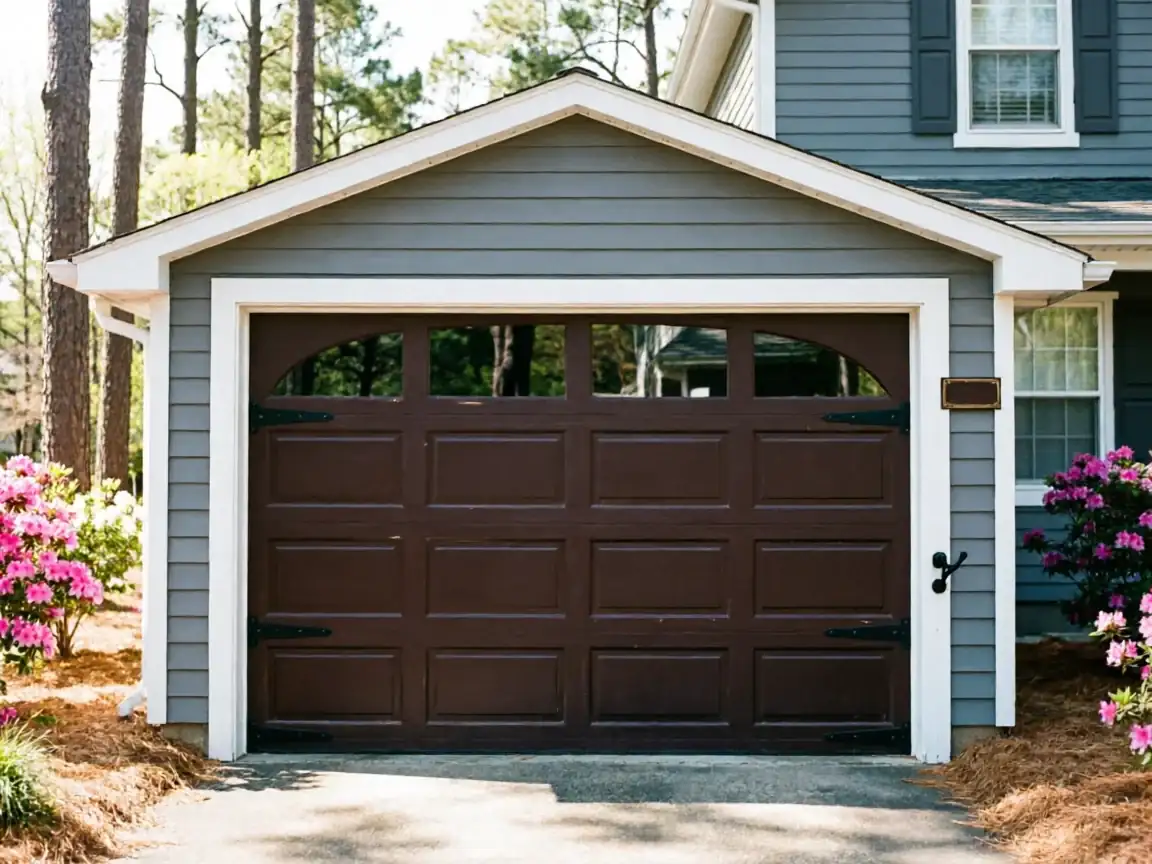
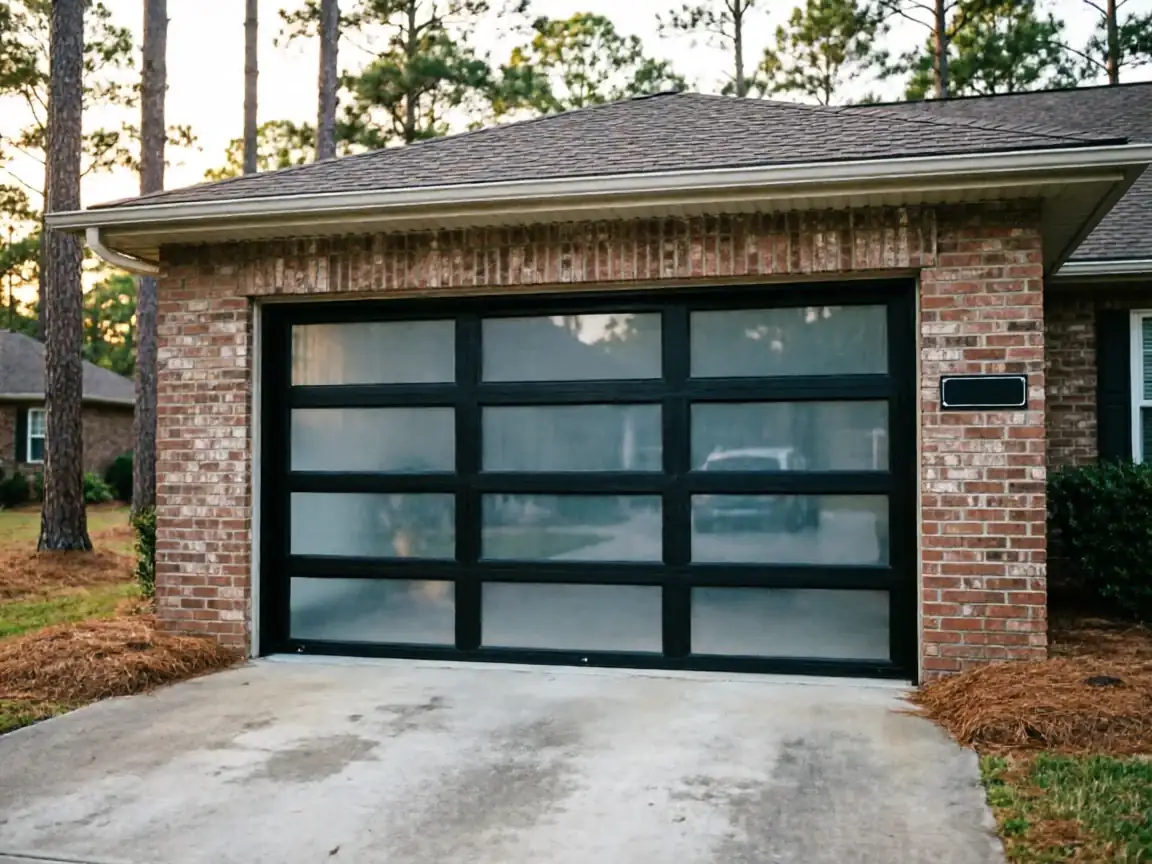
Mountain Park's housing stock runs younger than you'd guess for this part of the county, with a median year built around 1984. That puts most doors here on steel sectional panels from the mid-80s run, not the older wood or the newer composite stock you see on houses built after 2000. The panel profile, the seam spacing, and the way the hardware mounts to the stile all come out of that era, and that's the detail that decides whether a single-panel repair is even possible or whether you're buying a matched set.
Where This Job Goes Sideways
The common failure on a 1984-era door is panel mismatch
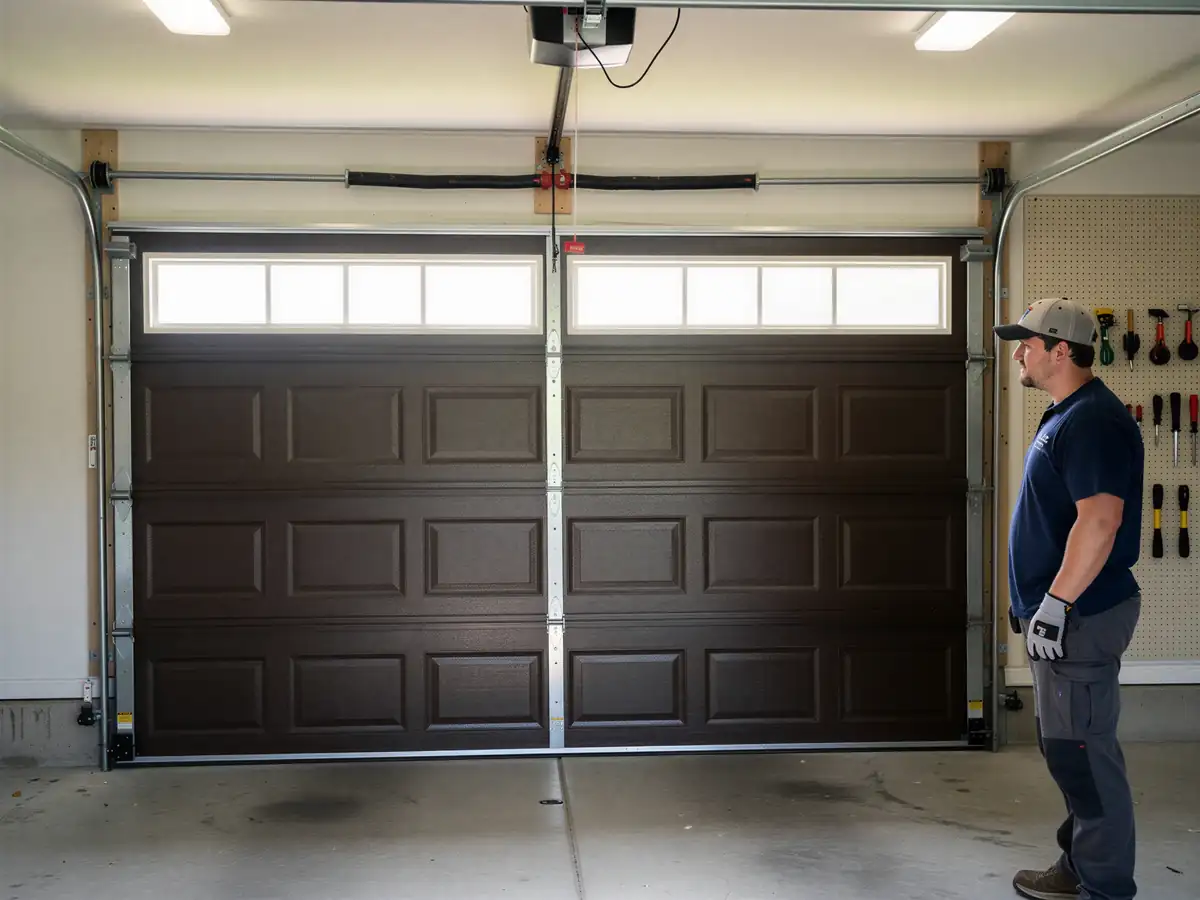
Steel sectional profiles changed enough through the late 80s and 90s that a replacement panel ordered off a generic spec sheet often doesn't sit flush against the original sections - different rib depth, different seam reveal, sometimes a half-inch difference in panel height that throws off the whole stack. On a single-car or double door built around that year, that mismatch shows up as a visible seam line and, worse, a door that doesn't seal right at the joint.
The area sits in a cold-moderate climate band
Which means panels with a foam or polystyrene core were often spec'd for some insulation value, not just looks. A replacement panel that's solid steel with no core, bolted next to original insulated panels, creates a cold spot and a sound difference when the door runs - you'll hear it before you see it. Getting the core type right on a 1984 panel means knowing what was actually installed, not just what's sold today as the nearest equivalent. That's the part that goes sideways when someone orders by color and size alone.
Doing It Yourself
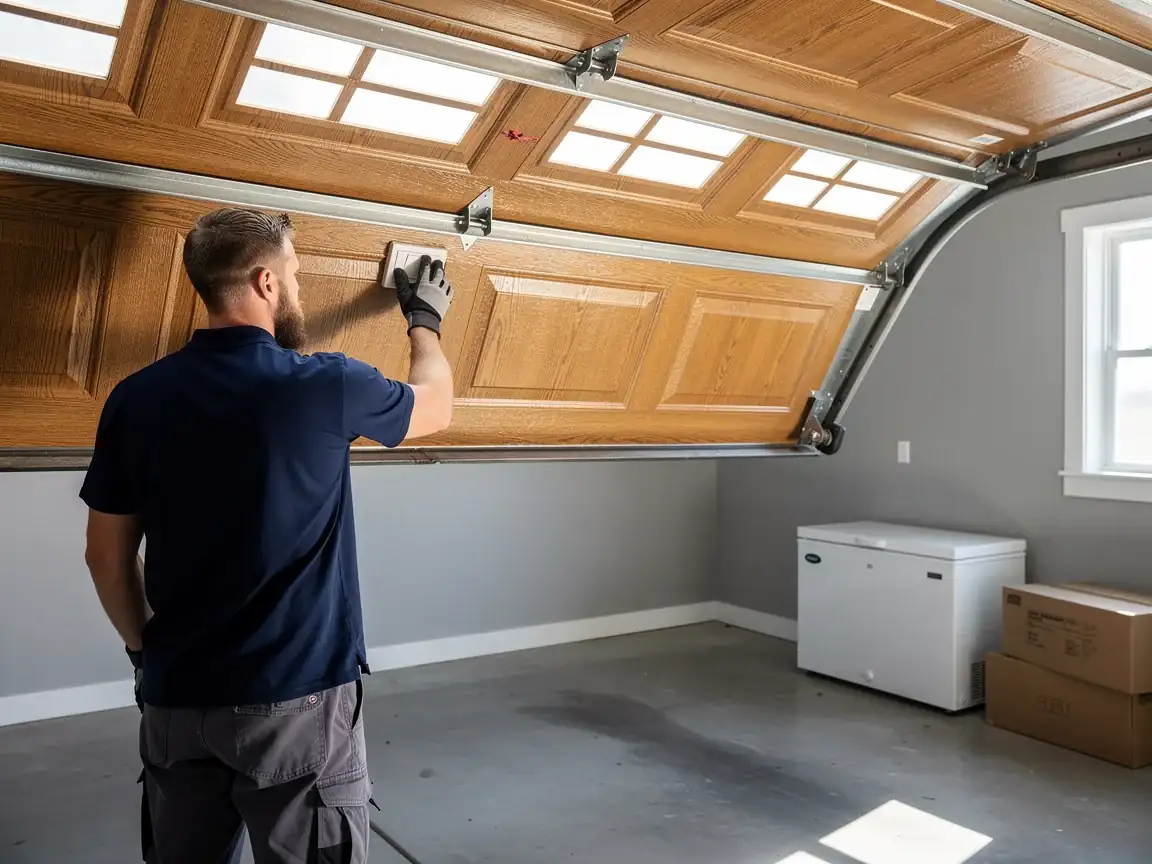
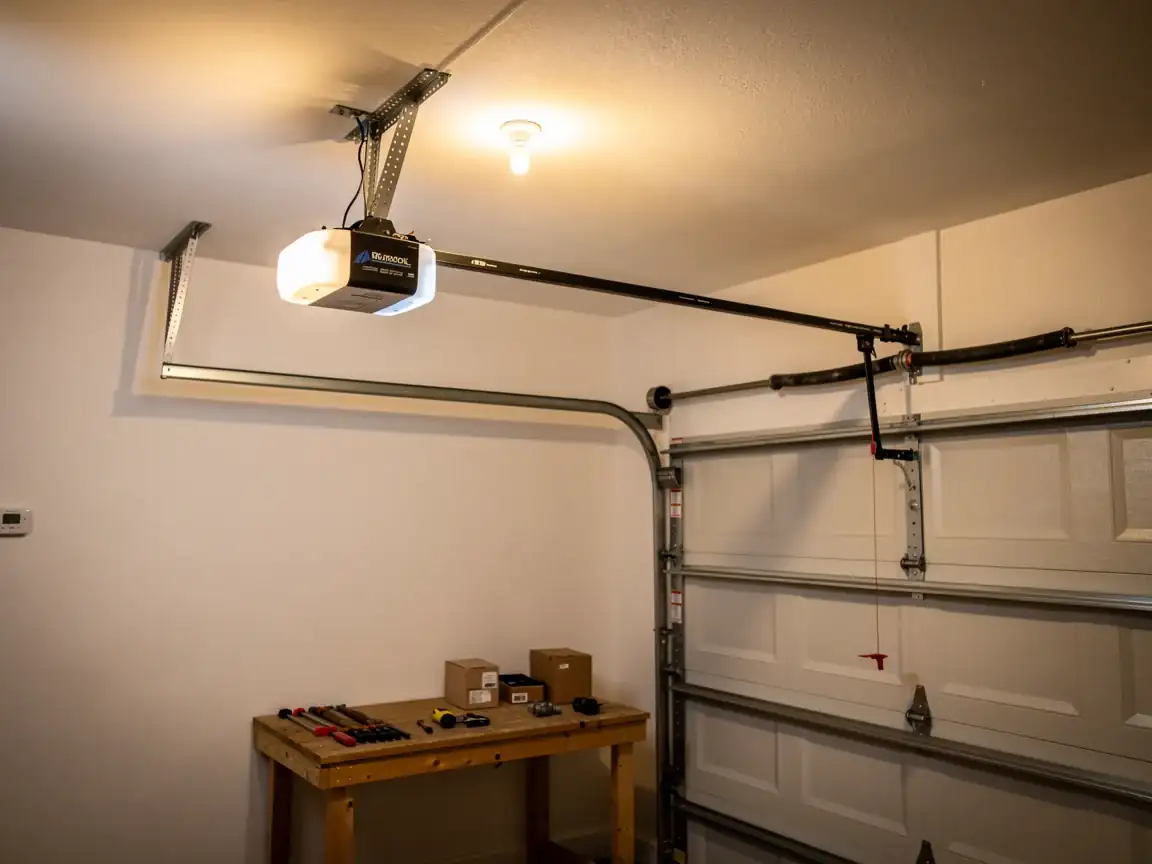
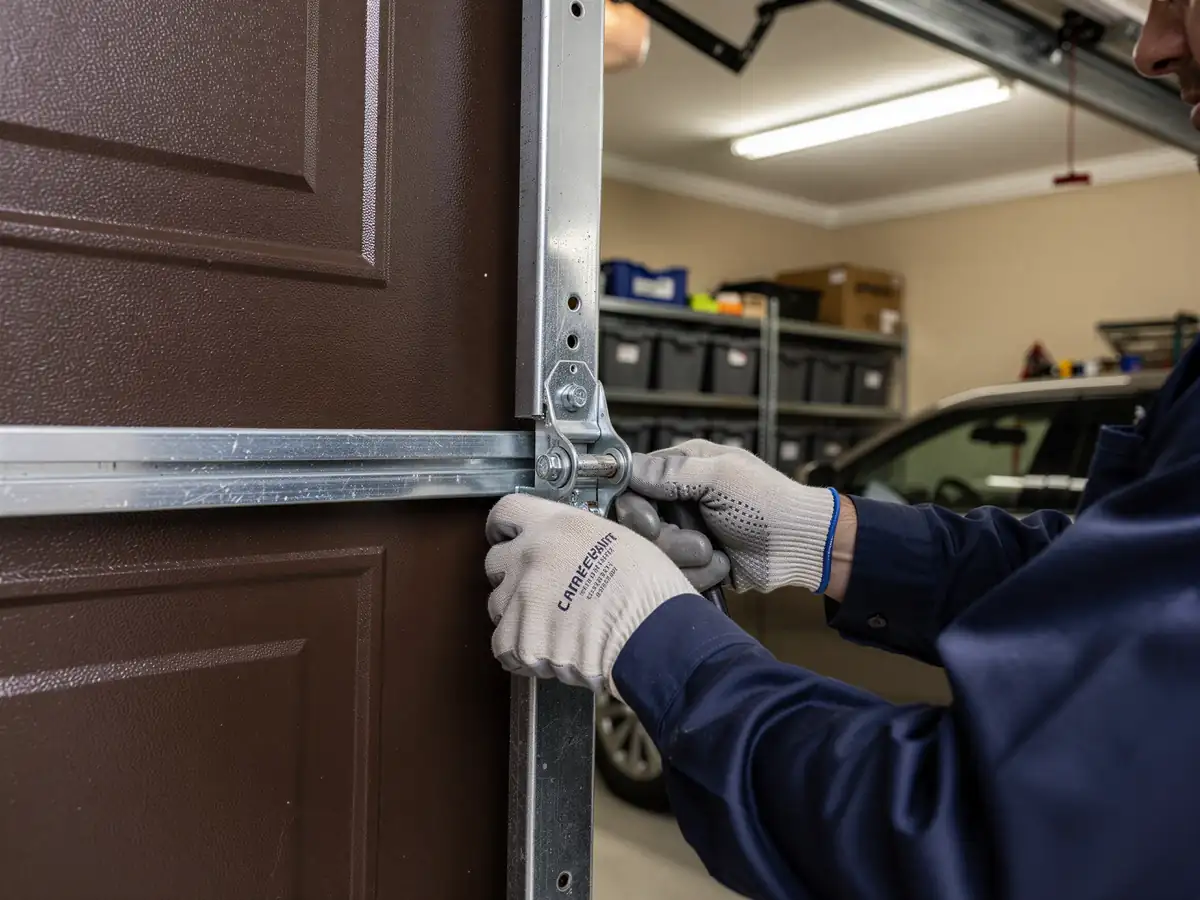
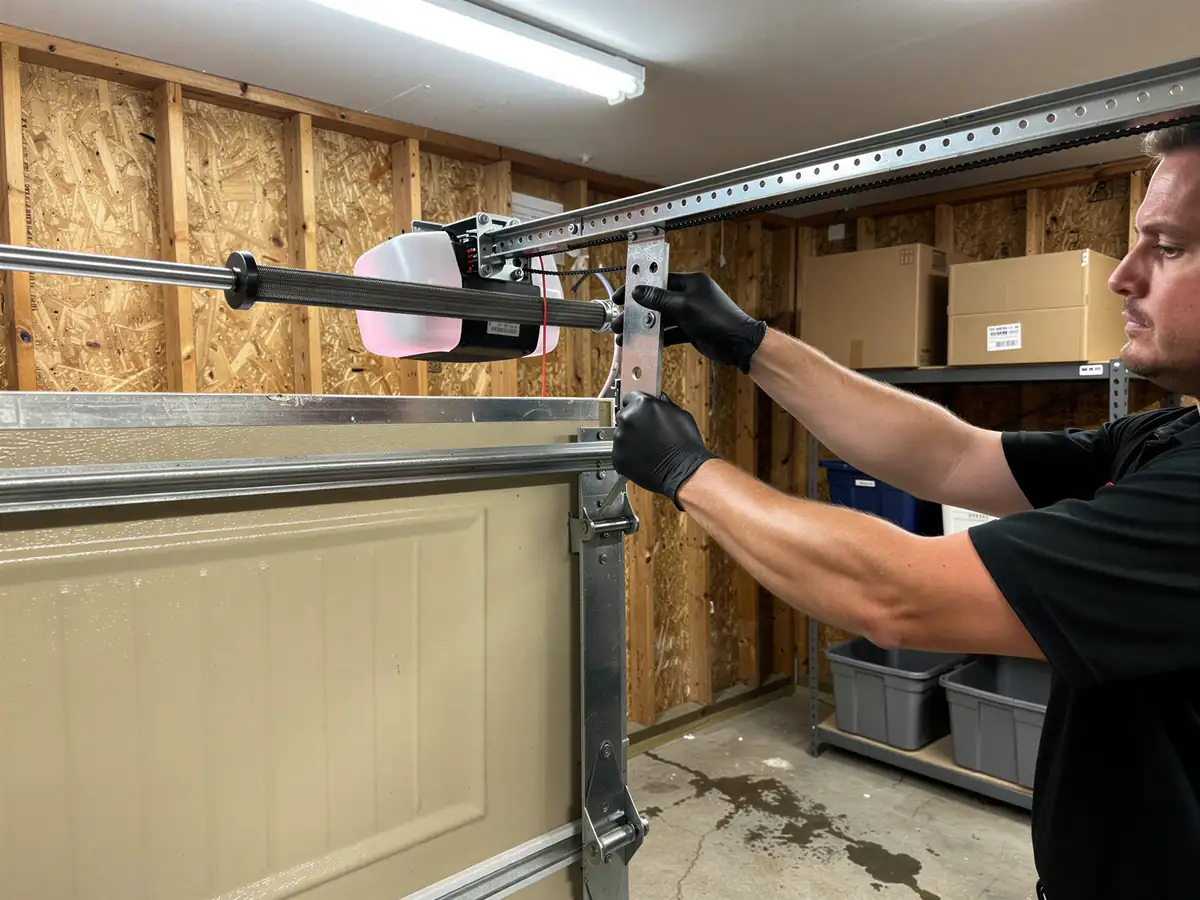
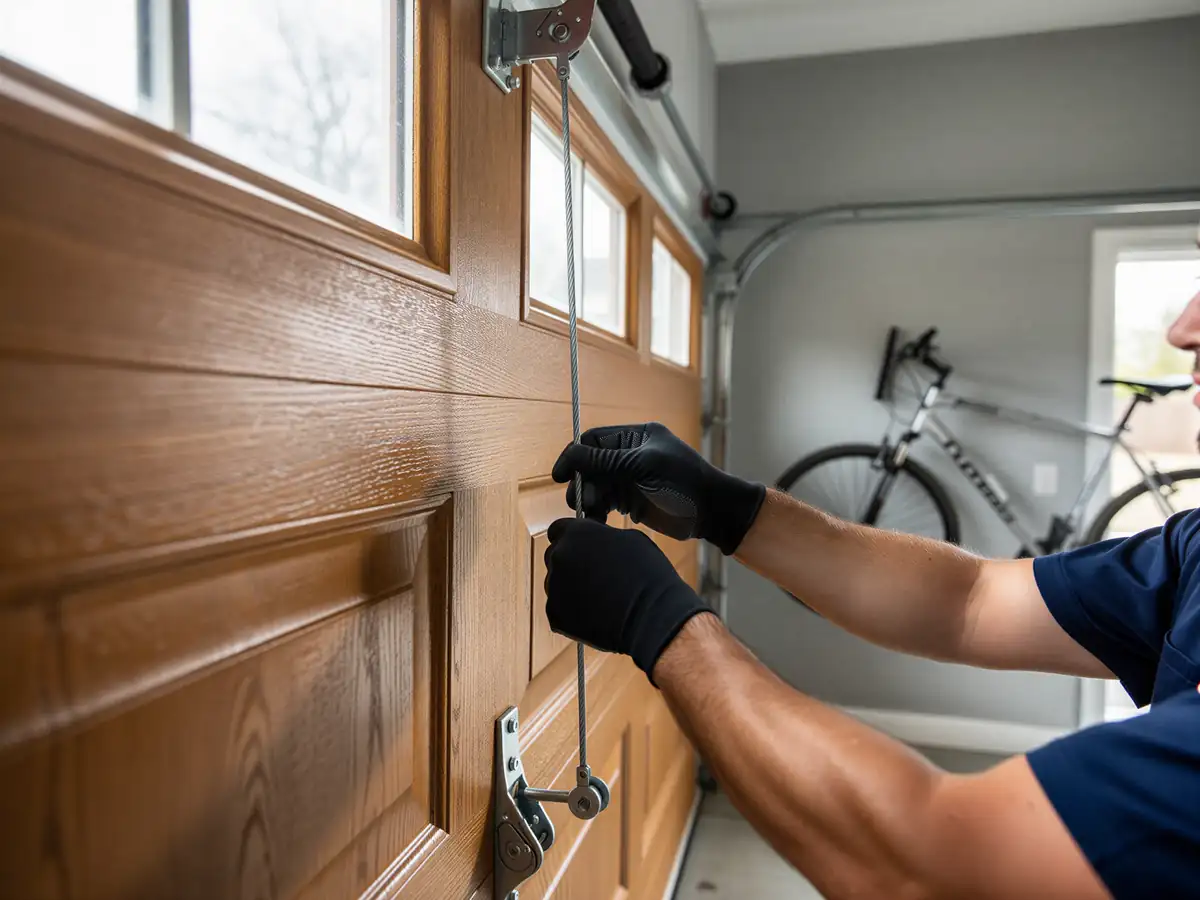
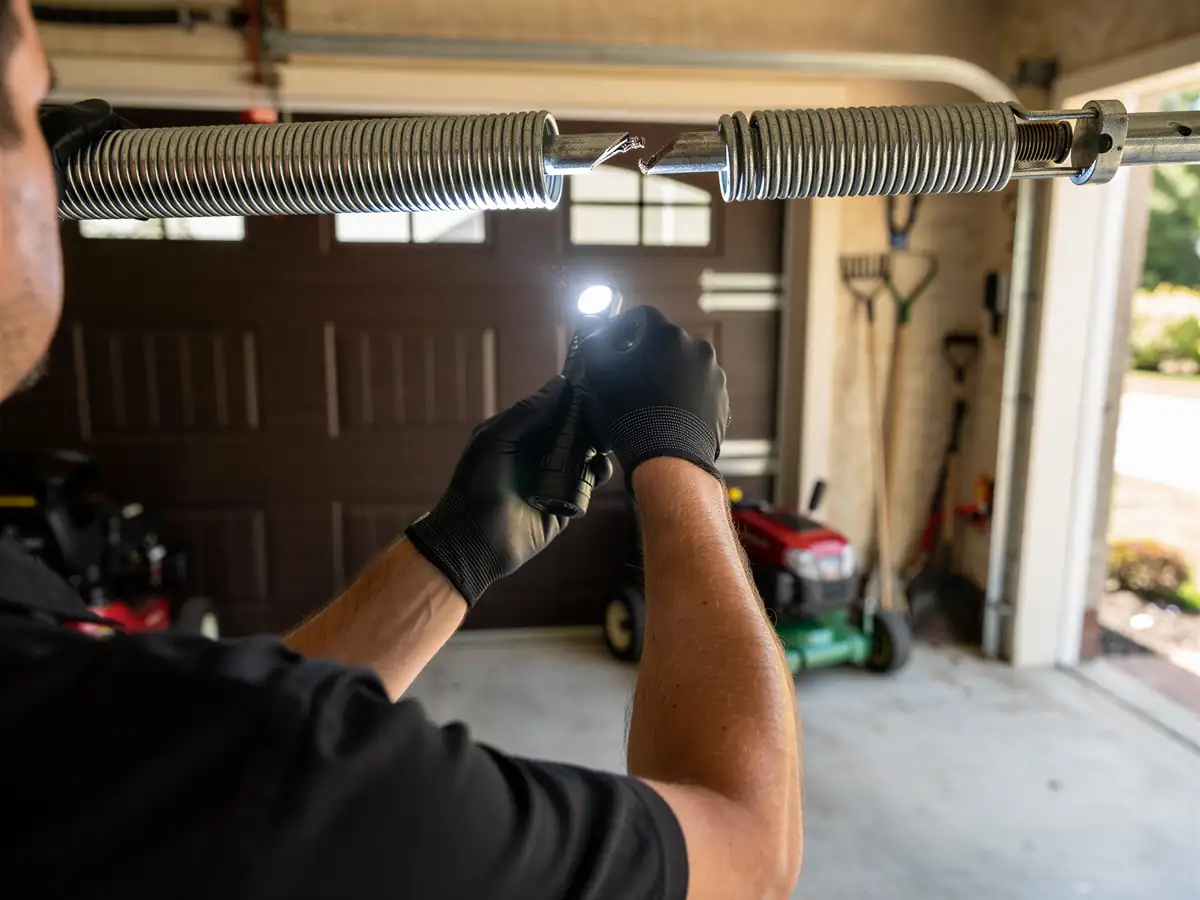
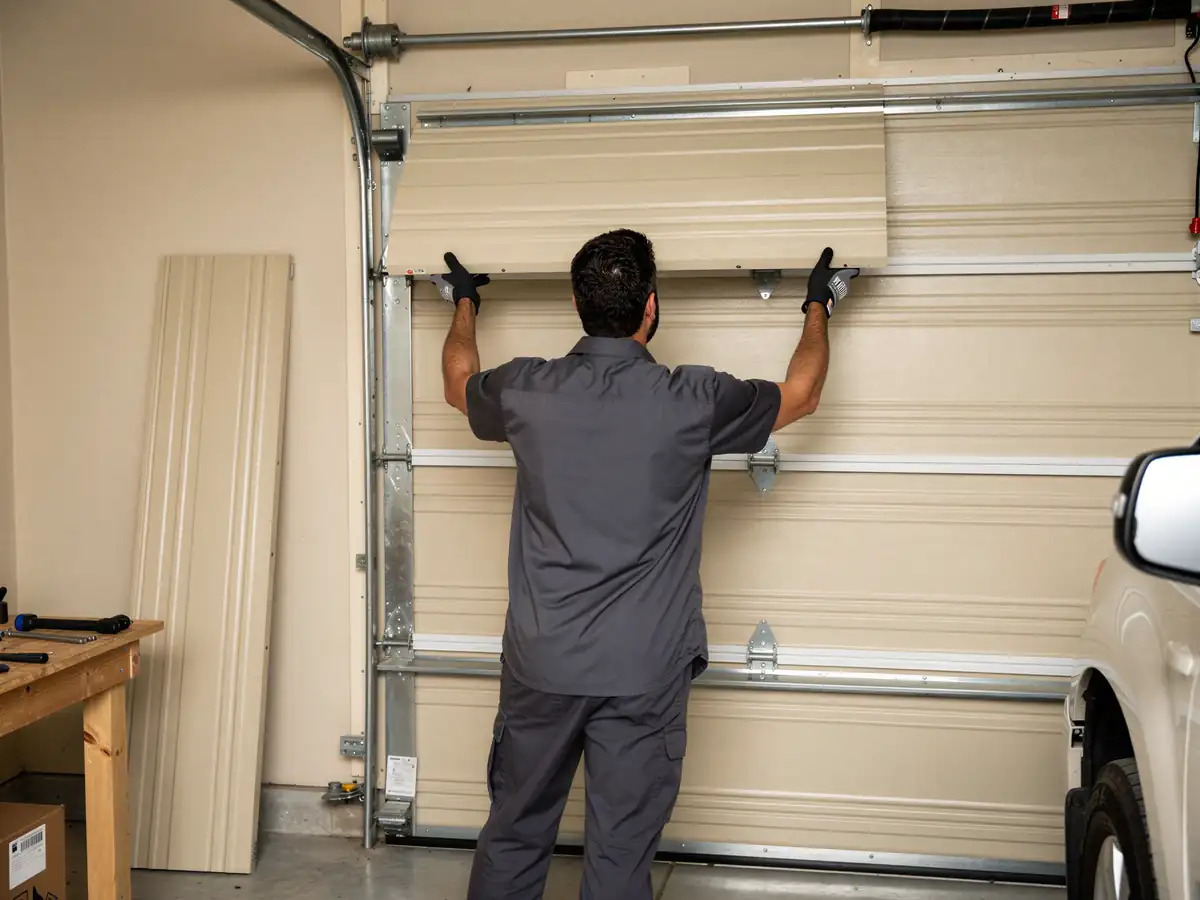
Swapping a single panel on a sectional door is within reach for someone comfortable with a drill and a level, provided the door is off its spring tension while you work - never touch panel hinges with the door under torsion spring load. The honest limit here: lining up a 1984-spec panel against the originals takes more than a square edge. If the new panel's rib spacing or seam depth is even slightly off from what's original to that build year, the door will bind on the track or the weatherstrip won't compress evenly, and you won't know until it's reassembled and running.
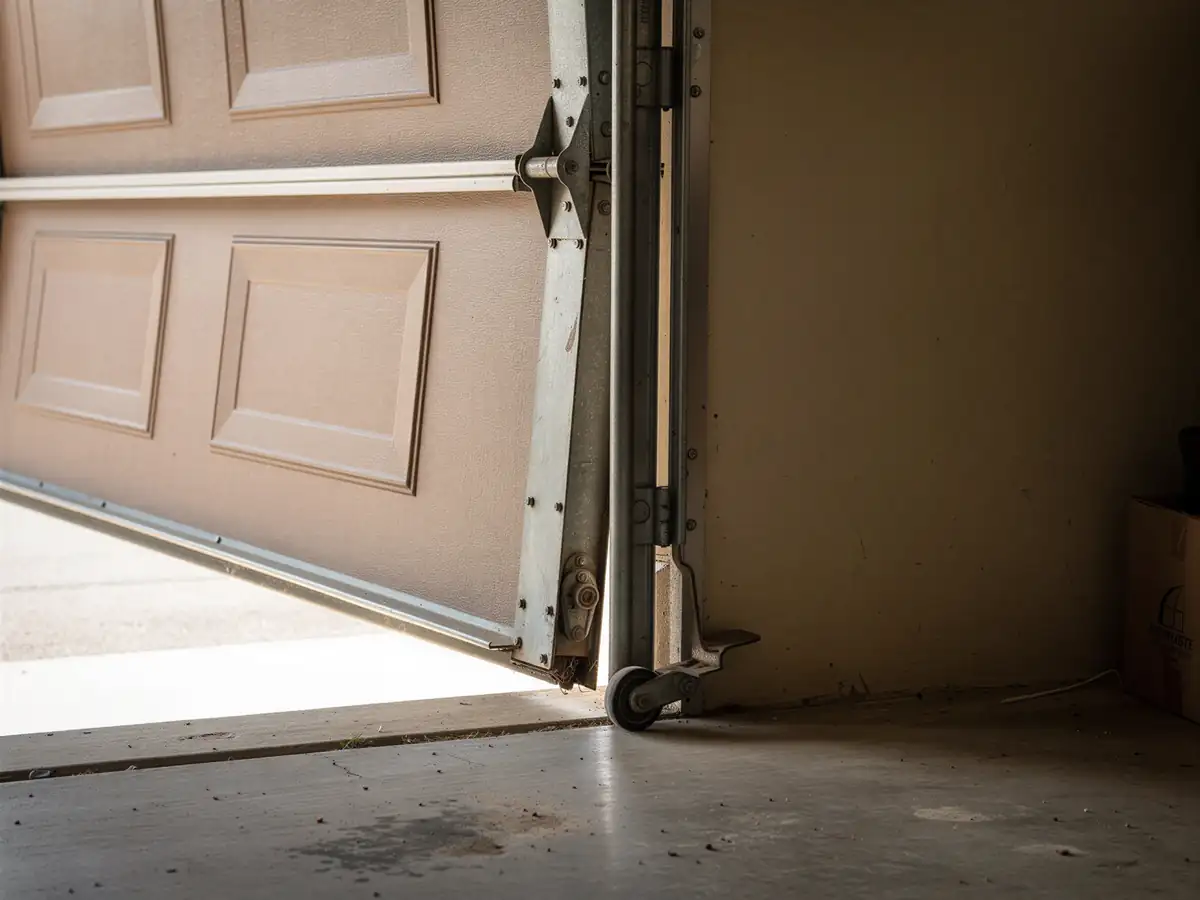
We won't pretend every panel job is worth a truck roll. If the door's already at the end of its life - rust through the bottom sections, a track that's been bent and straightened more than once - putting a new panel on it is good money chasing a door that needs replacing anyway. That's a call worth making before you order a part, not after.
How Long You Are Without the Door
We run out of Acworth, about 15 miles from Mountain Park, so there's no local branch stock to pull from on short notice - the panel has to be matched, ordered if it's not a stock profile, and brought out on the truck. For a door running original 1984 panels, that ordering step is usually the long pole, not the drive. A common stock panel can turn around fast; a panel matched to an older seam profile or a specific insulated core takes longer to source, and we'll tell you which situation you're in before we quote the job, not after.
If the door is drivable with the damaged panel in place - cosmetic dent, no binding, no exposed insulation - there's no reason to park the car and wait. If the panel's cracked through or the door won't seat in the track, that's a different conversation, and we'll say so on the call.